


ADVERTISEMENT
The average American family spends more than $4,000 a year on groceries. With rising food prices, this number is shocking. But, you can save money on groceries without losing out on quality or nutrition.
With smart planning and some tips, you can still enjoy tasty and healthy meals. This article will share ways to cut costs while keeping your food delicious and nutritious.
Key Takeaways
- Create a grocery budget to manage expenses effectively.
- Shop at local markets for fresh and potentially cheaper options.
- Plan meals to minimize impulse purchases and waste.
- Take advantage of coupons and grocery apps for additional savings.
- Consider buying in bulk for non-perishable items to save money over time.
- Understand seasonal produce to get the best prices for quality ingredients.
- Emphasize cooking at home for health and cost benefits.
Understanding Your Grocery Budget
Setting up a grocery budget is essential for smart money management at home. By setting spending limits, you ensure that you buy what you need and avoid unnecessary items. Learning about grocery budgeting can let families enjoy great food without spending too much. This lets you make thoughtful choices, avoiding impulse purchases and spending on what’s important.
Why You Should Create a Grocery Budget
Having a grocery budget makes you more aware of how you spend. With a set limit, you aim for cost-effective shopping, making each dollar count. It also makes it easier to track expenses and adjust based on your family’s needs and changes in lifestyle. This approach helps with better planning for shopping trips, leading to a stronger financial future.
How to Track Your Spending
Monitoring your grocery expenses is crucial. Use apps or spreadsheets to keep track of what you spend, breaking it down by categories like fruits, meats, or dairy. Looking at your monthly spending shows your shopping habits. Spotting these habits can reveal ways to save, especially if certain things often cause you to overspend. Keeping regular tabs on what you spend helps you stick to your budget and shop smarter.

Choosing the Right Grocery Store
Looking for the right grocery store can make a big difference in your spending. With lots of choices, it’s key to see what each store has to offer. When you hunt for discounts, check out different markets and compare deals. You want to get the best stuff without spending too much.
The Benefits of Shopping at Local Markets
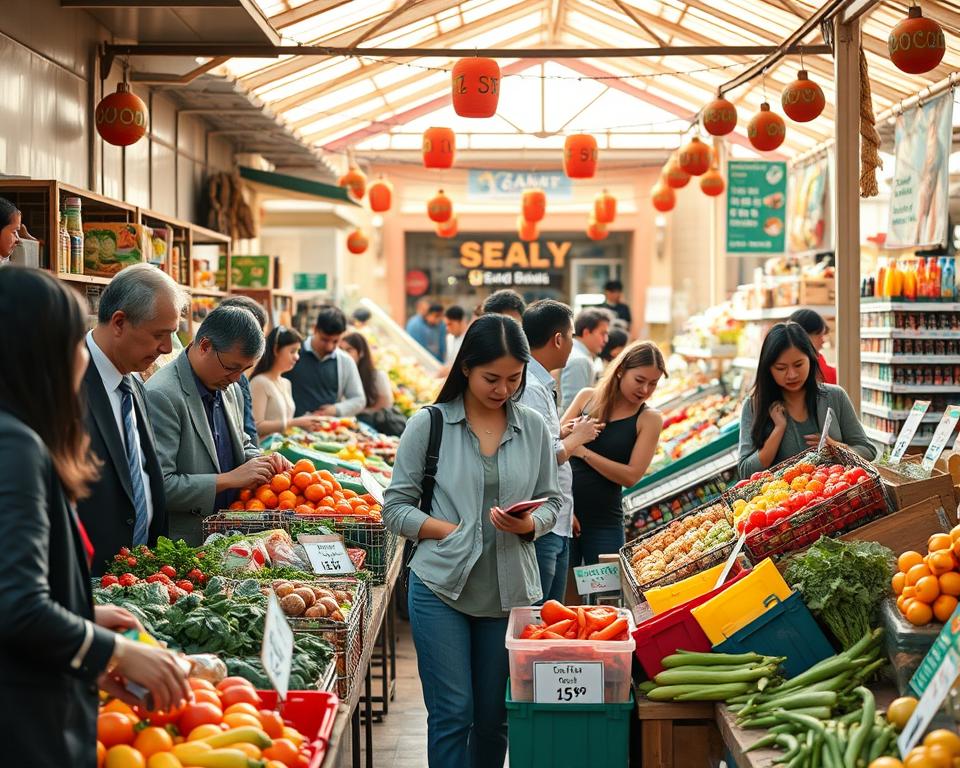
Local markets are great for fresh and quality food. They usually have seasonal items, which might cost less. By shopping locally, you help your community and save money on transport. You might also find something special or get a better deal by talking directly with sellers.
Comparing Prices at Different Chains
Each grocery chain has its own way of pricing things. That’s why it’s important to keep checking prices. Use apps and flyers to spot the best deals. Knowing your way around the store also helps avoid buying things you don’t need.
| Store Type | Average Price for Produce | Unique Offerings | Accessibility |
|---|---|---|---|
| Local Markets | $$ | Seasonal, Farm-Fresh | Limited Locations |
| Big Chains | $$$ | Wide Variety | Multiple Locations |
| Discount Stores | $ | Basic Selection | Accessible Locations |
Meal Planning for Savings
Meal planning helps you save money on groceries. You start by figuring out what your family likes to eat. Then, match your plan with what’s on sale. You can use ingredients more than once, buy in bulk, and avoid buying things you don’t need. This way, you’ll spend less but still enjoy great meals.
How to Create a Weekly Meal Plan
Here’s how to make a week’s meal plan:
- Look at grocery flyers for deals.
- Make a menu for all meals and snacks.
- Make a list of what you need, so you don’t shop on impulse.
- Pick meals that let you reuse ingredients to waste less food.
Using coupons can help you save even more money.
Tips for Using Leftovers Wisely
Leftovers can save you a lot of money. Get creative:
- Turn extra chicken into salads or stir-fries.
- Put leftover veggies in soups or casseroles.
- Use fruit scraps in smoothies or desserts.
When you plan to have leftovers, it means less waste. It’s also a smart way to have quick lunches ready. This strategy lets you save money and enjoy your food to the fullest.
Smart Shopping Strategies
Learning how to shop smartly for groceries can change how you spend and shop. With the correct tips, you can cut costs but still enjoy great food. Here’s a look at effective grocery shopping methods.
Make a Shopping List and Stick to It
Making a shopping list ahead of time stops impulse buying. It helps you buy only what you need. Keeping your list updated prevents unnecessary purchases, making shopping quicker and easier.
Why You Should Avoid Shopping When Hungry
Shopping hungry can cause you to buy things you don’t need. This often leads to spending on snacks or other items not on your list. Eat a meal before shopping or bring snacks to avoid this.
The Importance of Timing Your Shopping Trips
When you go grocery shopping is key for saving money. Try to shop during sales or the last hour the store is open for discounts. Shopping mid-week is less crowded, making your trip smoother.
Utilizing Coupons and Discounts
Effective grocery couponing can change how you shop for deals. To really save, you need a plan for finding coupons. Look in newspapers, store ads, and deal websites to start. Old-school clipping can work, but tech can boost your savings even more.
How to Find Coupons Effectively
It’s important to find the right coupons to save big on groceries. Here are the best ways to find them:
- Explore local newspapers for store flyers and special deals.
- Use websites like Coupons.com and RetailMeNot for coupon sharing.
- Join loyalty programs at your go-to grocery stores.
- Look for digital coupons on store apps.
The Best Grocery Apps for Saving Money
Mobile grocery apps make shopping easier and can help you save. These apps come with features to help maximize your savings:
- Ibotta: Gives you cash back for uploading receipts or linking your loyalty card.
- Flipp: Lets you check weekly ads to find the best prices on what you need.
- Checkout 51: Offers cash-back that you can use with other discounts.
- RetailMeNot: Great for finding coupon codes for online grocery shopping.
Buying in Bulk
Buying in bulk saves money and keeps your pantry full. It’s great for items like grains, pasta, canned goods, and cleaning supplies. Bulk buying means lower prices and fewer trips to the store.
What Items Are Worth Buying in Bulk?
Think about the staples you use a lot for bulk buying. These often include:
- Grains like rice and oats
- Pasta and dried legumes
- Canned goods, such as tomatoes and beans
- Frozen fruits and vegetables, especially when they’re in season
- Cleaning supplies and toiletries
These choices save money and keep important items on hand. This makes cooking meals easier and more convenient.
Tips for Storing Bulk Purchases
Good storage is key to getting the most from bulk buys. Here are some top storage tips:
- Use airtight containers for grains, beans, and pasta to keep them fresh.
- Freeze perishable items like fruits and veggies in portions to reduce waste.
- Label containers and freezer bags with dates to keep track of freshness.
- Keep your pantry organized to easily use what you buy.
With these strategies, you can make the most of your groceries. Enjoy the benefits and savings of bulk buying.
Seasonal Shopping
Learning about seasonal shopping can greatly help with your grocery budget. When you buy seasonal produce, you get fruits and vegetables that are fresher, tastier, and usually less expensive. This method improves your meals and helps you save money on groceries.
Understanding Seasonal Produce
Different seasons offer different fruits and vegetables that grow well in those conditions. For example, summer brings berries and tomatoes while winter has root vegetables. Knowing what produce is in season allows you to make meals that are affordable and full of nutrients.
How Seasonality Affects Prices
The prices of groceries change with the seasons. Items are cheaper when they are in abundance during their peak seasons. But, prices go up for fruits and vegetables that are out of season. Shopping seasonally lets you enjoy the best produce at the best prices, helping your budget.
| Season | In-Season Produce | Average Price Range ($) |
|---|---|---|
| Spring | Asparagus, Strawberries, Radishes | 2-4 |
| Summer | Peaches, Zucchini, Corn | 1-3 |
| Fall | Pumpkins, Apples, Brussels Sprouts | 3-5 |
| Winter | Oranges, Kale, Sweet Potatoes | 2-6 |
Quality Over Quantity
When you go grocery shopping, choosing fresh ingredients can lead to better health and more satisfying meals. These ingredients are not just tastier; they also make your diet more nutritious. How you shop affects your wallet and the quality of your meals. If you pick fresh veggies and quality meats, you’re choosing healthier meals with less processed stuff.
Why Fresh Ingredients Matter
Fresh ingredients can make your cooking stand out. They are packed with vitamins and minerals unlike processed options. With fresh fruits, vegetables, and meats, your meals will taste great and boost your health. These choices help you waste less and make every meal special.
How to Choose High-Quality Products on a Budget
You can find good products without spending a lot. Store brands offer great quality for less money, helping your budget. Look around different stores to find the best deals. Use sales and promotions to save on high-quality items. Knowing about local products can also lead to great finds that are both excellent and affordable.
Cooking at Home
Cooking at home helps save a lot of money on food. It leads to healthier, more enjoyable meals. It’s about making food that costs less and tastes better. People can pick what they like to eat and still keep their budget in check. This way, cooking at home can save a lot of money.
The Cost Benefits of Home Cooking
Cooking at home is really cost-effective. It lets you decide how much to eat and what ingredients to use. This leads to eating healthier. By choosing to cook rather than eat out, people can cut their food costs a lot.
Easy and Affordable Recipes
There are so many simple, cheap recipes out there. You can find them in cookbooks, blogs, and on social media. Try simple meals like stir-fries, soups, or casseroles. These use ingredients you likely have at home. They are cheap but add variety to your meals, making each week different and exciting.
Avoiding Food Waste
Reducing food waste saves money and supports a green lifestyle. It starts with managing groceries wisely at home. Always check your pantry and fridge. This helps you keep up with what might spoil soon. Planning meals around items about to expire prevents waste. You can also extend food life by freezing or pickling.
How to Reduce Food Waste at Home
To cut down on food waste, begin with a detailed shopping list. Only buy what’s necessary. Proper food storage is key to longer freshness. For instance, veggies last longer in breathable bags. Turning kitchen scraps into compost is great for waste management. It turns leftovers into valuable soil.
Creative Ways to Use Leftovers
Being creative with leftovers can reduce waste and liven up your meals. Don’t let extras linger in the fridge unused. Turn them into something new. Leftover roast can become taco filling, while ripe fruits are perfect for smoothies. This approach saves money and enriches your cooking. Explore new spices and methods to reinvent your meals.
Online Grocery Shopping Tips
Shopping for groceries online can help you save money and time. You can easily compare prices from different places. You might find special discounts you wouldn’t get in a store. Making a detailed shopping list helps stick to your budget.
Comparing Prices Online vs. In-Store
Comparing prices online can lead to finding better deals than in physical stores. This method helps you spot the best offers before buying. Many apps and websites let you filter searches and see current sales.
Knowing price differences can greatly reduce your spending.
How to Avoid Impulse Buys While Shopping Online
Shopping online makes it easier to buy things on impulse because of its convenience. Make a list of what you need to avoid this. Stick to looking at only what’s necessary. Turning on privacy settings can lessen ads that tempt you off track.
Waiting a bit before you click ‘buy’ helps stop impulse purchases. It makes you think more about what you’re buying.