

ADVERTISEMENT
Did you know that over 80% of people use their smartphones for everything? This makes portable chargers not just handy but essential. As we lean more on our gadgets, finding a reliable power source becomes crucial. In this guide, we’ll give you tips and recommend products for the best portable chargers. They’re perfect for your daily tasks and travel. Having a charger for our many devices, like smartphones, tablets, and wearables, ensures we stay connected at all times.
Key Takeaways
- Choosing the right portable charger is essential for everyday connectivity.
- Understanding different types of chargers can help in making the best selection.
- Capacity and charging speed are critical factors in your decision process.
- Portability and weight should influence your charger choice, especially for travelers.
- Safe charging practices can enhance the longevity of your device.
Why You Need a Portable Charger
In our busy lives, having a portable charger is a game-changer. We use our phones and gadgets a lot, so keeping them powered up is key. They’re perfect for travel, outdoor adventures, or just a long day out.
Convenience of On-the-Go Charging
Ever been on a long trip or stuck waiting, with no way to charge your phone? A portable charger can save the day. They come in different sizes and power levels to fit what you need. This means you can charge your devices anytime, even on the move.
Staying Connected Anywhere
Being able to talk, text, and use the internet is really important today. With a portable charger, you don’t have to worry about your phone dying. It’s great for work trips or fun weekends away. You’ll always be able to keep in touch with the people you care about.
Essential for Travel and Adventures
Love exploring new places or going on adventures? Don’t forget to pack a portable charger. It’s tough when your phone’s battery is low during a long day outside. A portable charger means you can take photos, find your way, and stay safe without battery stress.
Types of Portable Chargers
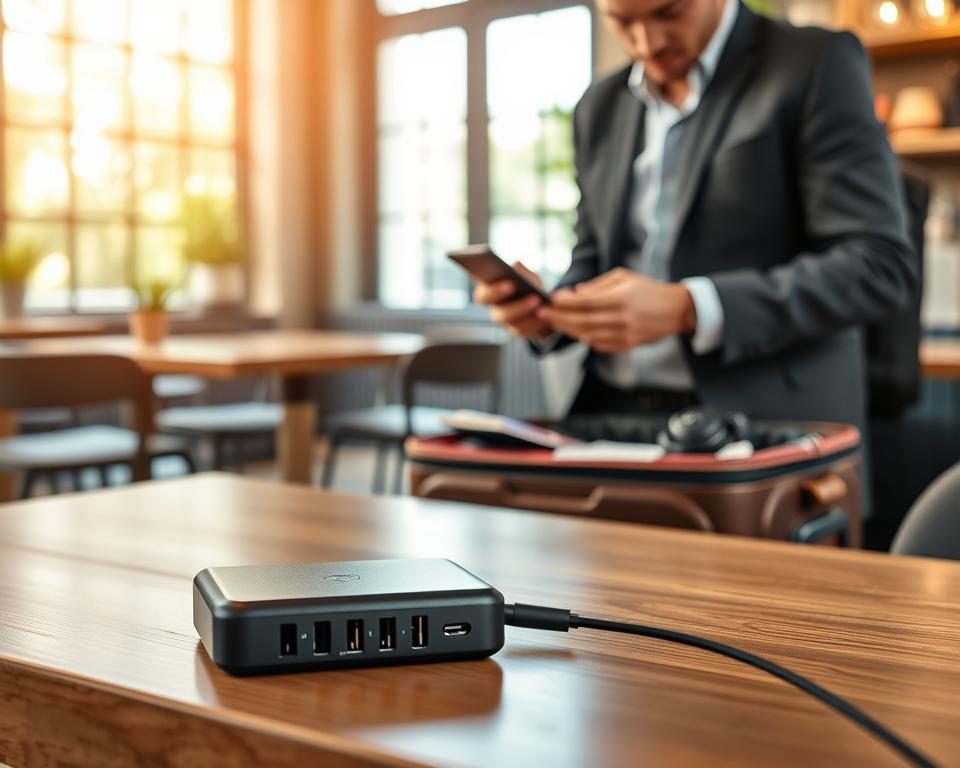
There are many portable chargers to choose from. Power banks are versatile and can charge different devices. Battery cases are great for extra protection and more life for certain phones. Charging stations can power several devices at once. Solar chargers are good for the environment and charge in sunlight. When looking at power banks, consider how much charge they hold and how fast they can charge.
Power Banks vs. Battery Cases
Power banks are adaptable and work with many devices. Battery cases blend protection and charging for some phones. Think about how you use your devices and what you need most.
Charging Stations and Solar Chargers
Charging stations are ideal for powering many devices at once. They suit homes or offices and come with multiple ports. Solar chargers use sunlight to power devices and are eco-friendly. They’re great for outdoors or those wanting to lower their environmental impact.
Key Features to Look For
When picking portable chargers, certain features matter a lot. Look for:
- Capacity: This tells you how much charge the device can hold.
- Charging Speed: Fast charging gets your devices powered quicker.
- Number of Ports: More ports mean charging several devices at the same time.
Capacity Explained
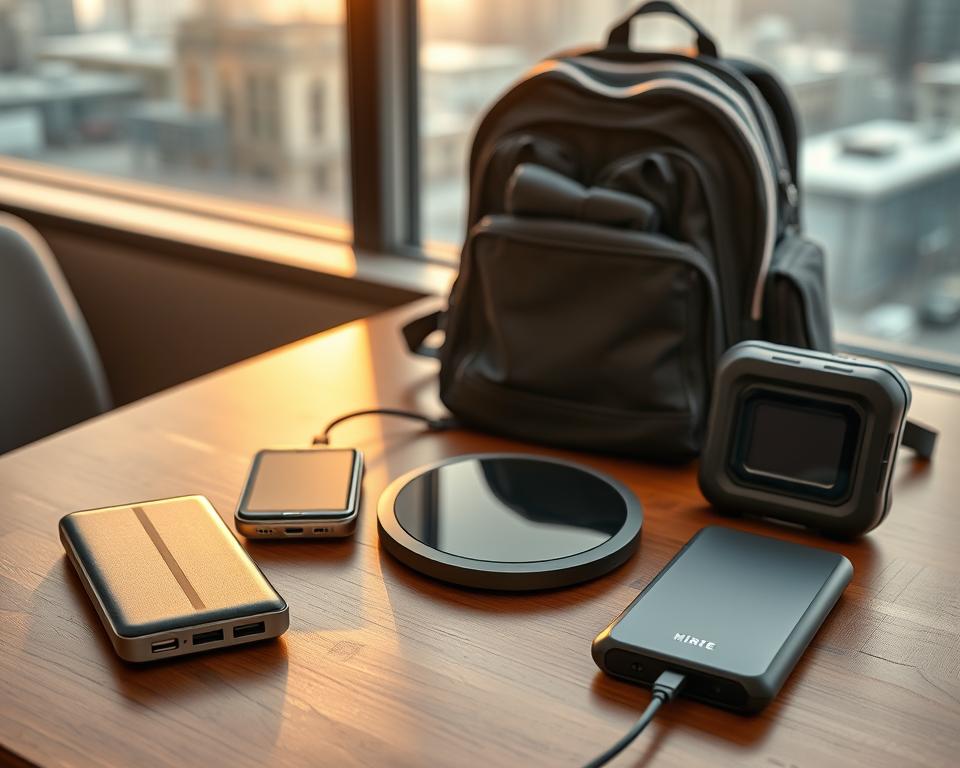
The capacity of a portable charger greatly affects how well it can keep your devices powered. Knowing about battery capacity, shown in mAh ratings, helps you choose the right power bank. We will look into these ratings and help you pick one that fits your lifestyle best.
Understanding mAh Ratings
mAh stands for milliampere-hour and tells you how much energy a battery can hold. A bigger mAh number means more stored energy, so you can charge your phone or tablet more times. For instance, a 10,000 mAh power bank can usually charge a phone two to three times. Knowing about mAh ratings helps you figure out what a power bank can do.
Choosing the Right Capacity for Your Needs
Think about how much you use your devices and your travel needs when picking a power bank. If you don’t use your devices a lot every day, a 5,000 to 10,000 mAh power bank might be enough. But if you travel a lot or use many devices, you might need something with 20,000 mAh or more. It’s important to balance these needs with how easy the device is to carry around.
The Trade-Off: Size vs. Power
Deciding between size and power can be tough. Larger mAh numbers mean more power but usually make the power bank bigger. If carrying something small is important to you, you might choose a smaller size with less power. Think about what’s more important to you: a small charger that’s easy to carry or a bigger one that can charge your devices all day.
Charging Speed Considerations
When looking for a portable charger, it’s vital to understand how fast it can charge your device. Fast charging technology lets us charge our devices quickly, matching our busy lives. It’s key to know about fast charging to pick the best charger for you.
What is Fast Charging?
Fast charging boosts a charger’s power to your device faster than normal chargers do. It’s great for smartphones and tablets that can take in more power. With fast charging, your device gets to the power level you need quicker, making things more convenient for you.
USB-C vs. USB-A: What to Choose?
Choosing between USB-C and USB-A affects how fast your device charges. USB-C supports fast charging and higher power, perfect for new gadgets. USB-A is more common but slower in charging. Think about your device’s needs when picking a charger to get the best speed.
Compatibility with Devices
It’s crucial to ensure your portable charger works well with your devices for the best speed. Some chargers have various ports for different devices, focusing on fast charging tech. Make sure the charger meets your device’s fast charging needs for top performance while you’re out and about.
Assessing Portability
Choosing the right portable charger is key, especially for those always on the go. The need differs for travelers and business folks. Knowing the distinction between light and heavy-duty chargers is crucial. Picking the perfect size makes travel smoother. Let’s dive into selecting the ideal portable charger.
Lightweight vs. Heavy-Duty Options
Light chargers are great for travelers wanting less weight. They easily fit in bags without taking up space. But, heavy-duty chargers offer more power for long trips or outdoor use. Think about what you need to pick the best one.
Ideal Sizes for Travel
Size matters when choosing a charger. Small ones are great for short outings and fit in pockets. For longer journeys, a bigger charger with more power is better. Finding the right balance is key for travel ease.
Packing Tips for Travelers
Follow these packing tips for a hassle-free trip. Keep your charger in a spot that’s easy to reach, like a bag pocket. Protective pouches keep it safe and handy. Choosing a light charger makes your travel lighter and fun.
Safety Features to Look For
Choosing a portable charger means you need to know about its safety features. These features are crucial for keeping both the charger and your gadgets safe. Understanding these can prevent problems like overcharging and short-circuits, making charging safer.
Overcharge Protection
Overcharge protection is key in portable chargers. It stops the charger from taking in too much power. This avoids damage or overheating of the battery. Brands known for their quality often include this feature, offering you peace of mind. A charger with overcharge protection reduces the risks of charging for too long.
Short-Circuit Prevention
Short-circuit prevention is another important feature. Chargers with this can turn off when a short circuit happens. This protects the charger and any device plugged into it from damage. A charger that comes with short-circuit prevention is safer to use.
Quality Certifications to Trust
Quality certifications are proof that a charger meets safety standards. Look for marks like UL, CE, or FCC on chargers. These show the charger has passed serious safety and performance tests. Choosing a charger with these certifications means you’re picking a reliable, safe product.
| Safety Feature | Description | Benefit |
|---|---|---|
| Overcharge Protection | Prevents excessive charging of the battery. | Reduces risk of battery damage and overheating. |
| Short-Circuit Prevention | Automatically cuts off power during a short circuit. | Protects both the charger and connected devices. |
| Quality Certifications | Indicates compliance with safety standards. | Ensures reliability and performance in use. |
Brand Recommendations
Picking the right portable charger can make charging easier. If you travel a lot or just need it daily, it’s important to know top brands. We’ll talk about established brands and new ones that are getting noticed. This will help you choose the best one.
Popular Portable Charger Brands
Top recommended brands include:
- Anker: They’re known for making long-lasting and efficient products. Anker has earned a good name in the market.
- Belkin: They make stylish and fast chargers. Tech lovers often choose them.
- Jackery: They are famous for powerful power banks. Outdoor lovers like them for their sturdy products.
Emerging Brands to Watch
There are new brands making an impact, such as:
- Zendure: They make tough and sleek chargers. Zendure focuses on durability.
- Baseus: This brand is known for its innovative features and great prices. People looking for value like Baseus.
These companies stand out for their quality and innovation.
What Makes a Brand Reliable?
When looking at brand reliability, think about:
- Customer Reviews: User reviews tell you a lot about charger quality.
- Warranty and Support: Good brands offer strong warranties and help.
- Testing and Certifications: Safe and tested chargers are the best choice.
Price Range and Budgeting
Understanding the price range for portable chargers is key to making a good choice. There are many options available for different budgets. We divide chargers into three categories: affordable, mid-range, and premium, each offering different benefits.
Affordable Options Under $30
If saving money is your goal, there are several chargers under $30. Though basic, these chargers do the job for smartphones and small devices. Brands like Anker and RAVPower offer reliable options without a hefty price tag.
Mid-Range Choices with Extra Features
Spend a little more, and you get mid-range chargers priced $30 to $70. With faster charging and the ability to power multiple devices at once, they offer more. Look at the Aukey 10000mAh Power Bank or the Mophie Powerstation for good value.
Premium Chargers Worth the Investment
For top-notch charging, premium chargers are the best bet. Priced above $70, they feature large-capacity batteries and cutting-edge safety. Zendure and Goal Zero are go-tos for those needing robust performance, especially for heavy users or travelers.
| Price Range | Example Brands | Features |
|---|---|---|
| Under $30 | Anker, RAVPower | Basic charging, lightweight |
| $30 – $70 | Aukey, Mophie | Fast charging, multiple ports |
| Over $70 | Zendure, Goal Zero | High capacity, advanced safety features |
Eco-Friendly Charging Solutions
In our tech-savvy world, the demand for eco-friendly chargers has risen. People are worried about climate change and using up natural resources. This has led to a search for sustainable charging ways. Solar power banks shine as a great choice. They help charge our gadgets and support using renewable energy.
Benefits of Solar Chargers
Solar chargers have many benefits. They use the sun’s energy, cutting down on the need for regular electricity. This feature is perfect for outdoor activities or during power outages. It keeps your devices running without tapping into fossil fuels. So, you can charge on the move and help our planet stay green.
Brands Committed to Sustainability
Some brands are all about being green and sustainable. Anker and RAVPower lead in adding renewable tech to their products. They focus on eco-friendly chargers. Their solar power banks are made with materials that are easy on the environment and built to last.
How to Choose Eco-Conscious Products
Choosing green charging options needs thought. Look for eco-friendly charger labels that prove they’re sustainable. Pick solar power banks with good panels and sturdy builds. Check if the brand really cares about the environment. Also, read what other buyers say to make sure the product is good.
User Reviews and Ratings
User reviews and ratings are key when picking a portable charger. They give real insights on the pros and cons of a product. This helps you know about its performance, durability, and how satisfied users are.
Importance of Customer Feedback
Customer feedback tells you a lot about a product’s quality. By reading others’ experiences, you can dodge common problems. Positive comments reveal the best features, while negative ones show what to avoid. This info guides smart buying choices.
How to Find Trustworthy Reviews
Not every review is reliable. Always look for ones that give specific details. Reviews with particular experiences are more useful. To get a full picture, check different sources. Look for comments from verified buyers to find credible opinions.
Platforms for Comparing Products
Websites that compare products make finding the right charger easier. On Amazon, Best Buy, and similar sites, user reviews help compare different chargers. They let you see various options and pick the best one for your needs.
Maintenance Tips for Longevity
Want your portable charger to last longer? Follow these simple tips. Good charging habits extend its life. They ensure your device charges right and stays in great shape. Taking care of your charger and fixing common problems help it work better for longer.
Proper Charging Habits
It’s key not to let your battery die before charging. Charge it when it’s 20-30% full. This keeps the battery healthy. Always use the charger and cable the maker gave you. Other brands might harm it. If your charger is smart, update its software to keep it running smoothly.
Storage and Care for Your Charger
Store your charger in a cool, dry spot. This prevents battery damage. Make sure the cables are properly coiled to avoid breaks. Regularly check for damage to avoid bigger issues later.
Troubleshooting Common Issues
Know how to fix common charger problems. If your charger won’t turn on, inspect the cables and connections. If it’s not charging well, try another USB port or plug. Solving these issues keeps your charger reliable, especially when you’re on the move or use it daily.