
ADVERTISEMENT
Did you know nearly 80% of interviewers decide on hiring in the first five minutes? This fact shows how crucial job interview prep is. It’s key to approach these moments with confidence. Good preparation helps lower anxiety and boosts your performance.
Preparing for an interview is more than practicing answers. It’s about clearly sharing your skills. By focusing on important topics and planning your answers, you can boost your success chances. Plus, being curious and asking smart questions makes the conversation more interesting. Are you ready to learn about interview tips and techniques that can really help you?
Key Takeaways
- Effective job interview preparation can reduce anxiety.
- Structured steps enhance clarity and confidence.
- Communicating key themes is crucial.
- Asking strategic questions fosters engagement.
- Preparation is key to making a strong first impression.
Understanding the Job Description
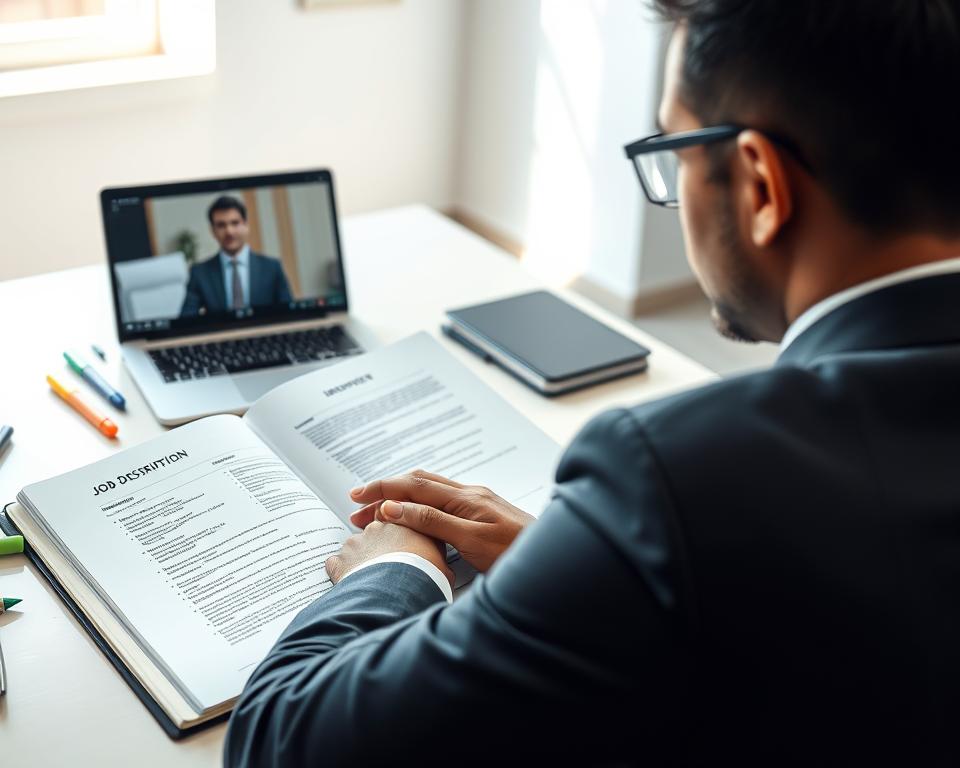
Getting ready for a job interview starts by knowing the job description well. You need to dive deep into it to see what the employer wants. This helps you see how your past work fits with their needs. By looking closely at the duties and what’s required, you can show why you’re right for the job.
Break Down Key Responsibilities
Start by reading the job description closely. Find out the main tasks you’d be doing. Breaking these down helps match your skills and past work to the job’s needs. This is a key step in getting ready for your interview.
Identify Required Skills
Then, look at the needed skills listed in the job posting. Consider both technical skills and people skills like teamwork. Make a list of how your skills and past wins match up. This shows you’re a good fit during the interview.
Research the Company Culture
Knowing the culture of the company is also crucial. Research to understand its values and what it’s like to work there. Showing you fit in with their culture makes you stand out. Sharing how your values align with theirs can really boost your chances.
Researching the Company
Before you go for an interview, it’s key to do your homework on the company. Knowing the company’s past, what it values, and the latest news can really set you apart. This effort lets you tailor your answers and connect better with interviewers. Here’s what to zero in on during your research.
Company History and Values
Looking into the company’s history shows its foundation and mission. Learn about their main values, which shape their work and how employees act. Sharing these values can make you stand out as a great fit during an interview. Focus on things like:
- Year of establishment
- Pioneering achievements
- Key milestones in development
Recent News and Developments
Keeping up with the company’s latest happenings can spark good conversation during an interview. This could be about new products, partnerships, or industry challenges. Showing you’re up-to-date proves you’re really interested in the company. Make sure to check out:
- Press releases on the company’s website
- Articles in reputable news sources
- Social media updates and announcements
Competitors and Industry Trends
Knowing the competition and the latest trends is important. It helps you talk about how your skills can meet the company’s needs. This prepares you for deeper talks about how you can help the company face its challenges. Think about looking into:
| Competitor | Strengths | Weaknesses |
|---|---|---|
| Company A | Innovative technology | Poor customer service |
| Company B | Strong market presence | High pricing |
| Company C | Competitive pricing | Limited product range |
Doing this research doesn’t just make you better in interviews, it also boosts your confidence. Knowing about the industry puts you in a great spot to show how your abilities can solve the company’s problems.

Practicing Common Interview Questions
Practicing common interview questions is key when preparing for an interview. Being able to answer with confidence can make you stand out. It’s important to cover various question types, especially behavioral ones. They reveal how your past actions predict future behaviors.
Behavioral Questions to Expect
Behavioral questions often start with “Tell me about a time when…” or “Give me an example of…”. They aim to find out how you dealt with past situations. Getting ready for these questions helps you share specific examples. This shows your skills, how you solve problems, and how you adapt.
Industry-Specific Questions
Some jobs ask industry-specific questions. These require you to show your knowledge and how it applies to the field. Looking into major trends, challenges, and tools in your industry is crucial. By doing this, you show you know your stuff to interviewers. And you prove you’re really clued-in about the job.
Questions to Self-Reflect On
It’s vital to think about yourself before the interview. Figure out your strengths and weaknesses and how they fit the job. Think well about your experiences and be ready to talk about them. This not only helps with regular questions. It also shows how much you’ve grown and what you bring to the table.
Dressing for Success
Getting ready for a job interview means dressing well. How you dress shows respect and makes a good first impression. It’s key to pick the right outfit by knowing the company’s style.
Dressing Based on Company Culture
Each company has its own dress code. Researching this can help choose what to wear. You might wear a suit to a bank job interview, but something more casual for a tech company. Dressing to match the company’s vibe shows you fit in.
Choosing the Right Accessories
Smart accessories can make your outfit stand out. Choose simple items, like a nice watch or earrings, to enhance your look. Keep it simple to keep the focus on what you say and do.
Comfort Meets Professionalism
Being comfortable in what you wear is critical. Clothes that let you move freely will ease your nerves. Pick clothes that fit well and are made of good fabric. This boosts your confidence, helping you perform better in the interview.
Mastering Non-Verbal Communication
Interviews aren’t just about what you say. Your body language is key to showing confidence and connecting. Skills in non-verbal communication can make or break how an interviewer sees you. Knowing how to use these can help you get the job you want.
Importance of Body Language
Body language tells a lot about how you’re feeling and what you mean. Standing or sitting with arms uncrossed and shoulders relaxed shows you’re open. Small actions like nodding show you’re listening and care about the conversation. Good body language makes you seem more likable and sure of yourself.
Maintaining Eye Contact
Looking someone in the eye helps build trust and a connection. It’s important to keep eye contact when you’re talking and listening. It shows you’re confident and paying attention. Just remember not to stare too much. It’s okay to look away now and then when thinking.
The Power of a Good Handshake
The way you shake hands matters. A strong handshake shows you’re professional and confident right from the start. You want to be firm but not too strong. It shows you’re excited to meet the interviewer. Getting this right can change how your interview goes.
| Non-Verbal Cue | Impact on Interview |
|---|---|
| Open Posture | Shows receptiveness and engagement |
| Consistent Eye Contact | Builds trust and demonstrates confidence |
| Firm Handshake | Creates a positive first impression |
| Nodding Responses | Indicates active listening |
Preparing Your Questions for the Interviewer
Heading into the interview, it’s key to prepare your questions. These questions show you’re keen on the role. They also let you see if the company matches your career goals. A ready candidate leaves a good mark by asking smart questions.
Demonstrating Interest in the Role
Asking deep questions shows you really care about the job. Questions about daily tasks, expectations, and chances to grow show you’re interested in more than just a paycheck. You might ask:
- What does a typical day look like for someone in this position?
- What are the immediate challenges you foresee for this role?
- How does this role contribute to the company’s short- and long-term goals?
Questions About Company Culture
Knowing the company’s culture helps you see if you’d fit in. Talking about team vibes and company values shows you’re looking for a positive place to work. Good questions include:
- How would you describe the company culture?
- What do employees enjoy most about working here?
- Can you share examples of the company’s commitment to professional development?
Understanding Performance Expectations
Understanding what the company expects helps you meet their goals. Asking about these expectations shows you’re ready to give your all. You could ask:
- What does success look like in this position after six months?
- How is performance typically evaluated for this role?
- What key performance indicators should I focus on to meet expectations?
The Importance of Mock Interviews
Mock interviews are key in getting ready for real job interviews. They let candidates practice their answers and build confidence. By mimicking real interview situations, people find out what they need to work on. They also get ready for surprise questions.
Finding a Practice Partner
It helps a lot to have someone to practice with. This could be a friend, family member, or a coworker who wants to help. Working with someone else gives you new perspectives and better feedback. Someone else might notice things you missed. This leads to helpful criticism that helps you grow.
Utilizing Online Resources
Nowadays, there are online tools for mock interviews. Sites with recorded mock interviews let you see how you did. These sites also offer coaching, helping candidates with tough questions and scenarios. This method covers content, how you deliver answers, and body language.
Requesting Constructive Feedback
Getting feedback after mock interviews is vital. It can come from your practice partner or a career coach. They point out what you can do better. Getting feedback regularly makes each practice session a chance to learn. This leads to more confidence and skill in real interviews.
Organizing Your Documents
Being ready for an interview can boost your confidence and impress employers. It’s important to prepare your resume well. This means having the right documents ready for any question. Here are key tips on organizing your papers.
Essential Documents to Bring
Collect all key documents before your interview. This includes:
- Your updated resume
- Cover letters for specific roles
- References and letters of recommendation
Having these documents in order is crucial. It shows you have good organizational skills.
Creating a Professional Portfolio
A professional portfolio can display your skills and achievements. It could include work samples or certifications. Arrange it logically, starting with your best work. This approach helps you confidently discuss your qualifications.
Digital vs. Physical Copies
Choosing between digital and physical documents depends on your preference and the interview type. Digital copies on a tablet are convenient. But, physical copies are easier to share in face-to-face meetings. Consider what works best for you and the interview situation.
| Document Type | Digital Copies | Physical Copies |
|---|---|---|
| Resume | Easy to edit, can be stored on multiple devices | Ready to hand over, tangible presence |
| Cover Letter | Can quickly adjust for specific roles | More personal touch when physically presented |
| References | Quick to access, lacks personal connection | Provides authenticity and credibility |
Organizing your documents well shows professionalism and readiness for the interview. Make sure everything is in order. It shows you are serious about the job and boosts your confidence.
The Day Before the Interview
The day before the interview is vital for getting everything ready. Use this time for last-minute prep and to get your mind right. A checklist review and some chill time can boost your chance to impress.
Final Preparation Checklist
Having a detailed checklist helps keep everything in order. Here are key items to include:
- Interview attire is clean, pressed, and ready to go.
- Documents like your resume, cover letter, and portfolio are printed and organized.
- A notebook and pen for taking notes.
- Directions and contact details for the interview place.
- A small snack and water, just in case.
Setting the Right Mindset
The right mindset is key to being mentally prepared. Try these steps:
- Do deep breathing exercises to lower anxiety.
- Imagine yourself acing the interview.
- Use positive affirmations to boost your confidence.
- Avoid things that make you more nervous, like cramming.
Planning Your Journey
Good planning helps you arrive on time. Keep these in mind:
| Aspect | Tips |
|---|---|
| Route | Check a GPS or map for the best way there. |
| Travel Time | Give yourself extra time for traffic or unexpected hold-ups. |
| Transportation | Think about using public transport or sharing a ride. |
| Destination | Know the building’s layout in advance. |
With good interview prep and a focus on staying calm, candidates can face their interviews confidently and smoothly.
Following Up After the Interview
After an interview, sending a thank-you email quickly is a smart move. It shows you value the chance you were given. Writing this email lets you say thanks and remind them of your skills. It’s a way to tell them you’re the right choice.
Don’t stop at saying thank you. Also, show you still want the job. Talk about what was said in the interview that stuck with you. Or how you see yourself helping the team. This shows you’re really interested and helps you stand out.
Reflecting on how the interview went is very important. Think about what you did well and what could be better next time. This helps you get better and feel more confident when you’re up for another interview.