

ADVERTISEMENT
Did you know over 85% of US homes have hard water? Many homeowners battle ugly hard water stains in their bathrooms. These stains look white or cloudy and mean minerals have built up. If you want to get rid of hard water stains and make your bathroom shine, you’re in the right spot. We’ll show you how to clean off those marks. Your bathroom will look clean and welcoming.
Key Takeaways
- Hard water stains are caused by mineral buildup from evaporated water.
- Effective removal enhances the appearance of bathroom fixtures.
- Regular cleaning can prevent hard water stain accumulation.
- Various methods, including natural remedies and commercial products, are available for removal.
- Understanding the specific areas affected can aid in targeted cleaning.
What Are Hard Water Stains?
Many households face the issue of hard water stains, which leave ugly marks. They come from minerals left after water evaporates. These marks are from calcium and magnesium in water, affecting many areas.
Definition and Causes
Hard water stains look chalky or cloudy on surfaces. They form where water often splashes. The minerals harden over time, making them hard to clean. The stains come from the water’s high mineral content.
Common Areas Affected
Hard water stains are found in many bathroom spots, including:
- Bathroom sinks
- Faucets
- Shower doors
- Bathtubs
These stains form in places that frequently get wet. This makes them a common issue for homeowners.
Identifying Hard Water Stains
Knowing how to spot hard water stains is key for clean-up. They come from minerals left behind when water dries. You can often tell them apart by looking, which helps in figuring out how to clean them.
Visual Characteristics
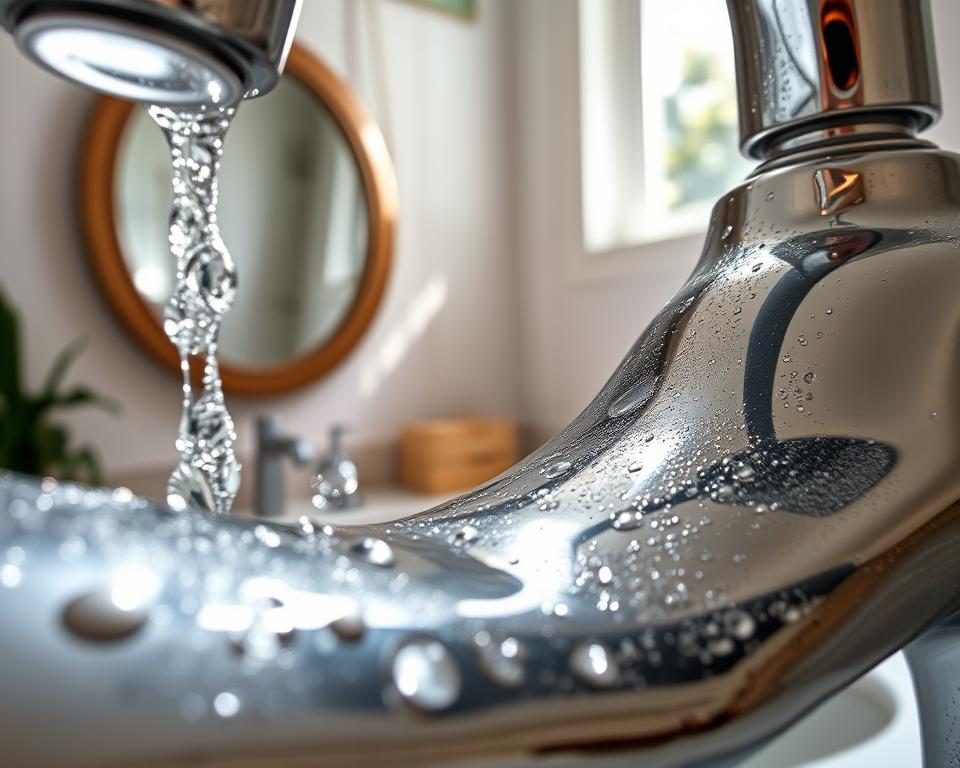
Hard water stains look white and chalky. They build up on things like taps, showerheads, and glass. You see them a lot where water hits surfaces often.
Over time, they can make chrome and glass lose their shine. This looks bad and can be annoying. Knowing what these stains look like helps you know where to clean.
How to Differentiate from Other Stains
Distinguishing hard water stains from others, like soap scum or mold, is important. They’re rough or chalky, unlike the greasy feel of soap scum. Mold or mildew stains are usually dark and fuzzy.
Knowing how to spot hard water stains lets you clean more effectively. This way, you can focus on these specific problems.
Tools You’ll Need for the Job
Gathering the right tools is key to fighting hard water stains. With the correct cleaning supplies, you can make the job easier and get better outcomes. Here’s a list of recommended tools and supplies to make cleaning simpler.
Cleaning Supplies
- White Distilled Vinegar: A natural acid that dissolves mineral deposits.
- Baking Soda: It gently scrubs surfaces without causing damage.
- Microfiber Cloths: Great for wiping down surfaces and grabbing dirt.
- Soft-Bristled Toothbrush: Helps clean tight spots and corners easily.
Protective Gear
Protecting yourself is important when cleaning with these supplies. Ensure your skin stays safe from chemical burns and irritation. Here are some protective items you’ll need:
- Rubber Gloves: They keep your hands safe from cleaners.
- Safety Goggles: Prevent splashes from reaching your eyes.
- Face Mask: Stops you from breathing in bad fumes.
Having the right tools and protective gear makes cleaning hard water stains more efficient and safe. Being prepared is crucial for shining surfaces and removing tough stains without hassle.
Natural Remedies for Hard Water Stains
Natural remedies for hard water stains are easy and green ways to make your bathroom shine again. You can use things you already have at home. These methods don’t need strong chemicals. Try vinegar, baking soda paste, or lemon juice to tackle those stubborn stains.
Vinegar Method
The vinegar method is great for getting rid of hard water stains. Just soak a cloth in white vinegar and wrap it around the stain. Let it sit for 15 to 30 minutes. Then, use a soft sponge to scrub. This method cleans well and makes your fixtures look new.
Baking Soda Paste
Baking soda is another way to fight hard water stains. Mix it with a little water to make a paste. Put the paste on the stain and wait about 10 minutes. Gently scrub it off. Baking soda’s gentle abrasion removes stains without harm.
Lemon Juice Solution
Lemon juice is a natural option that fights stains with its acidity. Just put lemon juice on the stains and let it sit for a while. Then, wash it off. This not only cleans but also leaves a fresh smell and shine.
These natural methods show how you can remove hard water stains safely. They clean effectively while protecting your home and the planet.
Using Commercial Cleaners
For a quick fix, commercial hard water stain removers can change the game. They’re made to fight tough mineral build-up on bathroom surfaces. Products like CLR and Zep are top choices for their power and quick action.
Recommended Products
Choose cleaners designed for hard water stains. Here are some top picks:
- CLR Multi-Purpose Cleaner
- Zep Bathroom cleaner
- Iron OUT Rust Stain Remover
How to Use Them Effectively
To get the best from these products, follow these tips:
- Read the manufacturer’s instructions carefully.
- Apply the cleaner directly to the stained area.
- Let it sit for the recommended time to work on stains.
- Rinse well with water to clean off any leftover cleaner.
By following these steps, you can achieve great results. Using the right products and methods makes fixing your fixtures easy.
Step-by-Step Guide to Removing Stains
To effectively remove hard water stains, follow a structured method. This guide will make removing hard water stains easier for you.
Preparation
First, gather all that you need including gloves, a sponge or cloth, a brush, and a cleaner. Choose a cleaner—natural like vinegar or a store-bought one. Always wear gloves to protect your hands.
Application Process
Put the cleaner on the stains. If it’s vinegar or lemon juice, wait for 10-15 minutes. For store cleaners, use as directed for the best outcome. Then, softly scrub with a cloth or toothbrush to remove the mineral build-up. This method works well against hard water stains.
Rinsing and Drying
After scrubbing, wash off the cleaner with water. This stops more stains from happening. Dry it off with a cloth to make it shine and stop new stains.
Tips for Preventing Future Stains
Keeping your bathroom free from hard water stains is key. It’s all about forming good cleaning habits. Such habits greatly lower the risk of stains coming back. We’ve got some tips to help your bathroom stay spotless.
Regular Maintenance
Stopping hard water stains starts with simple steps. Drying off fixtures right after using them helps a lot. Regular cleaning fights stains and keeps the area smelling fresh. Below are tips to keep things clean:
- Use a soft cloth or squeegee to remove water spots.
- Clean faucets, showerheads, and tiles with a mild detergent weekly.
- Inspect your fixtures regularly for build-up and handle it quickly.
Water Softener Options
Getting a water softener is a great way to stop stains for good. These devices treat your water by taking out the minerals that cause hardness. This makes your plumbing last longer and cleaning becomes easier. Here are some water softeners to think about:
| Type of Softener | How It Works | Benefits |
|---|---|---|
| Salt-Based | Uses ion exchange to remove hard minerals | Effective and reduces stains significantly |
| Salt-Free | Uses a conditioning process instead of salt | Environmentally friendly, low maintenance |
| Dual Tank | Two tanks for continuous softening | Provides an unlimited supply of softened water |
How to Clean Different Bathroom Fixtures
Cleaning bathroom fixtures requires specific steps to make each one shine. You need to use the right cleaning method for every fixture. This ensures they not only look clean but also last longer. Here you will find instructions for cleaning faucets, showerheads, tiles, and bathtubs.
Faucets and Sink
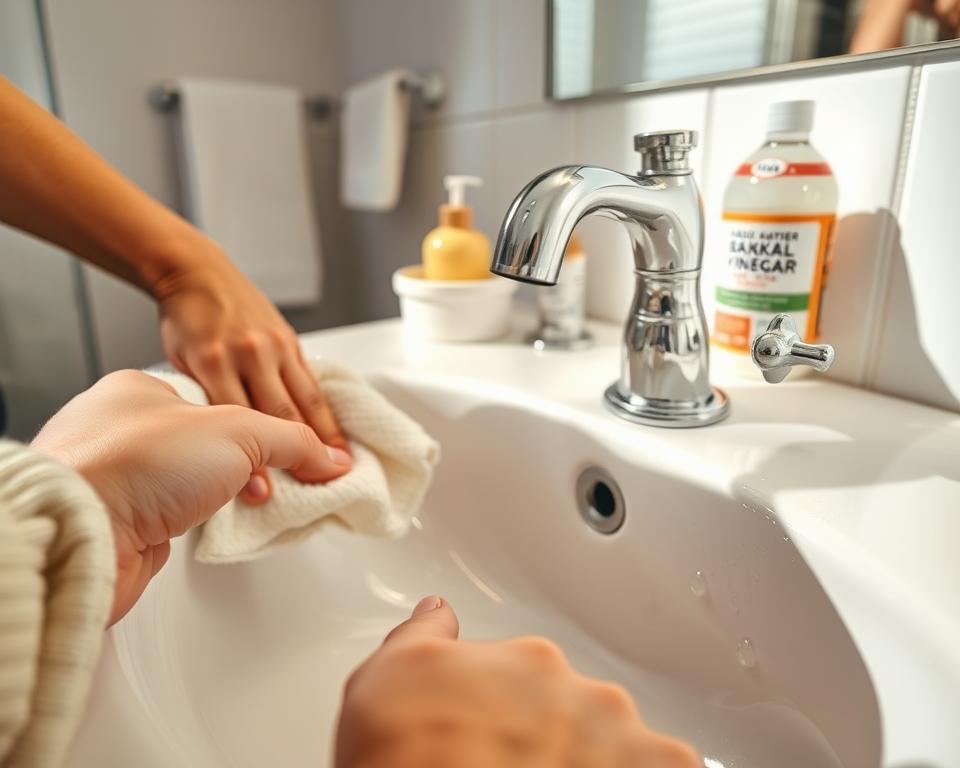
First, gather all your cleaning supplies. You can use vinegar or a gentle cleaner for faucets and sinks. Spray the cleaner and wait a few minutes. Use a soft cloth or sponge to scrub away hard water marks. This keeps your fixtures looking new and avoids damage.
Showerheads and Tiles
To clean showerheads and tiles, start with vinegar in a plastic bag. Tie it around the showerhead and leave it overnight. This helps remove buildup. Mix vinegar and baking soda for a powerful tile scrub. Spread it on the tiles and use a brush for scrubbing. Rinse well for a sparkling surface.
Bathtubs
Cleaning bathtubs demands extra effort. Choose a cleaner that matches your tub’s material, like acrylic, metal, or ceramic. Use baking soda and vinegar for tough stains. Always follow the cleaning product guidelines to prevent damage. Test a small area first if you’re uncertain about cleaning your bathtub.
Eco-Friendly Alternatives
Choosing eco-friendly cleaning options helps your health and decreases pollution. Many standard cleaners have harsh chemicals bad for us and Earth. Using greener methods means positive changes for your home and the world around you.
Reusable Cleaning Solutions
Homemade cleaners from simple ingredients are effective and reduce trash. Here are some you can try:
- Vinegar: A strong, natural disinfectant that tackles hard water stains.
- Baking Soda: It’s slightly abrasive, which makes it great for scrubbing.
- Lemon Juice: Acts as a natural bleach that kills germs and smells good.
Environmental Impact
Going for eco-friendly cleaning choices cuts down on your carbon footprint. Typical products often come in one-time-use plastics, adding to pollution. On the other hand, homemade cleaners reduce plastic waste and keep harmful substances out of our water. Changing to greener options helps protect our planet for future generations.
Troubleshooting Common Issues
Hard water stains can be quite a headache. These stubborn marks often resist our cleaning efforts. Knowing the right approach is crucial for tackling them effectively. Figuring out the best methods and products can make the job easier.
Stains That Won’t Budge
If you’re dealing with stubborn stains, first check how you’re trying to clean them. Sometimes, tougher commercial cleaners are needed. Or, a mix of vinegar and baking soda can form a strong cleaning paste. This paste, when applied well and left for some time, can work wonders.
Surface Damage Risks
When removing hard water stains, it’s important to be careful. Some cleaning tools might scratch or harm delicate surfaces. Think about what you’re cleaning. Picking milder cleaning ways is key to keep your fixtures safe and stain-free.
When to Call a Professional
Sometimes, knowing when to call a professional can really help keep your bathroom in good shape. DIY might work for some problems, yet certain serious signs indicate you need expert cleaning. If hard water stains won’t go away, or you spot strange colors on surfaces, it’s smart to get help. This avoids bigger problems later on.
Water damage you can see is especially worrying. It might cause mold or bigger structure issues if ignored. Not dealing with these signs can make things worse, leading to expensive fixes. Getting a pro to clean can save you time and protect your fixtures from damage.
How much it costs to get these services can really vary. It depends on how bad the staining or damage is. Though hiring pros might seem costly, think about the risks of damaging your pricy fixtures by trying to fix them yourself. If you’re not sure what to do, calling specialists is wise. They can look at the issue and suggest the best fix.