

ADVERTISEMENT
About 30% of Americans now garden indoors for fresh produce at home. This trend brings fresher meals and connects us with nature, even in small spaces. Want to know how to grow herbs inside? You’ll love this! Growing herbs indoors adds great taste and smell to your kitchen year-round.
We’ll show you the best herbs for indoor pots, what you need to start, and tips to keep your garden happy. By the end, you’ll know how to spice up your meals with herbs from your own kitchen!
Key Takeaways
- Growing herbs indoors offers fresh flavor at your fingertips.
- Indoor herb gardening is cost-effective and convenient.
- Choosing the right herbs can enhance your culinary experience.
- Essential supplies, such as containers and grow lights, are crucial for success.
- Maintaining the right environment is key to healthy herb growth.
The Benefits of Growing Herbs Indoors
Growing herbs indoors boosts your cooking game by adding freshness to your kitchen. You’ll notice a big change in your meals and how you cook. Here are some advantages of having an indoor herb garden.
Freshness at Your Fingertips
With an indoor garden, fresh herbs indoors are just a snip away. Homegrown herbs taste much better than those from the store. Just picture adding fresh basil or thyme directly into your cooking. This boosts flavors and makes your food more enjoyable.
Cost-Effective Gardening
Starting an indoor herb garden saves money. You can grow herbs for indoor growing cheaper than buying them. This way, you avoid wasting money on herbs that might go bad. With the right indoor herb garden tips, you’ll save even more.
Enhancing Your Cooking Experience
Having herbs at home lets you try new things in the kitchen. Whether it’s a simple dish or something fancy, fresh herbs indoors improve it. This adds special flavors, making every meal a joy to eat.
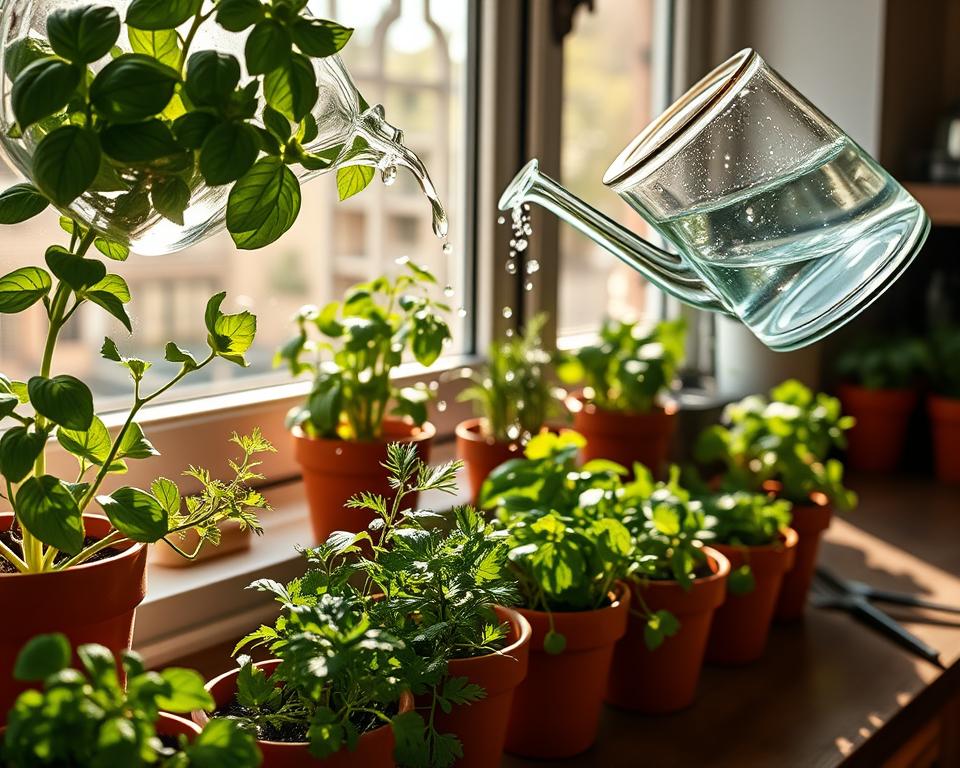
| Benefit | Details |
|---|---|
| Freshness | Immediate access to flavorful herbs, enhancing meal preparation. |
| Cost | Lower costs compared to purchasing herbs at stores. |
| Culinary Variety | Ability to experiment with different flavors in cooking. |
Choosing the Right Herbs for Indoors
Starting an indoor herb garden? Picking the right herbs is key to ensuring it thrives. The top herbs for indoors are those that grow well in small spaces and not a lot of light. They also make your cooking taste better. Favorites include basil, rosemary, and mint, each bringing its unique flavor and use to dishes.
Popular Indoor Herbs
Here are some top picks for your indoor garden:
- Basil – Great for a wide range of dishes, giving a fresh taste.
- Rosemary – Strong and perfect for flavoring meats and veggies.
- Mint – Good for teas, sweets, and cool drinks.
- Parsley – A basic herb that enhances many recipes.
- Cilantro – A must-have for salsas and international dishes.
Aromatic vs. Culinary Herbs
Know the difference between aromatic and culinary herbs for a better gardening experience. Aromatic herbs like lavender and sage fill your home with pleasant smells. Culinary herbs, such as thyme and oregano, are mostly used in cooking to add flavor to your food. Having both types can spice up your kitchen and garden space.
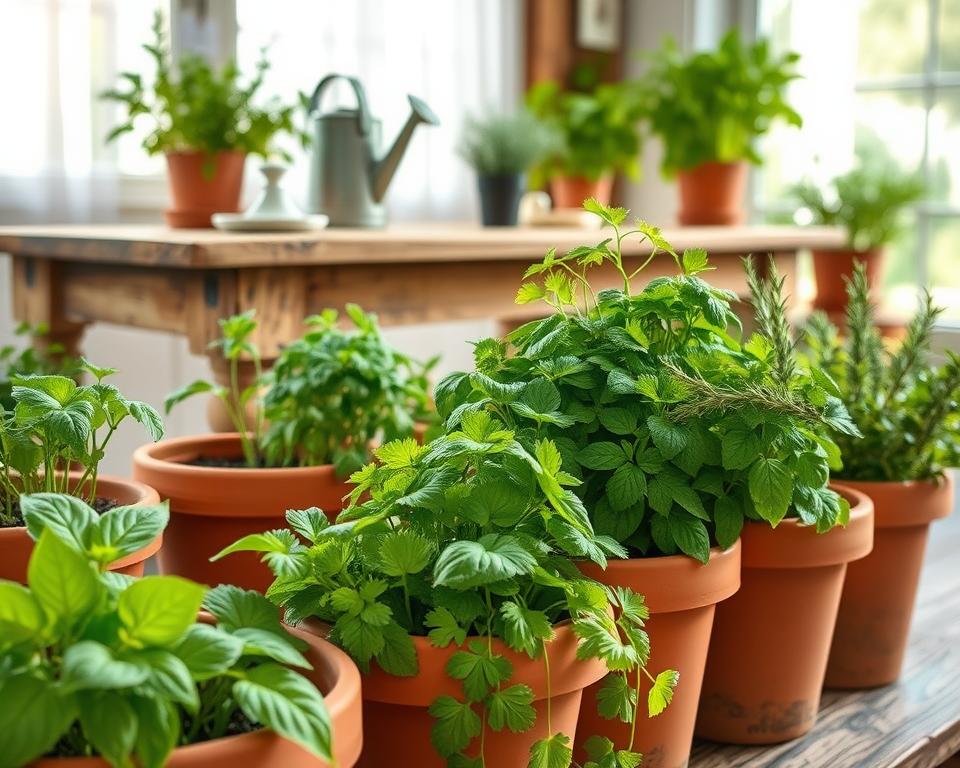
Choosing the right herbs, both popular and purposeful, lets you build a beautiful and useful herb garden. Enjoy your gardening journey!
Essential Supplies for Indoor Herb Gardening
To start growing fresh herbs at home, you need the right tools. These supplies make growing and caring for herbs indoors easier. Let’s look at what you need for healthy indoor herbs.
Containers and Pots
Choosing the right pots is key for indoor herbs. Go for clay or plastic pots that drain well. Make sure they have holes at the bottom to avoid overwatering. This can harm the roots. For different herbs, use pots of various sizes. Small herbs do well in 6-inch pots, while bigger ones like rosemary need 10-inch pots.
Soil and Fertilizers
The soil mix is crucial for your herbs’ health. Use a potting mix made for indoor plants. It gives your herbs the nutrients they need. If hydroponics interests you, try soilless mixes. They get nutrients from water. Use organic fertilizers, like fish emulsion, to keep your herbs growing strong.
Grow Lights and Natural Light Considerations
Light is important for your indoor herb garden. Although natural sunlight from windows helps, it might not be enough, especially in winter. Grow lights are a great solution. Choose energy-saving LED lights. They support healthy plant growth. Place them 6-12 inches above the plants for the best results.
Creating the Perfect Indoor Environment
To grow herbs indoors, you need to mimic their natural habitat. This means controlling temperature and humidity, plus giving them enough sunlight. Let’s talk about how to make the perfect environment for indoor herbs.
Ideal Temperature and Humidity
Herbs do best in temperatures between 65°F to 75°F. Keeping your herb garden in this range prevents stress. Humidity is key for herb health, so aim for 50% to 60%. To maintain this, you can use a humidifier or place water in pebble trays, especially when it’s dry.
Placement and Sunlight Requirements
Where you put your herbs affects their growth. They thrive near south-facing windows for maximum sunlight. They need direct sunlight for at least six hours a day. In winter, when days are shorter, you might need to use grow lights. This helps herbs that don’t get enough natural light.
Planting Your Herb Seeds or Seedlings
Starting an indoor herb garden means choosing between seeds or transplants. Each has benefits, but knowing how to plant correctly is key.
Starting from Seeds vs. Transplants
Many gardeners prefer transplants for an early win and better success rate. They’re easy to find at local nurseries and let you see results quickly. However, seeds are cheaper and let you grow more types of herbs. Choose based on each herb’s needs.
Planting Techniques
To do well with indoor herbs, focus on space and soil. Plant seeds at the right depth, often twice their size, in light, well-draining soil. For seedlings, move them carefully into bigger pots to give their roots space.
Help seeds grow by creating a mini greenhouse. Cover seed trays with plastic to keep moisture and heat in. Once they sprout, take the cover off to stop rot.
Watering and Maintenance Tips
Watering your indoor herbs right is key. You want to keep the soil just moist but not too wet. It’s important to watch your herbs closely and act quickly if you see any issues. This helps keep them healthy and strong.
Signs of Overwatering or Underwatering
Watch for trouble signs in your herbs often. Too much water can lead to:
- Wilting leaves despite wet soil
- Yellowing leaves that may drop off
- Mold or mildew on the soil surface
If your herbs aren’t getting enough water, you might see:
- Dry, crispy leaves that can curl or brown
- Soil pulling away from the edges of the pot
- Slow growth and drooping plants
Fertilizing Your Indoor Herbs
Feeding your herbs makes them grow strong and healthy. Organic fertilizers are best for adding nutrients. Remember, indoor herbs need food every four to six weeks when they’re growing. Pick a fertilizer that’s made for either all plants or just herbs. Doing this will make sure your herbs are healthy and tasty for your dishes.
Pruning and Harvesting Your Herbs
Looking after your indoor herbs by pruning and harvesting is key. These steps help plants grow well and taste better. Pruning right keeps plants bushy and stops them from flowering too soon, keeping them strong. Knowing when and how to pick your herbs adds zest to your cooking.
Best Practices for Pruning
For healthy indoor herbs, follow these pruning tips:
- Use clean, sharp scissors or shears to avoid harming the plants.
- Cut above a leaf node for fuller, bushier herbs.
- Keep pruning herbs like basil and mint to stop them from getting too tall and thin.
- Never cut more than a third of the plant at once to avoid shocking it.
How and When to Harvest
Knowing the right time and way to pick your herbs keeps them thriving. Here’s what to remember:
- Pick herbs in the morning when their flavor is best.
- Use scissors for harvesting to prevent hurting the plant.
- Continual picking of perennial herbs, like thyme, helps them grow.
- Picking annual herbs often makes them tastier and fuller.
Dealing with Pests and Diseases
Indoor herb gardens add freshness to your kitchen. Yet, they might face issues with pests and diseases. Watching out for pests is essential for taking care of herbs inside. Spotting these problems early and dealing with them quickly is crucial for garden success.
Common Indoor Pests to Watch For
Aphids and spider mites often trouble indoor herbs. You might see yellow leaves or webs under the leaves as signs. Keeping your garden clean can stop these pests from moving in.
Preventative Measures
For healthy indoor herbs, try these pest control tips:
- Maintain good air circulation around your plants to discourage moisture buildup, which attracts pests.
- Water your herbs right, too much water can attract pests and diseases.
- Check new plants for bugs before adding them to your indoor garden.
These steps are vital in keeping herb gardens disease-free. They help your indoor herbs stay healthy and beautiful.
Seasonal Considerations for Indoor Herbs
Taking care of indoor herbs means changing your methods with the seasons. Each season brings unique challenges and chances for your plants. You’ll need to adjust light, water, and food to keep them growing strong. Changing how you care for them is key to success.
Adapting Your Care Throughout the Year
Watch how temperature and light change through the year. In spring and summer, there’s more light for growth. This means more water and maybe some fertilizer every few weeks. But when fall and winter come, plants grow slower. So, you should water them less to avoid root rot. This is because they don’t need as much water then.
Indoor Herb Care in Winter
Winter is tough for indoor herbs due to less sunlight and dry air. Try to keep your herbs by a south-facing window to catch more light. If you can’t get enough sunlight, grow lights are a great fix. Also, keeping the air moist helps. You can use a humidifier or put water trays by your plants. These tips will help your herbs do well, even when it’s cold.
Creative Uses for Your Fresh Herbs
Fresh herbs add flavor to your meals and can be healthy for you. You can jazz up a recipe or create a natural cure with herbs from your indoor garden. Adding herbs like basil, cilantro, and parsley to foods improves taste and gives you important nutrients for staying healthy.
Culinary Uses
Picture blending fresh mint into your smoothies or using rosemary to make infused cooking oils. These herbs turn simple dishes into something special. Try making herb-infused butters or dressings for a flavor boost. Playing with different herbs in the kitchen is a fun way to discover new tastes daily. Why not try a herb salad or use a fresh herb marinade on your grilled dishes? The ideas are limitless!
DIY Herbal Remedies and Infusions
Herbs do more than taste good; they can also improve your health. You can use many herbs to create soothing teas, tinctures, and essential oils at home. Chamomile can relax you, and ginger is great for your stomach. Try making drinks with rosemary or thyme for a healthful spin. Your indoor herb garden offers both great tastes and health perks!