

ADVERTISEMENT
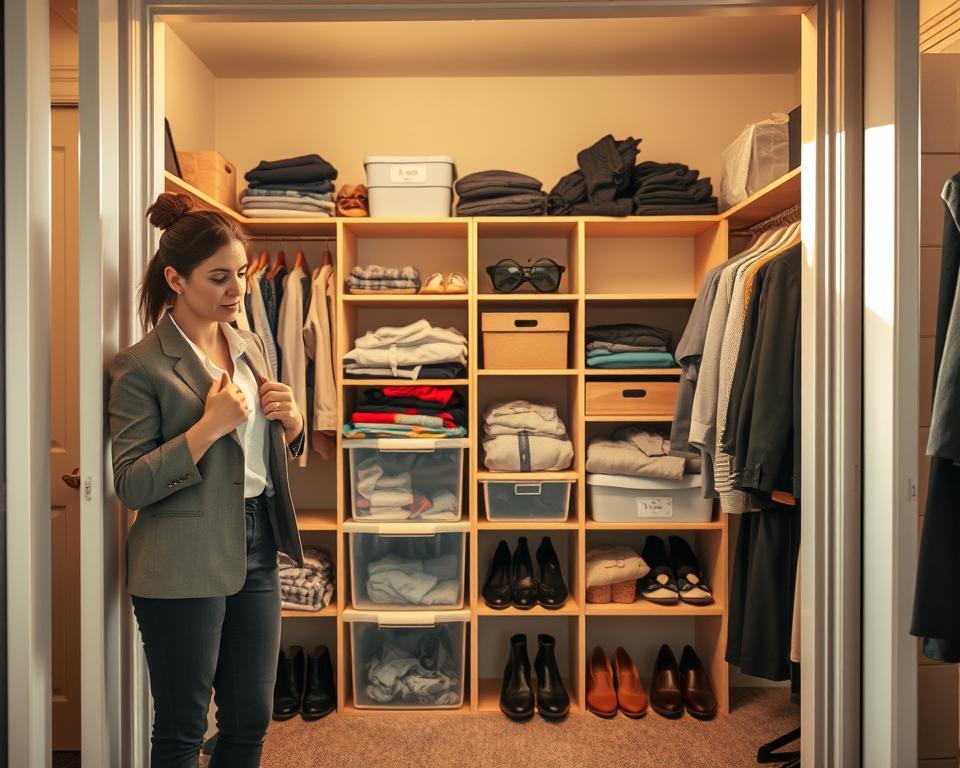
Did you know the average person only wears about 20% of their wardrobe most of the time? This fact shows how much stuff we don’t need fills our closets. If you’re feeling overwhelmed by your stuff and don’t know how to start cleaning out your closet, you’re in good company. This guide will show you how to clear out your closet without regretting or making a mess.
It provides tips for organizing your closet and tricks for decluttering. You will learn how to make your storage spaces tidy and functional. This change will help bring peace and balance to your home.
Key Takeaways
- Understanding the emotional benefits of a clutter-free closet.
- Setting clear goals for what to keep and let go.
- Choosing the right time for your decluttering session.
- Essential tools and storage solutions to streamline the process.
- Step-by-step methods to effectively sort and organize your items.
- Long-term maintenance tips to ensure your closet stays clutter-free.
Understanding the Importance of Decluttering
A neat and organized closet is more than just good looks. It offers many life benefits, making decluttering key. A tidy closet can make your day start smoother, make choosing what to wear easier, and helps keep things calm at home.
Benefits of a Clutter-Free Closet
Having a clutter-free closet means you can find things faster. This is super helpful when you’re in a hurry in the morning. Plus, with everything in its place, you end up keeping only what you really cherish. This makes you think more about what you buy, helping you shop less.
Mental Health Benefits of Decluttering
Clearing out clutter isn’t just good for your home; it’s great for your mind too. Studies have found that clutter can make you feel stressed and anxious. By using a decluttering checklist, you break down the task into small, easy steps. This gives you control and leads to happiness and peace, making it easier to relax at the end of the day.
Setting Your Goals for Closet Decluttering
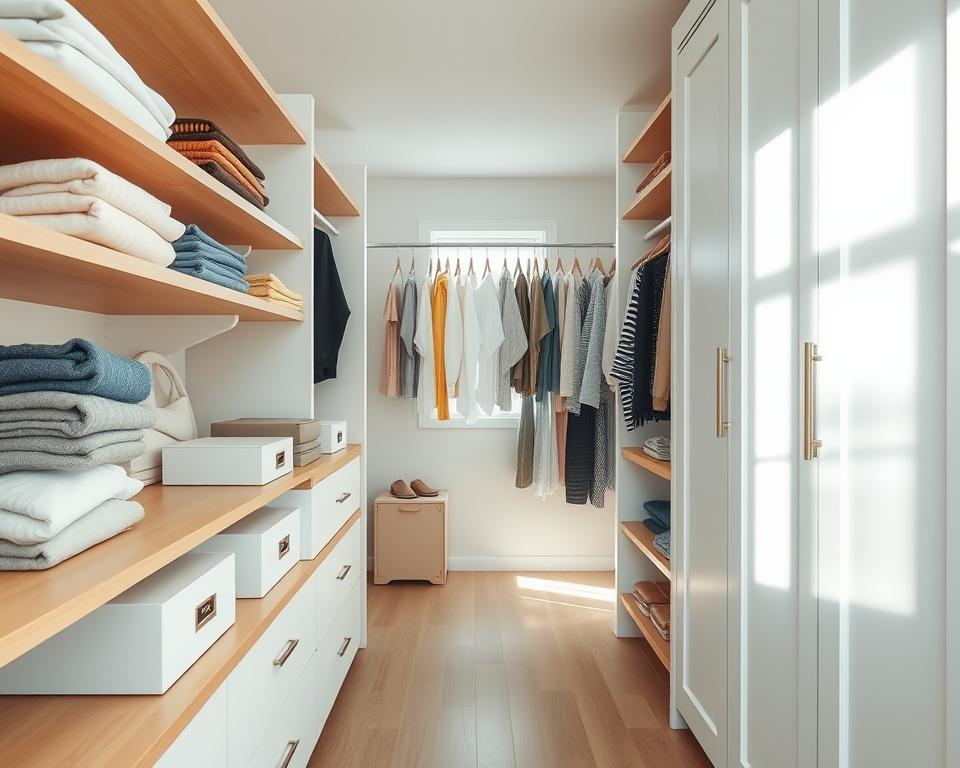
Before you start cleaning out your closet, it’s key to know your goals. Knowing what to keep and what to ditch can really change how well you declutter. Start by looking at your clothes and deciding what really matters to you.
This focus will help create a clear plan for decluttering.
What to Keep and What to Let Go
Setting rules for what stays or goes makes choosing easier. You could try the backward hanger trick for clothes you haven’t worn lately. After some time, it’s easier to see what you actually wear. Think about clothes that are worn often and mean a lot to you.
Choose clothes that are useful and make you happy.
Defining Your Decluttering Vision
Think about how you want your closet to look and feel. Imagine a tidy space with only things you love and use often. This vision will help keep your decluttering efforts on track.
Write down what you envision and look at it when you need to make tough choices.

Choosing the Right Time to Declutter
Looking for the perfect time to declutter is key for a good outcome. It’s vital to choose when you’re full of energy and focus. Weekends or days off are usually the best times.
You can set aside a block of time for an in-depth, unhurried clean-up. This way, you get more done and don’t feel swamped by the task.
When Is the Best Time to Start?
Figuring out the best time to tidy up your closet matters a lot. Think about when you have the most energy, with few distractions, and are really motivated. Early in the morning or in the mid-afternoon on weekends are often best.
Make sure no one will interrupt you. This helps you focus fully and make good choices about what to keep or throw away.
Planning Your Decluttering Day
Good planning is key for a smooth decluttering day. Start by planning time for each task like sorting, cleaning, and organizing. Breaking it down into steps helps reduce stress and clear up what needs to be done.
Make a timeline for better planning your day. Set specific goals for each time block to keep on track.
Gathering Your Supplies for Decluttering
To get organized, you need some basic tools. Having the right supplies makes decluttering less scary and more fun. It’s important to think about what you need. This way, you get the right tools and storage that fit your life and keep clutter away.
Essential Tools for Effective Decluttering
Before you start, make sure to have these items:
- Garbage bags for donations and trash
- Boxes for sorting seasonal items and keepsakes
- Labeling materials to keep everything organized
- Measuring tape for planning storage layout
- Cleaning supplies to freshen up the space
Storage Solutions to Consider
With your tools set, look at storage solutions to improve your closet:
| Storage Solution | Benefits |
|---|---|
| Clear storage bins | Allow visibility of contents while protecting items from dirt and damage |
| Shelving units | Maximize vertical space and keep items off the floor |
| Drawer organizers | Keep smaller items tidy and easy to find |
| Over-the-door racks | Create extra storage without taking up floor space |
Choosing the right tools and storage solutions makes your closet better and more organized. Picking options that meet your needs helps create a space that fits your lifestyle. It also makes using your closet easier.
The Step-by-Step Decluttering Process
When you start decluttering, having a step-by-step process helps a lot. Begin by emptying your closet fully. It gives you a fresh start and lets you see everything you have. This makes the next steps easier.
Emptying Your Closet Completely
Removing everything from your closet shows how much stuff you have. This can be eye-opening. It’s a crucial first step to figure out what you really like and use. It’s a chance to think about your style and what you need.
Sorting Items into Categories
Then, sort your items into different categories. Make piles for keeping, donating, or recycling. This makes it easier to decide what to do. You’ll see things you don’t use or have too many of. This sorting makes decluttering your closet less overwhelming and moves you towards having a tidy, organized space.
| Category | Action | Details |
|---|---|---|
| Keep | Return to Closet | Items that serve a purpose or bring joy. |
| Donate | Give Away | Items in good condition but no longer needed. |
| Recycle | Dispose | Worn or damaged items that can’t be reused. |
How to Decide What to Keep
Choosing what to keep or toss from your closet can be tough. But, there are some methods that make it easier. One popular method is the 30-day rule, which clarifies what’s really necessary in your wardrobe.
The 30-Day Rule Explained
The 30-day rule means if you haven’t used something in a month, it might be time to say goodbye. This approach helps you see what you don’t really need. You’ll stop holding onto things just because you feel you should. Using this rule can lead to a wardrobe that really works for you.
Sentimental Items: What to Do with Them
Deciding on sentimental items is hard. Think about the memories they hold and if they’re worth the space they take. Ask yourself, “Would I buy this again?” This helps you tell apart real treasures from things you’re just hanging onto. Getting rid of stuff that’s not needed can make your clothing collection better and less cluttered.
Organizing Your Closet Successfully
Start by organizing after you’ve decluttered. It’s key to use the space well and have a useful layout. This makes your closet work better. You can find good ways to organize, no matter if your closet is big or small. Using these smart tips can really change your storage space.
Tips for Efficient Closet Organization
- Group similar items together. Keeping like with like simplifies finding what you need.
- Use color-coded bins or hangers for a visually appealing and organized look.
- Invest in adjustable shelving units that cater to various item sizes.
- Add hooks or pegboards on the inside of doors for easy-access accessories.
How to Create a Functional Layout
Creating a functional layout makes your closet serve you better. Keep items you use a lot at eye level. Store seasonal clothes or less used items on high shelves. Use drawer organizers for small things like jewelry or socks. Here’s a guide to help you plan a great closet:
| Item | Optimal Storage Location | Frequency of Use |
|---|---|---|
| Everyday Clothing | Eye Level Rod | Daily |
| Seasonal Clothes | Upper Shelves | Seasonal |
| Shoes | Lower Shelves | As Needed |
| Accessories | Inner Door Hooks | Occasional |
A systematic approach makes your space welcoming and free from clutter. Having a clear plan for organization helps. This way, it’s easy to put things back where they belong, keeping your closet neat.
Maintaining Your Clutter-Free Closet
Keeping your closet neat takes continuous effort. You must find a routine that suits your life to keep it clutter-free. Doing regular upkeep keeps your space calm and your efforts lasting.
Establishing a Regular Maintenance Routine
It’s vital to have a maintenance routine for lasting order. Spending a few minutes each week to organize helps a lot. Set aside time each month to go through your items. This keeps your closet in check and promotes good habits.
Tips for Preventing Future Clutter
Avoiding new clutter is key. Using the one-in-one-out rule works well. Whenever you add a new item, remove an old one. This stops clutter from growing. Also, check your clothes each season to make sure they fit your style and needs.
Creative Storage Solutions
Turning your closet into a well-organized spot is key, especially in tight spaces. Creative storage ideas can help use all your available space. By using your closet’s vertical space well, you get to use every inch.
Utilizing Vertical Space Effectively
Using vertical space smartly can change how you organize. Think about adding shelves or pegboards. Use over-the-door hooks for keeping things off the ground and easy to see. Wall organizers keep shoes and accessories organized and visible.
Innovative Furniture Hacks
There are cool ways to store things beyond usual methods. Think about storage benches or ottomans for extra seating and storage. This approach makes your space tidy and functional. Adding these smart storage solutions keeps your place neat.
Celebrating Your Achievements
After you finish decluttering, take a moment to look back on your journey. It’s important to see how much you have achieved and how much better your space looks. This can really help keep you motivated.
Celebrating what you’ve done not only shows you the value of your hard work. It also makes your space work better and clears your mind.
Reflecting on Your Decluttering Journey
Think about the challenges you faced and how great it feels to have a clean space. This time of reflection is not only about the tidy space you’ve created. It’s also about how you’ve grown by moving past emotional attachments and letting go of things you don’t need. That’s a big win.
Sharing Your Success with Others
Telling others about your decluttering success can boost your achievements. You can share pictures online or talk about it with friends. Showing off your clutter-free space can encourage others to start cleaning up their own spaces.
When you celebrate with friends, it builds a helpful community. It keeps you on track and inspires others to organize their homes, too.