


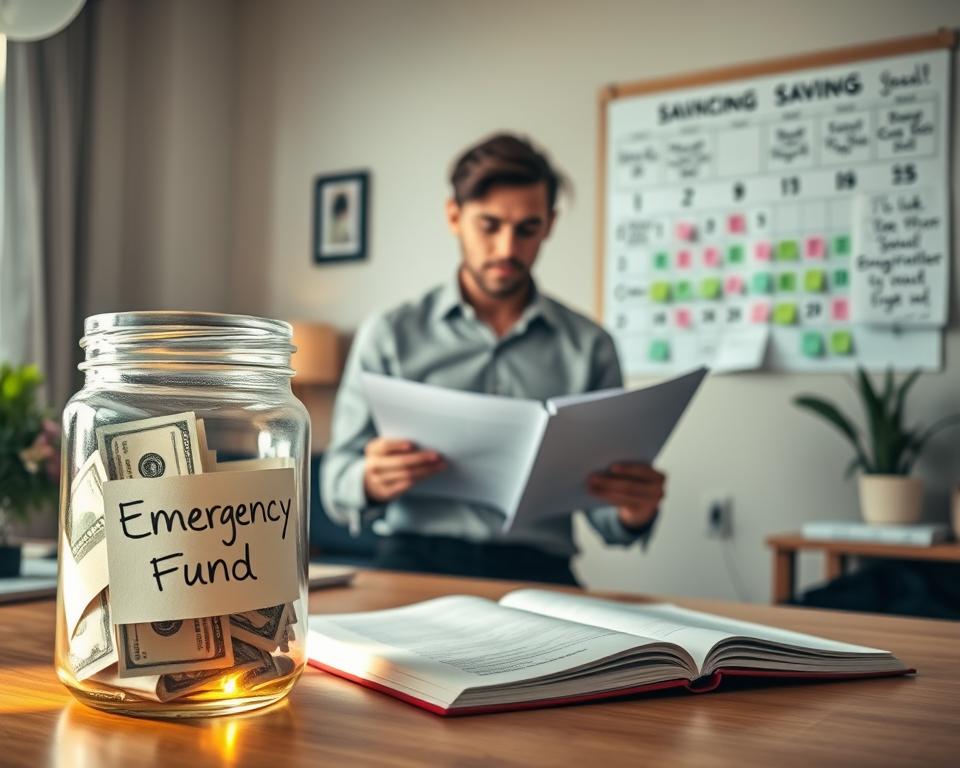
Did you know that almost 60% of Americans can’t handle an unexpected $1,000 bill? This fact shows why having an emergency fund is so crucial, especially when money matters are uncertain. An emergency fund is like a financial safety net. It keeps you stable when surprise costs come up, like losing your job suddenly or needing urgent home repairs.
By saving money on purpose, you avoid getting into high-interest debt. You also make your overall financial situation stronger and more secure. This means you can face life’s surprises with confidence.
Key Takeaways
- An emergency fund serves as a vital safety net for unexpected expenses.
- Nearly 60% of Americans cannot easily cover a $1,000 emergency.
- Having an emergency fund reduces the need for high-interest debt.
- A savings strategy enhances overall financial security and well-being.
- Creating an emergency fund promotes greater monthly stability.
Understanding the Importance of an Emergency Fund
An emergency fund is key for smart money management. It’s vital to know this is different from regular savings. Understanding what an emergency fund is can lead to better financial health. This fund helps deal with sudden costs without using other savings or getting into debt.
What is an Emergency Fund?
An emergency fund is money set aside for the unexpected. It can cover anything from car repairs, medical bills, to losing your job. The aim is to have funds ready for emergencies. It’s vital for keeping your finances stable during hard times.
Why Do You Need One?
Emergency funds are super important. They let you handle surprises without financial ruin. Without it, small problems can become big, leading some to use credit and gain debt. Studies show that people with an emergency fund bounce back faster from financial troubles. This shows how important it is to plan ahead.
Common Misconceptions
There are many wrong ideas about emergency funds. Some think they don’t need one because they believe life is predictable. Others feel small savings aren’t enough. But in reality, every saved dollar makes you more financially secure. Understanding these truths can help people see the real value of an emergency fund in reaching their financial goals.
| Myth | Reality |
|---|---|
| Life is predictable; I don’t need an emergency fund. | Unexpected expenses can happen at any time. |
| Small savings don’t matter. | Every bit of savings contributes to overall financial security. |
| Emergency funds are only for major life events. | They can help with everyday unexpected expenses. |
Assessing Your Financial Situation
Starting with a solid financial assessment is key to building an emergency fund. Look at your income and what you spend. This helps make smart money choices. Let’s simplify this process.
Calculating Your Monthly Expenses
First, figure out your monthly costs. List all must-pay bills like rent, utility bills, food, and travel costs. Make a thorough list of every expense. Knowing what you spend helps you decide how much to save for an emergency.
Understanding Your Income Streams
Then, examine how you make money. Include your main job, any extra jobs, or other ways you get money. Understanding how steady or changeable your income is can set realistic saving targets. For example, if your earnings vary, it’s good to adjust your savings plan.
Identifying Potential Risks
Finally, think about potential money risks. Look at job stability or unexpected medical bills. Have past emergencies forced you to spend suddenly? Thinking about past challenges can guide you in figuring out how big your emergency fund should be.

Setting a Savings Goal
It’s vital to have a savings goal for a good emergency plan. Knowing how much to save and what to think about can guide you. A clear target prepares you for surprises in your finances.
How Much Should You Have?
Experts recommend saving three to six months’ worth of expenses. This helps during a job loss or unexpected bills. Think about your needs to figure out the right amount for your goal.
Factors to Consider for Your Target
Your emergency fund goal depends on many things. Consider your family size, monthly costs, and job security. Other factors, like having kids or debt, play a role too. These help shape a solid emergency plan.
Establishing a Timeline
Making a realistic timeline can keep you motivated. Start with small, easy contributions. Increase them as your finances get better. This way, you make steady progress towards your goal.
Choosing the Right Savings Account
When looking for a savings account for your emergency money, it’s key to know the different types. The best account keeps your money safe and lets you get to it when needed. By understanding the good and bad sides of each, you can choose what works for your money goals.
Types of Accounts to Consider
Think about these common savings accounts for your emergency cash:
- High-Interest Savings Account
- Money Market Account
- Regular Savings Account
Pros and Cons of Each Type
Every type of account has its own benefits and downsides. High-interest accounts offer good rates to increase your savings over time. Money market accounts might let you write checks for easy access to cash. But, regular savings accounts usually give lower interest, which means less growth for your money.
Accessibility and Interest Rates
Being able to reach your funds fast is vital for an emergency fund. When picking an account, look at how easily you can take out money without facing penalties. The rates for saving money can change, which affects how much your savings can grow. Find a balance to easily access your cash and still earn interest, to make the most of your emergency savings.
Creating a Budget to Fund Your Emergency Savings
A solid budget is key to building a strong emergency fund. First, analyze your current budget to find areas to save. Looking at fixed and flexible spending can show you how to cut back.
Analyzing Your Current Budget
Understand your finances to start. Knowing where your money goes is important for adjusting your budget. This helps you meet your financial goals.
Strategies for Cutting Expenses
Cutting costs can help you save more. For instance, cooking at home saves a lot compared to eating out. Also, quit paying for things you don’t use. Every saved dollar helps grow your emergency funds.
Allocating Funds to Your Emergency Fund
After finding savings, plan to put money into your emergency fund. Decide an amount to save regularly. Setting up an automatic transfer helps your fund grow effortlessly.
Automating Your Savings Plan
Making your savings strategy easy can really help you reach your financial dreams. By setting up an automatic savings plan, you can save money without thinking about it. Knowing how automation helps can show you how it improves your journey to save.
Benefits of Automatic Transfers
Automation’s big advantage is making saving easy and regular. With automatic moves to your emergency fund, you won’t be tempted to spend that cash. This way, you build a strong saving habit, which helps keep your finances secure.
Setting Up Your Automation
Starting your automated savings is simple. Banks let you set up automatic moves from checking to savings. Just pick how much and how often, like every week or month, to match your budget. This helps keep you on track with saving money.
Monitoring Your Progress
It’s key to check on your savings to stay on the right path. Seeing how much you’ve saved can motivate you and show if you need to adjust. Setting goals for your savings growth can prove your commitment and the success of automating savings.
| Automation Method | Example Amount | Frequency | Benefits |
|---|---|---|---|
| Direct Transfer | $100 | Monthly | Consistent savings without manual effort |
| Percentage of Paycheck | 15% | Every Pay Period | Adapts with income changes |
| Round-Up Savings | Varies | Daily | Small, effortless contributions |
Making the Most of Windfalls
Getting unexpected money is like a financial gift. This could be from tax refunds, work bonuses, or inheritances. Knowing what a windfall is helps you use it to better your financial situation. It’s all about smart money management.
What Qualifies as a Windfall?
A windfall is any surprise bump in your income. It might come from a lottery win, unexpected gifts, or a big raise. These boosts can help you cover costs or save for the future. Knowing what a windfall is can help you plan your finances better.
Strategies for Using Extra Funds Wisely
Getting extra money means you need a smart plan. Think about putting some of it into emergency savings. This helps build a safety net and reach savings goals quicker. You can also pay off debt or invest for the future.
Balancing Immediate Needs vs. Savings
Extra money can be tempting to spend right away. But it’s important to find a balance. Decide on a part of the windfall for current needs. Put some money into savings but let yourself enjoy a bit, too. This helps you meet goals while still having fun.
Adjusting Your Strategy Over Time
Handling an emergency fund needs you to be flexible and aware of your situation. It’s key to regularly check your savings strategy to stay financially secure. As your life changes, it’s important to adapt to keep your safety net strong.
When to Reassess Your Emergency Fund
Look at your emergency fund yearly or when big changes happen in your life. Events like getting a new job, buying a house, or having a baby can change your finances. Adjusting your fund to match these changes helps keep you protected against surprises in spending.
Adapting to Life Changes
Changes in life often lead to changes in how we handle money. When things in your life shift, it’s key to tweak your emergency fund goals. You might need to save more to cover new responsibilities, ensuring you’re ready for what comes next.
Staying Committed to Your Goals
When money gets tight, sticking to your savings goals can be hard. Stay focused and keep working towards your emergency fund goals. This dedication shows how important your safety net is and helps you stay strong through uncertain financial times.
Tips for Staying Motivated
Saving money can seem tough. But, simple steps can help keep you motivated as you save. Celebrating small financial milestones is one key approach. It boosts your saving habits and lifts your mood. By celebrating each achievement, no matter the size, the process becomes fun.
Another tip is to visualize your savings goals. Make a chart or use an app to track your progress. These visual tools keep you focused. They show how far you’ve come, making it easier to keep going.
Getting friends or family to help can also boost your motivation. Talking about your goals with others builds a support network. Checking in with them helps you stay on track. Plus, celebrating your successes together makes saving a shared adventure.