


Did you know nearly 30% of our trash could be composted? Every year, millions of tons of organic waste get thrown out. By starting a compost bin, you can lessen this waste and improve your garden soil. This guide will show you how to compost in your backyard. You’ll learn how to keep your bin odor-free, a common worry for beginners. Whether you want to beautify your landscape or help the planet, this guide makes it easy to turn kitchen and yard waste into rich compost without a bad smell.
Key Takeaways
- Composting can significantly reduce landfill waste.
- Proper balance of greens and browns is crucial for an odor-free compost bin.
- Location and maintenance are key factors in successful composting.
- Understanding common misconceptions helps encourage new composters.
- Simple techniques can keep pests and odors at bay.
Understanding Composting Basics
Starting with composting might seem complex, but it is actually simple with lots of benefits. The key is understanding what composting is about. Knowing its benefits can encourage you to begin composting. It also helps clear any doubts you might have.
What is Composting?
Composting is a natural way to turn organic materials into nutrients for the soil. It uses microorganisms, like bacteria and fungi, to break down waste. This is important for recycling things like food scraps and turning them into healthy compost for the earth.
Benefits of Composting
Having a compost bin helps reduce waste and improves the soil. Composting benefits include:
- Improved soil structure
- Better nutrition for plants
- More moisture in the soil
These benefits make plants healthier and your garden better. Composting is good for the environment and useful for your garden.
Common Misconceptions
Some people think composting smells bad or is hard to do. But actually, these issues are easily solved. Keeping moisture right and stacking materials properly can prevent bad smells. Composting is something anyone can do if they learn the basics and see its value.
Choosing the Right Compost Bin
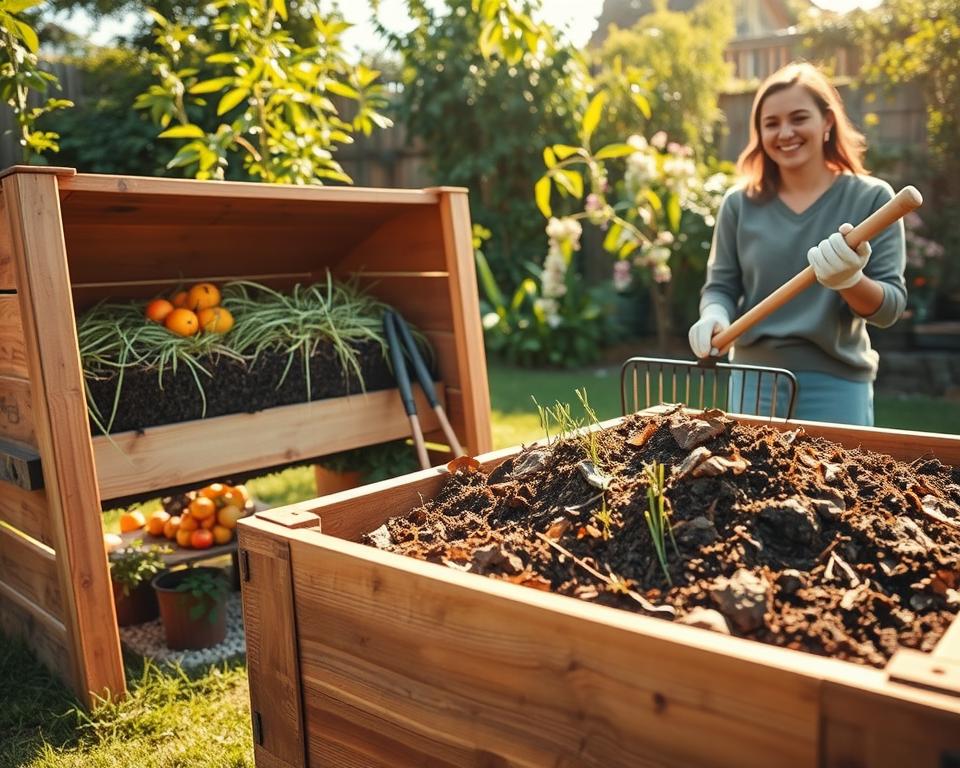
Finding the perfect compost bin is key to great composting. With so many choices, it’s important to pick one that fits your needs. Think about size, material, and how easy it is to maintain. Deciding between making your own or buying one can also affect your composting.
Types of Compost Bins
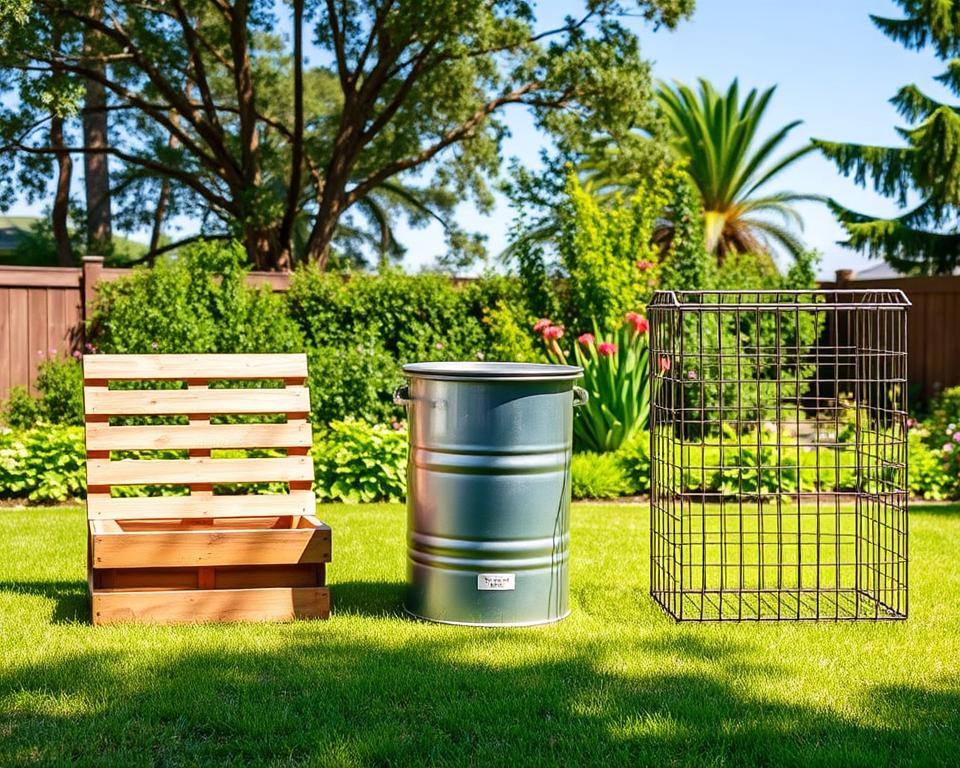
There are different types of compost bins based on how they work. You can choose from:
- Tumblers: Easy to turn, they help break down compost fast.
- Bin Systems: Simple and budget-friendly, great for small spaces.
- Worm Composters: Use worms to decompose waste, perfect if you have little outdoor space.
Factors to Consider
Think about these things when picking a compost bin:
- Size: Pick a bin that fits the amount of waste you have.
- Material: There’s plastic, wood, and more. Each has pros and cons.
- Accessibility: Choose a bin that’s easy to use and check on. For indoor bins, a secure lid is a must to keep smells in check.
DIY vs. Store-Bought Bins
Building your own compost bin can be fun and save money. You can use wooden pallets or old plastic bins. Buying a compost bin might give you extra features like better air flow and moisture control. This can be great for beginners wanting ease. Compare the benefits to find what’s best for your composting needs.
Finding the Perfect Location
Picking the best place for your compost bin is key to good composting. Tips on where to put it can help it break down better and make it easier to take care of. Think about these things to find the best spot for your bin.
Sunlight and Shade Considerations
Compost bins need sunlight to help warm up and break down faster. But, too much sun can dry it out. A place with some shade works best. It lets the tiny organisms do their job without getting too hot.
Accessibility for Maintenance
Choosing a spot that’s easy to get to makes taking care of your bin easier. Being able to add scraps and mix it quickly keeps smells down and air flowing. Checking on it often helps keep your compost healthy.
Proximity to Kitchen and Garden
Putting your bin near the kitchen makes it simple to throw away scraps. Also, having it close to the garden means easy access to the compost for your plants. This setup makes composting smoother and helps your garden grow better.
Materials to Add: Greens and Browns
Starting a compost heap requires knowing what to include for rich compost. Mixing two main material types: greens and browns is crucial. Understanding these categories improves your composting success.
What Are Greens and Browns?
Greens and browns are key to composting. Greens, which are rich in nitrogen, include fruit scraps, coffee grounds, and grass. Browns are carbon-filled materials like dry leaves and paper. Balancing these materials is crucial for top-notch compost.
Ideal Kitchen Scraps
Your kitchen is full of composting gold. Good scraps include:
- Fruit and vegetable peels
- Eggshells
- Coffee grounds
Avoid meat, dairy, oils, and sauces to prevent bad smells and pests.
Yard Waste Contributions
Adding yard waste makes your compost better. Great yard additions include:
- Grass clippings
- Dry leaves
- Plant trimmings
Keeping a balance of greens and browns manages moisture, cuts down smells, and helps air flow. This makes for healthy composting.
| Type | Examples | Benefits |
|---|---|---|
| Greens | Fruit scraps, Vegetable scraps, Coffee grounds | Boosts nitrogen levels, Increases decomposition speed |
| Browns | Dry leaves, Straw, Shredded paper | Provides carbon, Helps with aeration, Prevents odors |
Maintaining Your Compost Bin
To keep your compost bin thriving, some key practices are needed. These ensure kitchen scraps and yard waste turn into rich soil. Regularly turning the compost and controlling its moisture are vital.
Turning Your Compost
Turning your compost helps it get air, which speeds up breaking down. It lets oxygen help the microbes work better. Try to mix it every two weeks to break down materials evenly. If parts aren’t breaking down, mix those areas more next time.
Monitoring Moisture Levels
Managing moisture right is key for a healthy compost. The compost should feel like a damp sponge, not too wet or dry. Add dry leaves or cardboard if too wet. Add water or green scraps if too dry to find a balance.
Signs of a Healthy Compost Bin
A good compost bin shows signs of being healthy. It should be warm, indicating microbes are active. It will smell like earth, showing it’s breaking down well. The compost must stay moist but not too wet for best results.
Avoiding Odors and Pests
Getting composting right means focusing on small details. This includes how you manage odor control in compost and pest management in compost. Being proactive makes composting better. Knowing what causes smells is key to starting right.
Common Causes of Odors
Too much moisture is often why compost bins smell bad. Adding items like meat, dairy, and oily foods makes it worse. These foods don’t break down well and lead to bad smells, making composting less appealing.
Keeping Pests at Bay
Simple steps can keep pests from bothering your compost pile. Always put a layer of “browns” over food scraps to keep flies and mice away. It’s crucial to use a sealed bin and avoid putting in meat or dairy, which draw in pests.
Tips for Odor Control
To control smells in your compost, add brown materials atop food waste each time you add to it. Cleaning out your bin often and washing it after use helps fight against odors. Freezing your scraps before throwing them away can also lessen smells. This makes composting more enjoyable.
Troubleshooting Common Issues
Keeping a compost bin working well can sometimes lead to problems. It’s key to find and fix these issues for a healthy compost. Understanding how to troubleshoot compost helps fix balance problems quickly and effectively.
Too Wet or Too Dry?
An overly wet compost bin can smell bad and attract pests. If it’s too dry, it breaks down very slowly and might get too hard. It’s important to keep the moisture just right for the best composting.
Signs of Imbalance
It’s crucial to notice when your compost isn’t right. You may see:
- Foul odors: These mean there’s too much moisture and not enough air.
- Lack of decomposition: This happens when there’s not enough water or too many dry materials.
Knowing these signs helps you make the right changes to your compost. This can improve its breakdown and reduce bad smells.
How to Fix It
If your compost is off balance, try these tips depending on the issue:
| Condition | Solution |
|---|---|
| Too Wet | Mix in more dry materials, like dead leaves or straw, to soak up extra moisture. |
| Too Dry | Slowly add water or more green materials, like vegetable peels, to help it break down. |
Keeping an eye on your compost and adjusting as needed keeps it healthy. This means better decomposition.
Harvesting Your Compost
Knowing the right time to harvest compost is key for a great garden. It’s important to pick your compost at its peak for the best impact. When it’s ready, understanding how to use it can make your garden thrive. Also, storing compost right keeps it good for later.
When to Harvest
Compost is ready after a few months when it’s dark, crumbles easily, and smells like earth. It should look consistent without big chunks of uncomposted material. Full composting is seen when there’s much less of the starting materials and it looks fine and rich for your soil.
How to Use Finished Compost
Finished compost is very useful in gardens. It’s a top-notch soil improver, mixing well into beds or as a top dressing for plants. Compost makes the soil fertile, retains water better, and helps plants grow strong without chemical fertilizers.
Storage Tips for Compost
Keep your compost dry and in a place with good air flow. Use containers like burlap or cardboard to keep it dry and prevent too much moisture. When you store compost right, it’s ready for your garden anytime, helping your composting work all season.
Composting in Small Spaces
Composting is great for people living in tight spaces who want to reduce waste. Even if you live in a small apartment or tiny house, you can compost. This activity is both eco-friendly and practical.
Indoor Composting Solutions
Indoor composting is a good choice for those with little room. Countertop bins with tight lids keep smells in check and hold kitchen waste. Vermicomposting uses worms to break down scraps, saving space and producing rich compost. These methods are perfect for small, indoor spaces.
Bokashi Composting Method
Bokashi composting is another method that works well indoors. It uses fermentation to break down meats, dairy, and more, which are usually not compostable. You mix your scraps with a special mix of microbes. This creates compost quickly. Bokashi is especially good for city dwellers with limited space.
Container Gardening with Compost
Compost can boost the health of plants in container gardens. Add compost to your potting soil to help your indoor or balcony plants grow better. Using compost in this way improves plant quality and makes indoor gardening more fruitful.
Environmental Impact of Composting
Composting is key to improving our ecosystem. It helps the environment and soil health by turning waste into resources. It also boosts ecosystems and biodiversity.
Reducing Landfill Waste
Composting cuts down on what goes to landfills. Organic waste in landfills creates methane, a harmful greenhouse gas. By composting, we reduce methane emissions and adopt a greener lifestyle.
Promoting Soil Health
Compost makes soil healthier. It betters soil structure, adds nutrients, and helps soil hold water. Healthier plants grow from such soil, reducing the need for chemical fertilizers.
Supporting Biodiversity
Composting boosts the variety of microbes in the soil. This creates a welcoming space for worms and bacteria, which help balance the ecosystem. More microbial diversity means stronger plants and a healthier environment.
| Environmental Benefits | Composting Impact |
|---|---|
| Landfill Waste Reduction | Decreases organic waste, lowers methane emissions |
| Soil Enrichment | Improves nutrient content and structure |
| Biodiversity Support | Encourages microbial diversity and ecosystem balance |
Conclusion: Start Your Composting Journey
Starting your composting journey might seem tough at first. But each step you take helps our planet. By following this guide, you can set up an effective, smell-free compost system quickly. Stick to it and you’ll soon see the results of your hard work.
Joining local composting groups can make your journey better. Going to workshops or joining groups helps you learn and make friends who compost too. These groups offer great support and make composting more fun.
Look for composting resources nearby to learn more. Libraries often have books on how to compost, and environment groups sometimes have events. Getting involved with these resources will boost your skills and confidence, leading to success in composting.