

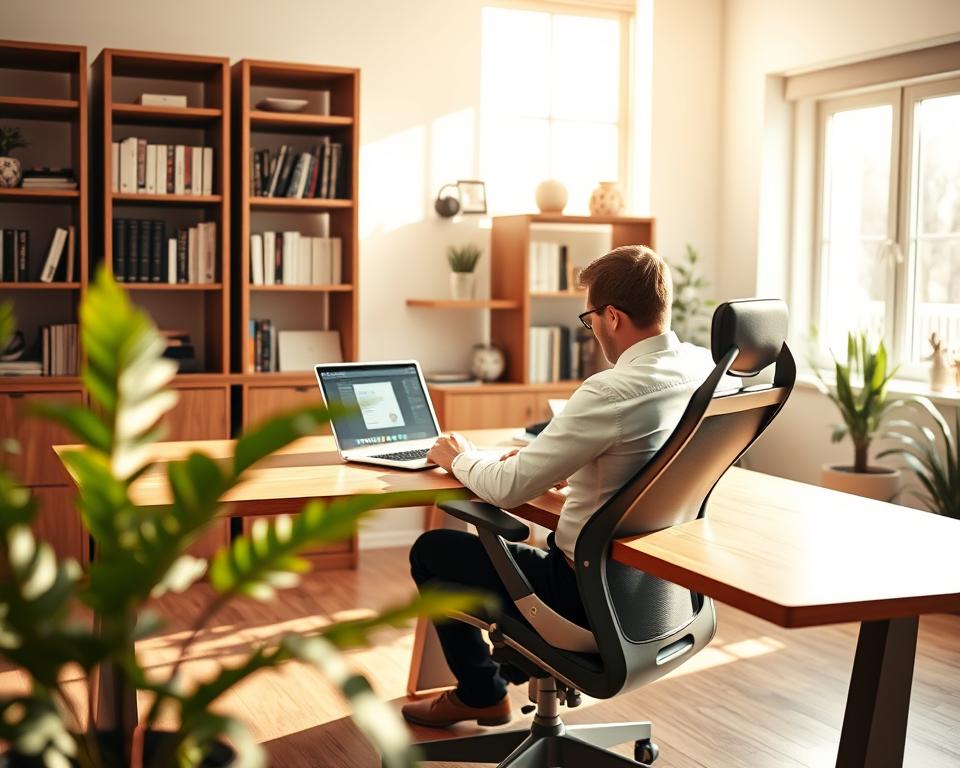
Did you know remote workers are 13% more productive than those in an office? This fact shows how vital a good home workspace is. As workplaces change, creating a home office that helps you focus and be creative is key. A perfect home office setup is more than a desk and chair. It needs careful planning to cut distractions and boost focus and efficiency. This article will guide you through steps to make a productive home office. We’ll look at design strategies, must-have equipment, and ways to organize. Together, these can turn any space into a hub of productivity and inspiration.
Key Takeaways
- Properly designed home offices can increase productivity significantly.
- Choosing the right space and layout is crucial for focus.
- Invest in ergonomic furniture to maintain comfort and health.
- Good lighting plays a vital role in creating a productive environment.
- Organizing your workspace reduces distractions and improves efficiency.
- Establishing a routine helps maintain productivity throughout the day.
Determine Your Space and Layout
Setting up a home office needs you to look carefully at space and layout. Start by figuring out the best spots in your home for an office. Consider each space’s size, how easy it is to get to, and its layout. Having a special area can boost productivity and make you more comfortable.
Assessing Available Space
First, figure out which rooms could be good for your office. Look for spaces big enough for all your stuff. Having plenty of storage is key to a good office setup. A neat and roomy space helps you focus and work better.
Choosing a Quiet Location
It’s also important to find a quiet spot for your office. Try to stay away from busy areas of your house. A quiet corner or an extra room helps you concentrate and do great work. Using these tips makes your home office work better.
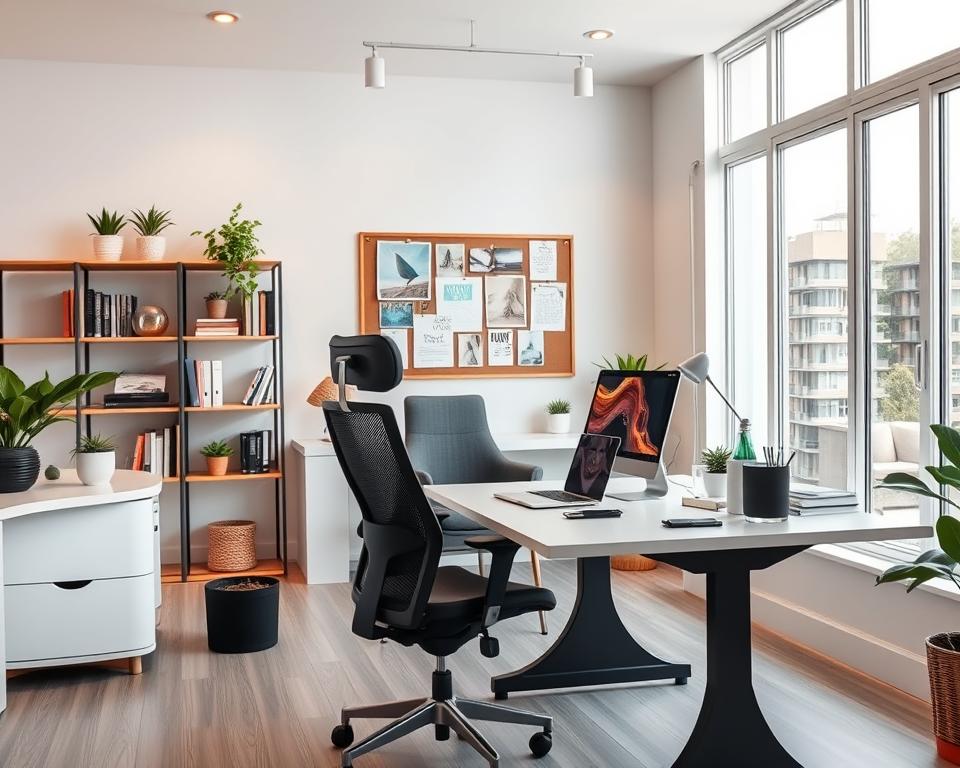
| Factors to Consider | Details |
|---|---|
| Size | Ensure enough space for desk, chair, and equipment. |
| Accessibility | Choose a location easy to access without distractions. |
| Layout | Assess how to arrange furniture for maximum efficiency. |
| Noise Levels | Opt for a quieter area to minimize interruptions. |
| Light Sources | Consider natural light and how it affects productivity. |
Essential Furniture and Equipment
Creating a great home office means picking the right furniture and gear. These choices really shape how comfortably and well you work. Using the best setup tips can make your workspace better for staying focused and getting things done.
Selecting the Right Desk
Choosing the right desk is key to a good workspace. It’s important to find one that suits how you like to work. Desks that let you stand or sit give you the chance to move more, which is good for you. A big desk helps with all sorts of tasks, from writing to using lots of screens. This helps in creating a space that works well, which is what you need for a good home office.
Investing in an Ergonomic Chair
Getting a good chair means looking after your health and staying productive. If you’re not comfortable, you can’t focus well. Look for a chair that helps you sit properly and adjust it to fit you. Being comfortable when you work long hours makes a big difference. It keeps you feeling good while you follow the best home office setup tips.
Must-Have Office Equipment
Having the right tools at your desk makes work go smoother. Here’s what you should have:
- High-definition monitors for clear visuals
- Mechanical keyboards to improve typing comfort
- Storage solutions, such as filing cabinets or storage bins, to keep your space organized
- Headphones for focused listening
Adding top-notch gear to your space sets you up for doing well in your daily tasks. It shows you’re serious about your home office essentials.
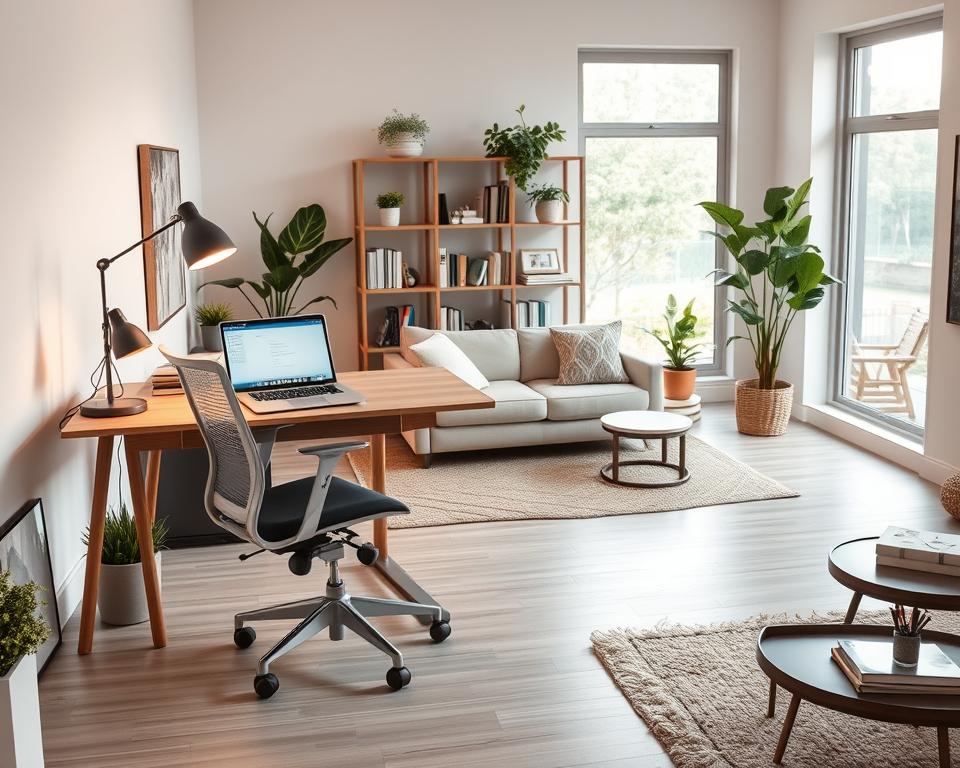
| Item | Benefit | Recommendation |
|---|---|---|
| Adjustable Desk | Promotes movement | VariDesk |
| Ergonomic Chair | Enhances comfort | Herman Miller Aeron |
| Dual Monitors | Increases productivity | Dell P series |
| Quality Keyboard | Improves typing experience | Logitech MX Keys |
Lighting Choices for Productivity
Correct lighting is essential in making a productive home office. It affects both your concentration and mood. Using both natural and artificial light well can boost your home office’s efficiency. Let’s look at the top lighting options to increase productivity.
Natural Light vs. Artificial Light
Natural light is great if you can get it in your workspace. Place your desk near windows to get as much sunlight as possible. This sunlight can make you feel more energetic and driven. Studies have found that being in natural light can make you happier and more productive. If there’s no natural light available, go for warm white light bulbs. They’re the next best thing for a cozy, productive office atmosphere.
Task Lighting Options
Task lighting is key for work that needs your full attention. Desk lamps that let you adjust the light can make reading and writing easier. They help avoid tiring your eyes. Pick LED lamps for their efficiency and long life. A well-chosen task lamp is crucial for your home office setup.
Dimming Solutions
Being able to change your lighting is a big plus. Dimming features let you adjust the light for various tasks and times. Bright lights are good for detailed work, while dim lights can relax you during breaks. With dimmers or smart lights, you can make your office light perfect for any situation. This way, your office is exactly how you need it for maximum productivity.
Organizing Your Workspace
Starting with a well-organized workspace is key for an efficient home office design. A clutter-free environment helps you focus and boosts your productivity. By using home office organization tips, you can make work easier and more fun.
Decluttering Your Desk
A clean desk is vital for a clear mind. Start by checking the items on your desk. Get rid of anything you don’t need for work. This includes old papers, unused gadgets, and extra office supplies. Adding personal items for inspiration and comfort is useful. A simple setup reduces work distractions.
Storage Solutions and Accessories
To improve your home office organization, add smart storage solutions. Use filing cabinets, wall-mounted shelves, and drawer organizers. Labeling everything helps you find items fast and keeps things tidy. Color-coded folders, for example, make finding paperwork easier.
| Storage Solution | Description | Benefits |
|---|---|---|
| Filing Cabinet | Great for keeping documents organized | Reduces pile-up on the desk |
| Wall-Mounted Shelves | Utilizes vertical space | Keeps frequently used items within reach |
| Drawer Organizers | Helps categorize smaller items | Enhances drawer accessibility |
| Desktop Organizers | Keeps office supplies neatly arranged | Minimizes visual clutter |
Using these home office organization tips, you can create a productive and creative workspace.
Personalizing Your Home Office
More than just being functional, a productive home office needs personal touches. Add artwork, inspiring quotes, or color schemes that show off your personality. These details make the space welcoming and boost your work experience.
Wall Decor Ideas for Inspiration
Your office walls are a blank canvas for your creativity. Here are ways to make them reflect your personal touch:
- Motivational quotes: Inspiring quotes can give you a motivation boost every day.
- Artwork: Select art that shows what you love, like abstracts or landscape photos.
- Bulletin boards: They’re great for pinning reminders, ideas, or fun memories.
Plants and Greenery Benefits
Adding plants to your office does wonders. They clean the air and make your space more soothing. Research shows plants can lower stress and help you focus better. Here are some easy-care plants:
- Succulents: These are perfect if you don’t have a lot of time for plant care.
- Snake plants: They clean the air well and aren’t picky about light.
- Pothos: These grow well even in low light and are simple to care for.
Ensuring Reliable Internet Connection
In today’s world, having a strong internet connection is a must for working from home. It’s important to ensure your home office has good internet. This guide will help you pick the right internet plan. Plus, you’ll get tips on where to place your router to get the best signal.
Choosing the Right Internet Plan
You need an internet plan that fits your work style. Think about your needs. Do you have video meetings or send big files? Knowing this will help you choose a plan that keeps your work smooth. Plans differ in speed from basic to fast, helping you decide what’s best for you.
Router Placement Tips
Choosing your internet plan is just the start. Putting your router in the right spot can boost your signal. Place it in the middle of your house, away from walls and furniture that block the signal.
- Elevate the router for better signal distribution.
- Avoid placing it near electronic devices that may cause interference.
- Consider using a range extender if you have a larger space.
These steps help ensure a reliable internet connection in your home office. A strong connection is key to work efficiently from home.
Establishing a Routine
Creating a structured routine is key for a good home office setup. By setting regular work hours, you make a clear line between personal and work time. This helps you work better and finish tasks on time.
Setting a Work Schedule
When making a work schedule, think about when you work best. Try to do harder tasks during these times for better results. Here are some tips to build a strong schedule:
- Find out when you have the most energy and plan tasks for those times.
- Have a set start and end time to help form a routine.
- Use digital calendars for reminders about meetings and due dates.
Breaks and Downtime Importance
Taking breaks is crucial for a great home office setup. Short breaks help your brain rest and can make you more focused. Keep these points in mind:
- Take a five-minute break every hour to stretch or have a drink.
- Spend longer breaks eating or going for short walks to recharge.
- Doing mindfulness or quick exercises can clear your mind and boost focus.
Managing Noise Levels
Noise can really disrupt your focus in a home office. Good organization tips can make your workspace quieter. Soundproofing your office is one effective way to get things done without noise distractions. Here are useful tricks to try.
Soundproofing Techniques
Adding sound-absorbing materials around you helps a lot. Things like rugs and heavy curtains keep unwanted noise away. Wall hangings or acoustic panels can also quiet things down, making it easier to focus.
Noise-Cancelling Headphones
For even more peace, noise-cancelling headphones are a great choice. They block out background noise so you can concentrate on work. They’re a big help for staying focused and boosting your productivity at home.
Staying Motivated and Focused
Making a home office productive is about keeping your motivation and focus. Using good time management can greatly improve how you work. It keeps you on the right path. Breaking your work into smaller parts makes things clearer and increases productivity. It’s also key to set clear goals for each day. This gives you direction and a feeling of success as you meet each goal.
Time Management Strategies
The Pomodoro technique is a great way to manage time. It has you work for 25 minutes, then take a 5-minute break. This helps you stay focused but avoids burnout. Other good strategies are:
- Making a daily to-do list to prioritize tasks
- Allocating specific times for different activities
- Staying away from multitasking to keep focus
Goal Setting Techniques
Knowing how to set goals is crucial when you have a home office. Goals should be SMART: Specific, Measurable, Achievable, Relevant, and Time-bound. This makes your goals clear and achievable. For more motivation, you can:
- Divide big projects into smaller, doable tasks
- Keep a visual tracker of your progress
- Celebrate every win, no matter the size
Continuous Improvement of Your Home Office
Making your home office better is an ongoing process, not just a one-time job. To find what needs work, check your space regularly. This includes checking if your desk and chair are good for your posture and looking at the tools you use to get work done. Keeping things tidy helps you stay focused and work better from home.
Regular Evaluations and Adjustments
Every so often, take a look at where you work. You might need to move things around, get new tech, or try different ways to stay organized. This keeps your work area useful and prevents it from getting boring. You want a home office that changes as your needs do, using the best tools and practices to stay sharp and productive.
Keeping Up with Trends and Tech
Knowing about new trends and technology is key to a great work-from-home setup. This could be new software that helps you work with others or furniture that’s good for your body. So, always be on the lookout for new things to add to your home office. This way, your space won’t just meet your needs now but will also encourage creativity and productivity for the future.