

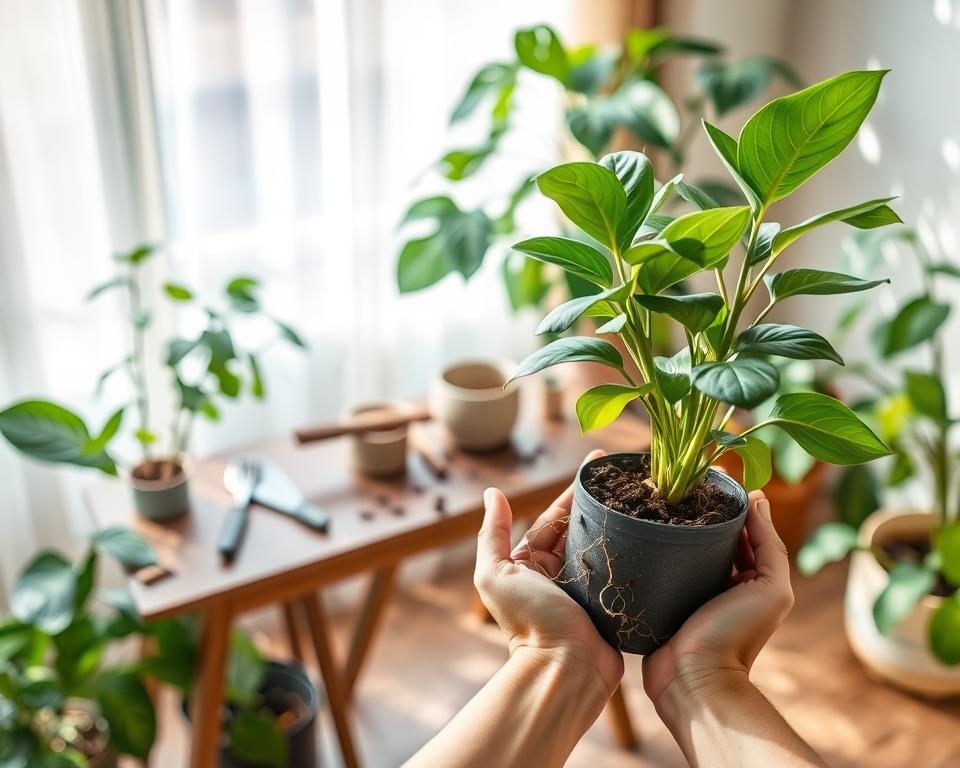
Did you know that about 30% of indoor plants don’t survive their first year? This is often due to not repotting them properly. Learning the right way to repot can help your plants live longer and look better. Whether you’re experienced or new to indoor gardening, our guide will help you. Repotting helps plants grow healthier and avoid problems with their roots. Let’s learn how to repot and make your indoor plants flourish!
Key Takeaways
- Repotting is key for healthy plant growth.
- Signs your plant needs repotting include crowded roots and slow growth.
- Picking the correct pot size and type is very important.
- The right potting mix improves soil health.
- Proper care after repotting helps plants recover well.
- Avoid overpotting to make sure your plants do well.
Why Repotting is Important for Indoor Plants
Knowing when to repot indoor plants is key to keeping them happy and healthy. Repotting refreshes the soil. It also gives roots room to grow. If a plant becomes too big for its pot, it can face problems. Spotting a plant that needs repotting helps you care for it better.
Signs Your Plant Needs Repotting
Look out for signs that your plant needs a new home. Some common indicators are:
- Roots coming out of the pot’s drainage holes
- The plant becoming top-heavy and unstable
- Soil drying out faster than usual
Noticing these signs means it’s time to repot your indoor plants. This helps them grow in a healthier way.
Benefits of Repotting
Repotting offers many perks for your plant’s growth. Important benefits are:
- New soil brings nutrients for healthy growth
- More room lets roots spread out
- Better drainage prevents too much water
These repotting tips will help your indoor garden thrive.
The Right Time to Repot
The timing of repotting is critical. Spring to early summer is best. That’s when plants are growing most. This matches their natural cycles and helps them settle in better.
Choosing the Right Pot for Repotting
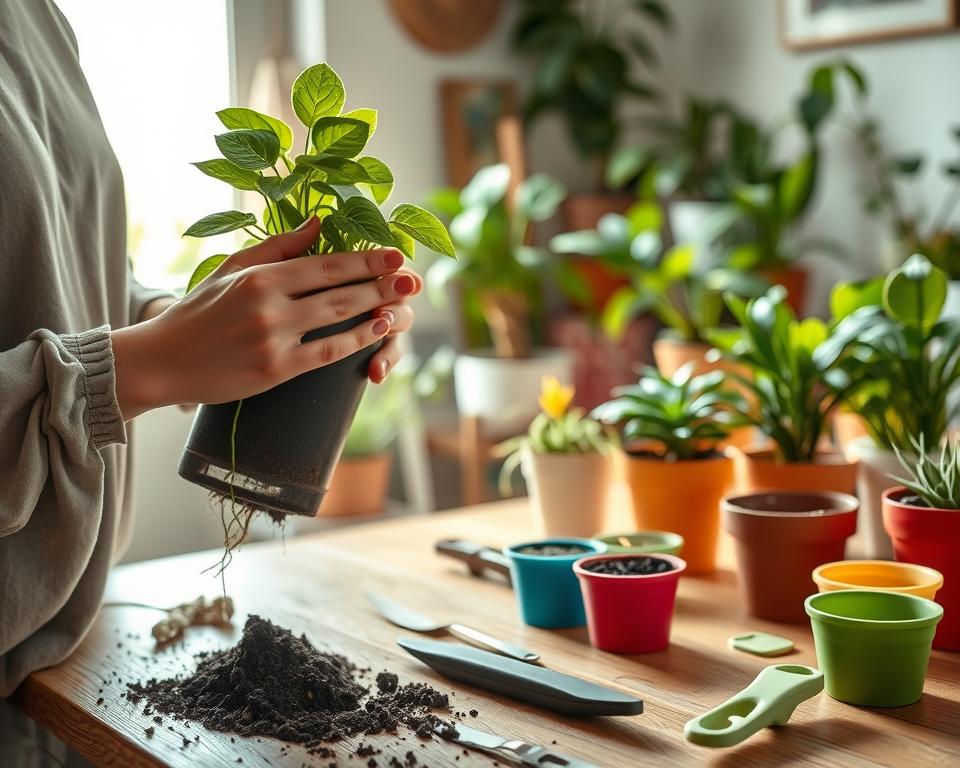
Finding the right pot is key for your indoor plants’ success after repotting. With lots of choices, knowing the differences in materials, sizes, and features is crucial. This knowledge helps make a choice that helps your plants thrive.
Material Options: Clay vs. Plastic
When picking a pot, think about the material. Clay pots let roots breathe, which is good for growth. They’re also stable because they’re heavy. But, they can dry out fast. This might stress your plant unless you keep up with the watering. Plastic pots, however, keep moisture in. They are great for plants that need steady humidity. The right material for you depends on what your plant needs and your watering habits.
Size Matters: Finding the Perfect Fit
Finding a pot that’s 1-2 inches bigger than the last one is crucial. A too-big pot could hold too much water. This might cause root rot. Your new pot should let your plant grow but not hold too much moisture. This balance is key to keeping your indoor plants healthy.
Drainage Holes: Why They’re Essential
Drainage holes in a pot are important. They let out extra water to avoid root rot. This problem is common in many houseplants. A pot without these holes can hold water at the bottom. This is bad for your plant and might kill it. Make sure your new pots have drainage holes to keep your plants healthy.
Selecting the Right Potting Mix
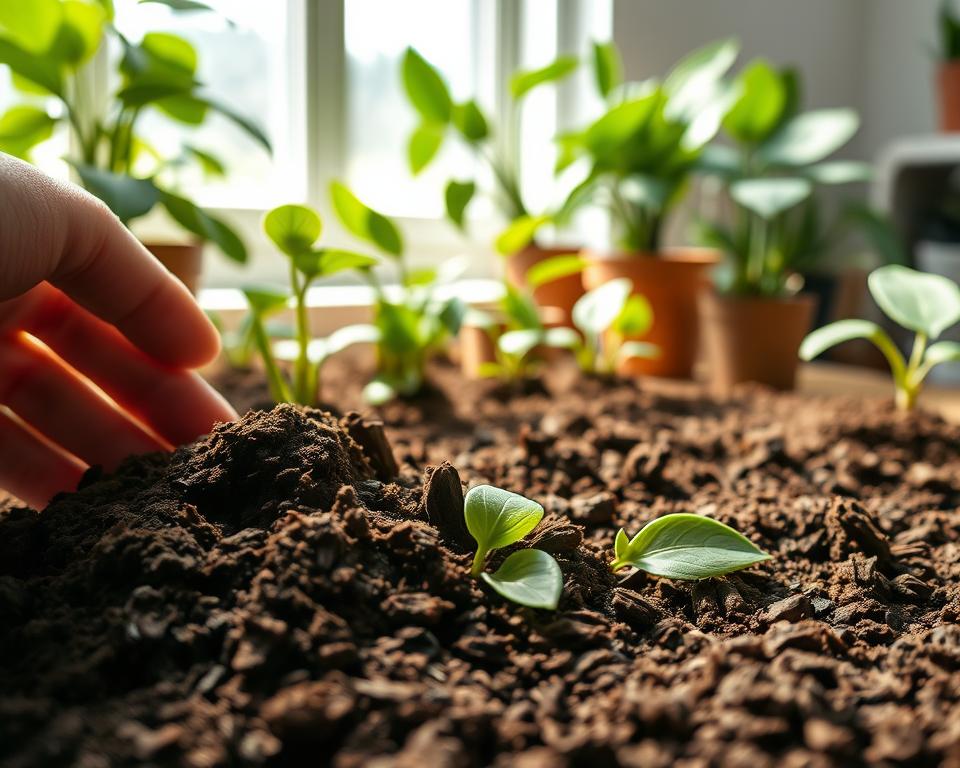
It’s key to pick the right potting mix for indoor plants to keep them healthy and growing. Each type of plant needs something different. Knowing what they need can really help when you’re getting ready to repot them. A good mix helps roots stay healthy and keeps the soil moist.
Types of Potting Soil
There are many kinds of potting soil, each made for certain plants:
- Standard Potting Mix: Works great for most indoor plants, offering a good balance.
- Succulent and Cactus Mix: Drains quickly, perfect for plants that don’t need much water.
- Tropical Plant Mix: Very airy, often without soil, ideal for plants that love humidity.
DIY Potting Mix Recipes
Making your own potting mix can be fun. Try mixing equal parts of:
- Peat moss
- Perlite or vermiculite for air
- Compost for food
This recipe is good for many indoor plants and helps them grow strong.
Additives to Enhance Soil Health
Adding extra stuff to your potting mix can make it even better for plants. Some good additions are:
- Perlite: Helps with drainage and stops roots from rotting.
- Worm Castings: Full of nutrients, great for plant health.
- Mulch: Keeps moisture in and weeds out when on top.
Tools You’ll Need for Repotting
Having the right tools makes repotting easier and safer for you and your plants. A good repotting checklist ensures you’re fully prepared. With the essential tools, you can focus on taking care of your plants.
Essential Tools for Success
- Gloves: Protect your hands from dirt and any potential irritants in the soil.
- Trowel: A small spade makes digging into the potting mix much easier.
- Pruning Shears: Essential for trimming any damaged roots or foliage during the process.
Optional Equipment for Better Results
- Moisture Meter: This tool can help assess whether the soil is too dry or wet for optimal repotting conditions.
- Plant Labels: Use these to track the various types of plants you are repotting, especially if you have many indoor plants.
Preparing Your Plant for Repotting
Ready your plant for a new pot by taking some key steps. This makes sure it settles well in its new place. Doing things from a checklist helps the plant grow strong.
Watering Before You Start
Give your plant water a day or two before you repot. This eases the roots’ stress and makes taking the plant out easier. When the soil holds together, it protects the roots as you move the plant.
Assessing the Root System
Now that your plant is hydrated, check its roots. Look for tight roots around the pot’s side. Clip any damaged roots to help the plant grow well in its new spot.
Pruning Roots: When and How
If roots are crowded, trim them. Cutting back the spiraled roots can help your plant grow healthier. Always use clean scissors for the cuts. This keeps your indoor plant happy and healthy after repotting.
Step-by-Step Guide to Repotting
Repotting indoor plants might seem hard, but it’s easier with simple steps. These steps make the process less stressful. Your plants will grow better after moving.
Removing the Plant from Its Old Pot
Gently hold the plant’s base and tip the pot sideways. Pull the plant out carefully, watching the root ball. If the plant doesn’t come out easily, tap the pot sides.
Be patient to avoid hurting the roots, as this can stop growth.
Placing in the New Pot: Tips to Follow
After removing the plant, it’s time for the new pot. The new pot should be clean and the right size. Put the root ball at the same level it was before.
This keeps the plant stable and helps it grow. This is important for the health of repotted indoor plants.
Filling with Fresh Soil: Dos and Don’ts
Fill the new pot with a good potting mix. Add soil around the roots to avoid empty spaces. Yet, don’t pack the soil tightly.
Roots need room and air to grow. Watering lightly now makes the soil settle. This helps your plant get used to its new home.
How to Minimize Root Disturbance
Minimizing root disturbance is key when changing pots. Lightly massaging the roots helps them untangle, making repotting easier. Proper techniques ensure healthier, well-adapted plants in their new homes.
Techniques to Keep Roots Intact
Gently massaging the root ball is a good way to untangle roots without harm. This step helps avoid damage when moving plants. Keeping original soil around the roots makes adjusting to a new pot smoother.
Using a Root Ball for Easy Transition
Using a root ball eases the transition. A healthy root ball keeps the root system stable, ensuring a smooth move. Handle the root ball with care to promote good growth.
Post-Repotting Care Tips
After you repot your plant, it needs extra care for a smooth change. Following an indoor plant repotting guide can help a lot. Make sure to watch its water, light, and any stress signs to keep it healthy.
Watering After Repotting
Watering right after repotting is key. It settles the soil and roots. Give just enough water to avoid soggy soil. Adapt your watering habits to the plant’s needs and the new soil mix.
Light Requirements for Your Repotted Plant
Most indoor plants love indirect sunlight. Find the best light spots for your plant type in your home after repotting. Keep it out of direct sun right away to avoid root stress and harm.
Monitoring for Stress Signs
Watch your plant for any stress signs after repotting. Wilting leaves or yellow foliage are warnings. These may mean you need to change light exposure or how often you water to help your plant settle in.
| Sign of Stress | Possible Cause | Recommended Action |
|---|---|---|
| Wilting Leaves | Insufficient watering | Increase watering frequency |
| Yellow Leaves | Overwatering or too much direct light | Adjust watering and relocate to indirect light |
| Stunted Growth | Poor soil conditions | Consider changing to a nutrient-rich potting mix |
Common Mistakes to Avoid While Repotting
Knowing what goes wrong when repotting can really help your indoor plants stay healthy. If you make these errors, you might hurt your plants instead of helping them. Remember these tips to repot indoor plants the right way.
Overpotting: The Risks Involved
Picking a pot that’s too big for your plant is overpotting. This can cause the soil to stay wet too long and lead to root rot, which stops your plant from growing well. Choose a pot that’s just right for the roots, with no extra soil.
Ignoring Drainage Needs
Good drainage is super important. Without enough holes in the bottom, water piles up and harms the roots. This can cause big problems, like fungus growth. Always pick pots that drain well so your plants can be healthy after repotting.
Not Accounting for Plant Size Increase
Indoor plants get bigger and their roots spread out. If you don’t think about how much your plant will grow, you might have to repot it too soon. This hurts the roots. Plan for the plant’s future size by picking a properly sized pot.
Repotting Different Types of Indoor Plants
Different indoor plants need special care when it’s time to repot them. Each kind has its own requirements for growing well. Learning these needs can make your repotting efforts more successful.
Cacti and Succulents
Cacti and succulents do best in dry soil that drains quickly. For these plants, choose a cactus mix or add sand and perlite to regular soil. They don’t need as much water as other plants. Handle their roots carefully to prevent any damage.
Tropical Plants
Tropical plants like their soil moist but also need air to reach their roots. A potting mix rich in organic material is ideal. If the roots get too crowded or leaves start to yellow, it’s repotting time. These plants also love humidity, so keep them watered and humid after repotting.
Flowering Houseplants
Repotting can help flowering plants bloom by providing new nutrients. Use a general potting soil and add some organic fertilizer. If the roots are too tight or there are no flowers, they may need repotting. Taking care of them after repotting can lead to more blooms.
Final Thoughts on Successful Repotting
As we wrap up this guide on repotting indoor plants, it’s clear how important mastering this process is. Make sure to pick the right pot and potting mix, check your plant’s roots, and take good care after repotting. Each step is crucial for your indoor plants to do well in their new home.
Recap of Key Steps
We’ve looked at important steps like knowing when your plant needs repotting and choosing the right pot. Getting the roots ready and taking care of your plant after repotting are also key. These steps help your plants stress less and grow better. Done right, repotting makes your plants healthier and improves your indoor air.
Encouragement for Plant Care Enthusiasts
If you love indoor gardening, repotting offers a great chance to bond with your plants. Use what you’ve learned from this guide to get closer to your green friends. With a little time and effort, you’ll see your repotted plants thrive and make your home more joyful. Enjoy your gardening!