

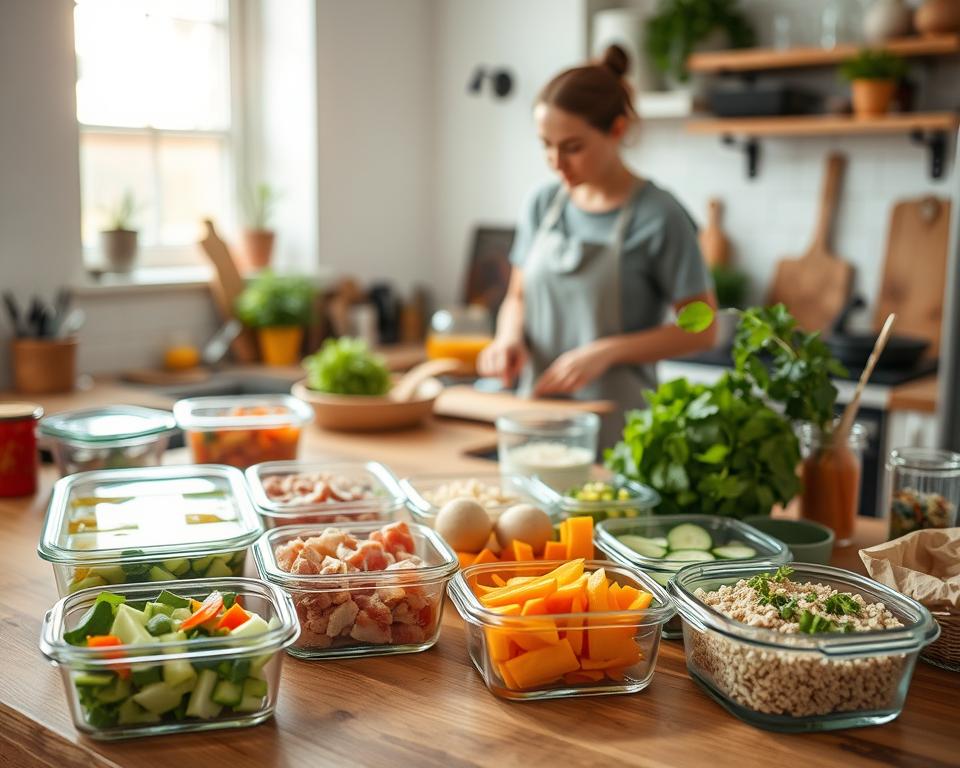
Americans throw away nearly 31% of their food, which costs about $408 billion every year. This huge waste shows why it’s key to plan and prep meals well, especially for weeknight dinners. By mastering efficient meal prep, you cut down cooking time on busy days. You also serve tasty and healthy meals to your family. This guide is full of easy-to-make meals, helpful meal prep tips, and various dinner ideas for the week. These are meant to make your life easier.
Key Takeaways
- Learn how to meal prep efficiently to save time and reduce food waste.
- Discover easy make-ahead meals that are simple to prepare.
- Explore meal prep tips that fit into a busy lifestyle.
- Find creative weeknight dinner ideas to keep meals interesting.
- Understand the basics of meal prep for better organization.
Understanding the Basics of Meal Prep
Meal prepping makes weeknight dinners easier and promotes healthier eating. It’s about planning and preparing meals or ingredients before you need them. This way, you change how you handle daily meals. Let’s dive into meal prepping and its benefits for your cooking routine.
What is Meal Prepping?
Meal prepping means getting meals ready before time. This can involve cooking meals or just cutting up fruits and veggies for the week. It helps busy people and families save time on busy nights. Meal prepping also means you can plan healthy meals that meet different diets.
Benefits of Meal Prepping
Meal prep does more than just save time. It cuts down on wasted food by planning meals around what you already have. It also saves money by cutting down on quick buys and takeout. Plus, meal prepping helps you eat better. With healthy meals ready to go, you’re less tempted by junk food or fast food.
Planning Your Meals for the Week
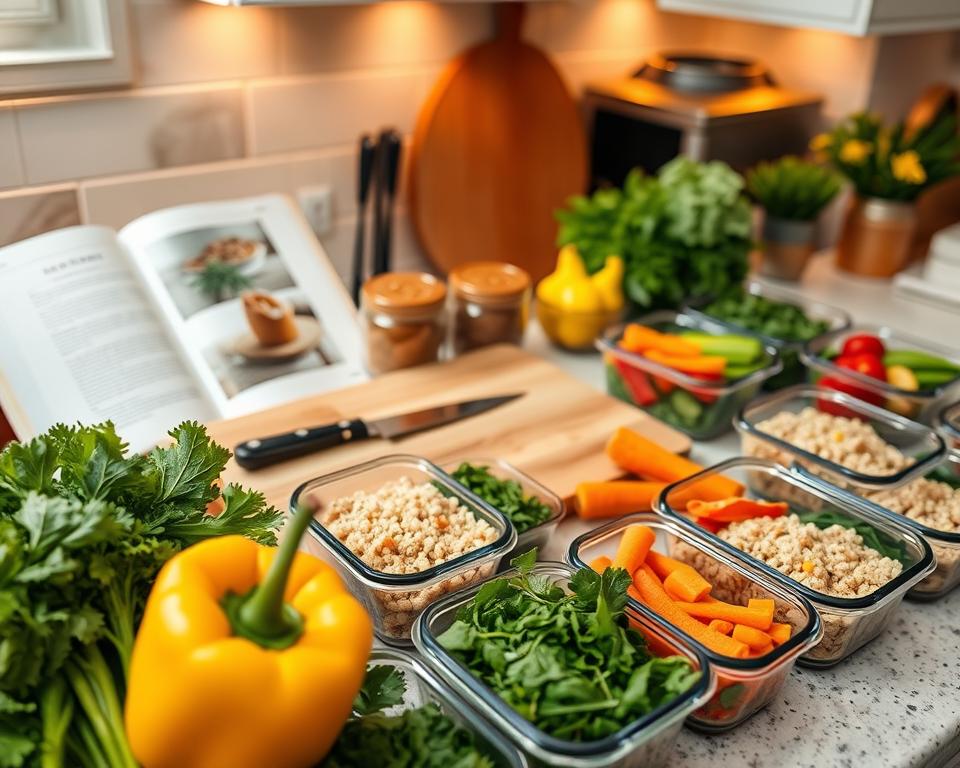
Starting to plan your meals means picking recipes with care. It’s key to find recipes that match what you like and fit your schedule. Choose dishes that are not only good for you but meet your dietary needs too. Ingredients like chicken, beans, or different veggies can be used in many tasty ways all week.
How to Choose Recipes
When picking recipes, think about these tips:
- Look at what your family likes and any food allergies.
- Choose recipes that let you use what’s in season or what you have on hand.
- Pick meals that will give you leftovers for lunch or another dinner.
- Make sure to have meals that are quick to prepare on your busy nights.
Creating a Weekly Meal Plan
Planning your meals for the week brings order to your cooking. Begin by laying out your chosen recipes day by day. This helps you see what you’ll be eating and keeps your meals balanced. See the example below for how to do this:
| Day | Breakfast | Lunch | Dinner |
|---|---|---|---|
| Monday | Oatmeal with Fruits | Chicken Salad | Stir-Fried Tofu and Veggies |
| Tuesday | Smoothie Bowl | Quinoa and Black Beans | Baked Salmon with Asparagus |
| Wednesday | Greek Yogurt and Granola | Veggie Wrap | Spaghetti with Marinara Sauce |
| Thursday | Eggs and Avocado Toast | Leftover Stir-Fry | Taco Night |
| Friday | Pancakes with Maple Syrup | Spinach Salad | Pizza with Mixed Toppings |
| Saturday | Breakfast Burrito | Grilled Cheese Sandwich | Thai Curry with Rice |
| Sunday | Fruit and Nut Bowl | Leftover Pizza | Roast Chicken with Vegetables |
Essential Meal Prep Tools and Containers
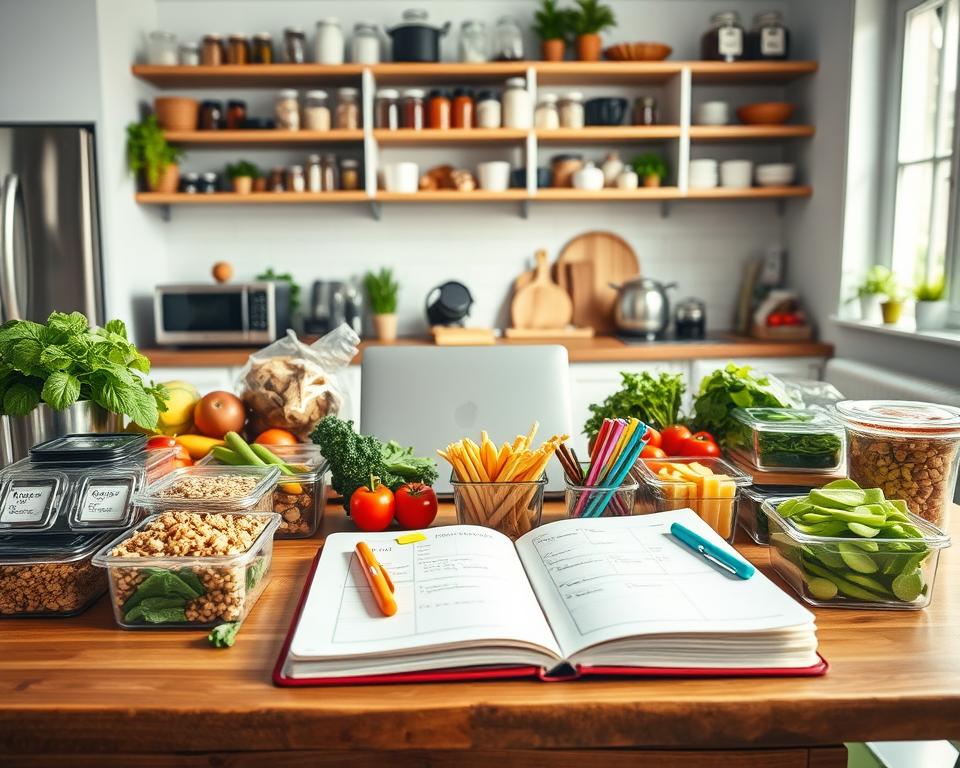
Having the right tools in your kitchen makes meal prepping much easier. Such gadgets speed up cooking tasks, making them fun. Quality meal prep containers help keep things organized, easy to store, and keep your food fresh.
Must-Have Kitchen Gadgets
For effective meal prep, a well-equipped kitchen is essential. Here are some gadgets you should have:
- Sharp knives: They make cutting quick and accurate.
- Cutting boards: They provide a solid chopping area.
- Measuring cups and spoons: They ensure precise ingredient measurements.
- Spiralizers: They add fun shapes to veggies and let you eat healthier.
Best Types of Storage Containers
Picking the right containers is key to keeping meals fresh. Different meal prep containers serve various needs:
| Container Type | Material | Best For |
|---|---|---|
| Glass Containers | Glass | Reheating and flavor preservation |
| Plastic Containers | Plastic | Lightweight and portable meals |
| Stainless Steel Containers | Stainless Steel | Durability and long-term storage |
Diverse container sizes let you easily store various meal portions. This makes grabbing meals on-the-go easy and dinner time less of a hassle.
Grocery Shopping Strategies
Successful meal prep often hinges on your approach to grocery shopping. Making a shopping list based on your weekly meal plan is key. This step helps you steer clear of spur-of-the-moment purchases and ensures you get all the necessary ingredients for healthy meals.
Creating a Shopping List
Putting together a detailed shopping list is vital for a smooth grocery shopping experience. Make sure to include:
- Ingredients needed for the recipes you intend to make.
- Basic items and pantry essentials that are running low.
- Snacks and other extras to keep you from needing quick trips to the store during the week.
Following this strategy will help you stay on track and focused while shopping.
Tips for Navigating the Grocery Store
Knowing your way around a grocery store can both save you time and lead to better choices. Keep these tips in mind:
- Most fresh food is found along the store’s edges, like produce, dairy, and meats.
- Always be on the lookout for sales, but only on items you were already planning to buy.
- Before you shop, check what you already have to avoid buying more than you need.
Preparing Ingredients in Advance
Prepping ahead is key to easier weeknight dinners. Doing this streamlines your cooking on busy nights. Learning effective chopping techniques helps save time and gets ingredients ready faster.
Efficient Chopping Techniques
Getting better at chopping saves a lot of prep time. Here’s how to chop faster:
- Use a sharp knife for clean cuts.
- Chop in bulk by prepping multiple servings at once.
- Organize your workspace for efficiency.
These tips will cut down your prep time and improve your meals. Well-chopped ingredients combine better and cook evenly.
Cooking Staples Ahead of Time
It’s smart to prepare staples like rice, quinoa, chicken, and beans ahead. Here’s a plan for these staples:
| Staple | Preparation Time | Storage Method | Usage |
|---|---|---|---|
| Rice | 20 minutes | Airtight container in the fridge | Use in stir-fries, salads, or as a side |
| Quinoa | 15 minutes | Airtight container in the fridge | Add to bowls or mix with veggies |
| Chicken | 30 minutes | Sealed bag in the fridge | Grill, bake, or sauté for various dishes |
| Beans | 1 hour (for dried beans) | Airtight container in the fridge | Include in soups, stews, or salads |
Preparing these items ahead can save time and simplify your dinners. It makes meal planning easier and more fun.
Storing and Reheating Meals Safely
It’s key to follow proper food storage to keep meals tasty and safe. Storing food right not only makes it last longer but also fights off foodborne illnesses.
Best Practices for Food Storage
Here are some tips to keep your leftovers fresh and safe:
- Use airtight containers to seal in freshness.
- Refrigerate leftovers within two hours of cooking to prevent bacteria growth.
- Cooked proteins can last 3-4 days in the fridge; keep track of these time limits.
- Label containers with dates to ensure you use older meals first and minimize waste.
Tips for Reheating Leftovers
Reheating leftovers correctly is key for a safe and enjoyable meal. Follow these tips for best results:
- Use the stovetop or oven for reheating, as these methods preserve texture and flavor.
- Avoid microwaving when possible since it often leads to uneven heating.
- Ensure that the internal temperature reaches at least 165°F to eliminate any harmful bacteria.
- Stir or flip food while reheating to promote even heating.
Batch Cooking Made Easy
Batch cooking makes weeknight dinners easy, especially for those with a busy schedule. It involves cooking meals in big amounts. This saves time and effort during the week. Choose recipes like soups, stews, and casseroles that are easy to make in large batches. These meals can be served in different ways, keeping things interesting.
What to Cook in Batches
It’s smart to pick the right dishes for batch cooking. Here are some top choices:
- Soups and stews, perfect for freezing and reheating.
- Casseroles that can serve as a complete meal.
- Grains like rice or quinoa that can accompany various proteins or vegetables.
- Roasted vegetables that can be mixed and matched with different meals.
- Marinated proteins that can be cooked in bulk and stored in the fridge.
Time-Saving Cooking Techniques
Use a few tricks to cook even faster. Here’s how:
- Utilize slow cookers to start meals in the morning, allowing them to cook throughout the day.
- Pressure cookers can significantly reduce cooking times for grains and meats.
- Sheet pan meals enable you to cook multiple components at once.
- Batch prep vegetables at the beginning of the week for easy access during cooking.
Keeping It Fresh and Interesting
Meal prep doesn’t need to be boring. Keeping your meals exciting can make eating more enjoyable and reduce food waste. An effective strategy is to get creative with leftovers. This turns yesterday’s dinner into a brand-new dish, adding variety to your week.
How to Use Leftovers Creatively
Leftovers are great for trying new recipes. For example, use roasted chicken from the night before in tacos or salads. Also, rice can become part of a tasty stir-fry, and roasted veggies can turn into a delicious soup. This way, leftovers save you time and transform your kitchen into a place of creativity.
Changing Up Flavors and Ingredients
Keep meals exciting by playing with spices and sauces. Adding hot sauce or herbs can revitalize a dish from the day before. Exploring different cuisines offers even more variety. Getting your family to suggest new flavors makes meal prep fun and keeps everyone interested.
| Leftover | Creative Use | Flavor Variation |
|---|---|---|
| Roasted Chicken | Tacos | Chipotle sauce and avocado |
| Cooked Rice | Stir-fry | Soy sauce and ginger |
| Vegetable Medley | Soup | Thyme and lemon zest |
| Pasta | Cold Pasta Salad | Balsamic vinaigrette and feta cheese |
Troubleshooting Common Meal Prep Issues
Even the best meal prep plans can face some challenges. Issues often come up with time, messing up our plans. When life gets too busy, try making quick meals on those days. Choose recipes that are easy or can be made in big batches. This way, you keep eating healthy without losing precious time.
Figuring out how much to eat can be tricky too. It’s key for eating right and not wasting food. Use things like measuring cups or a food scale to help. Soon, you’ll know just how much to make for your family, making things smoother.
Once you get the hang of meal prepping, things like time and portions get easier. The aim is to enjoy tasty, healthy food without stressing over time. With some practice and being flexible, meal prep can become a simple part of making dinner better.