

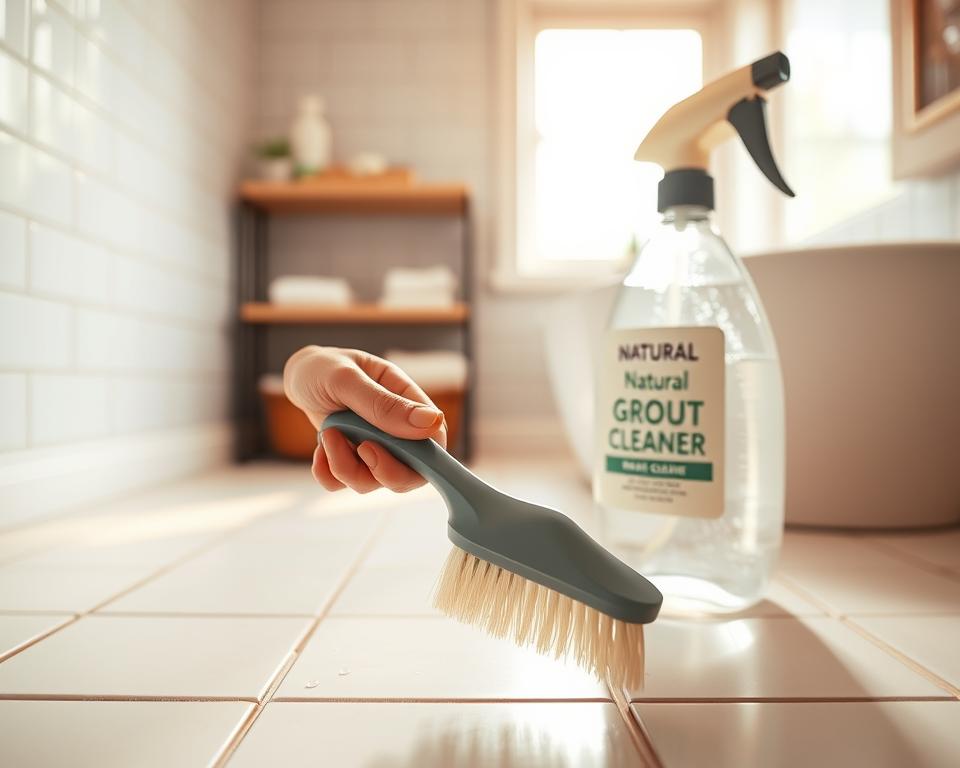
Did you know grout that’s not cleaned right can have more bacteria than a toilet seat? Think about that next time you’re in your kitchen or bathroom. Many people try hard to clean these lines but don’t get far. We’ll show you how to make them spotless without rough scrubbing. You’ll learn the best tricks for using natural and store-bought cleaners. This way, your tiles will look as good as new.
Key Takeaways
- Understanding the importance of grout maintenance can prevent bacteria buildup.
- Harsh scrubbing methods can damage your grout and tiles over time.
- Natural cleaning solutions like vinegar and baking soda are effective alternatives.
- Choosing the right store-bought grout cleaner is crucial for best results.
- Regular cleaning and sealing can help maintain the appearance of grout lines.
Understanding Grout and Its Problems
Grout fills the gaps between tiles, giving a clean finish. It’s made from cement, sand, and additives for strength and water resistance. There are cement-based and epoxy grouts, each with its advantages and weak points. Knowing these helps in keeping grout in good shape.
What is Grout?
Grout is a thick fluid used to fill tile spaces. It’s mainly cement, sand, and water, hardening into a solid filler. Despite its sturdiness, traditional grout is porous and can stain or grow mold and mildew. Thus, regular cleaning is crucial for maintaining the look of grout lines.
Common Issues with Grout Lines
Grout lines face several issues, like mold and mildew in damp places. These create dark stains and a bad look, especially in bathrooms. Stains can also come from hard water or organic materials, leading to rust or lime buildup. Catching these issues early ensures grout stays clean and appealing.
Why Traditional Scrubbing Isn’t Effective
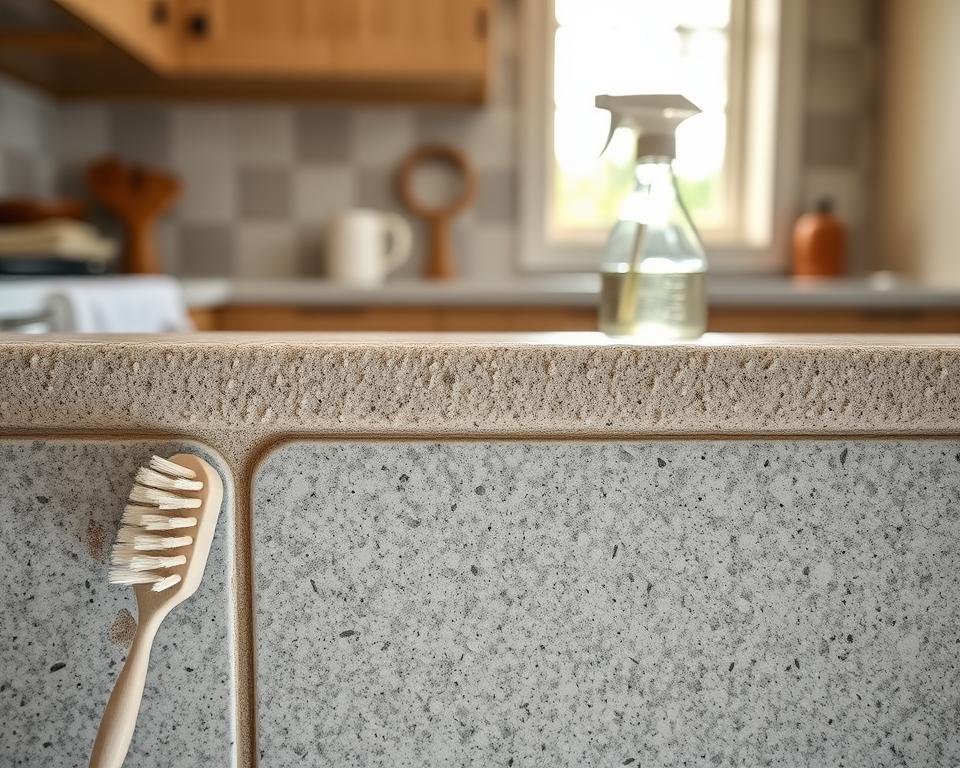
Traditional scrubbing might look like a good cleaning method, but it has major limitations of scrubbing. Although it can clean the surface, it often misses the deep stains. This leaves the surfaces looking dirty.
Many people get upset because tough dirt doesn’t come off, even with hard scrubbing.
The Limitations of Scrubbing
Traditional scrubbing doesn’t work well on stubborn stains in grout lines. Most grout cleaning methods can’t reach deep enough to get the dirt out. This leads to a lot of work but not much improvement. Plus, constant scrubbing can make people not want to clean regularly.
Risks of Damage to Grout and Tiles
Too much scrubbing can harm grout and tiles. Over time, hard scrubbing can cause damage to grout, leading to cracks. These cracks let moisture in, which can cause mold and other problems. Also, rough materials can harm tile damage, ruining the tiles’ look. It’s better to use gentle cleaning methods to keep grout and tiles looking good.
Natural Cleaning Solutions for Grout
Looking for safe ways to clean grout helps keep our homes healthy. More people are choosing natural cleaners for their safety and good results. Vinegar and baking soda, along with hydrogen peroxide, work well for cleaning grout yourself.
Vinegar and Baking Soda Method
this eco-friendly approach uses vinegar’s mild acid and baking soda’s grainy texture. When mixed, they fizz and lift away dirt, mold, and stains. And they do it without harsh chemicals.
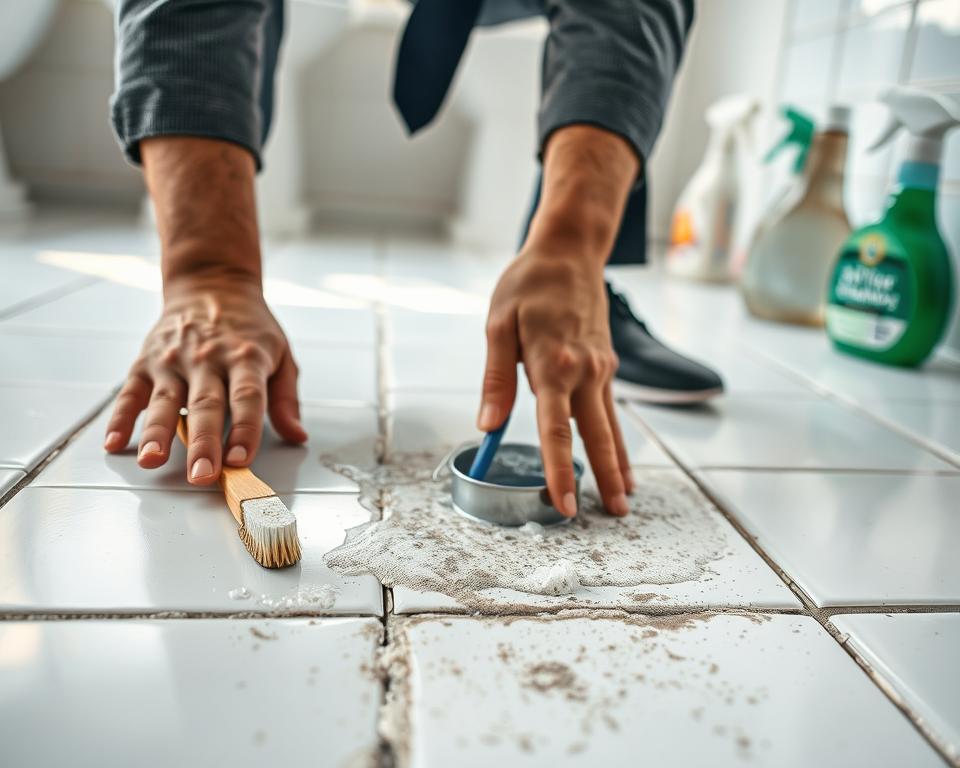
Spread this mix on grout and wait 10-15 minutes. This lets the natural cleaners soak into the dirt. Then, scrub gently with a brush or an old toothbrush. This not only cleans but also makes our homes healthier.
Hydrogen Peroxide Usage
Hydrogen peroxide is another safe grout cleaner. It’s a disinfectant that tackles tough stains. Mix it with baking soda to make a paste for stubborn stains. This boosts the cleaning power.
Be careful with hydrogen peroxide. Always dilute it as suggested and avoid touching it with your skin. It cleans grout safely and effectively, offering a great alternative to store-bought cleaners.
Store-Bought Grout Cleaners
When looking for grout cleaners, it’s key to pick those made for grout issues. Check the labels for non-toxic and eco-friendly options. These are safe and work well. It’s best to avoid strong chemicals or bleach. They can harm the grout and tiles.
Choose cleaners that have a balanced pH. This detail means they clean well and keep your surfaces in good shape.
What to Look For in a Product
Look for grout cleaners with germ-fighting features. This makes sure your spaces stay clean and fresh. The top choices handle tough stains without damaging the grout. Reading reviews can point you to the best grout cleaning brands.
Top Brands for Grout Cleaning
Tilex, Scrubbing Bubbles, and Bar Keepers Friend lead in grout cleaning. They offer products that are both effective and safe for surfaces. Picking from these top brands makes cleaning easier and ensures great results.
How to Prevent Grime Buildup
Keeping your grout lines clean is crucial for tile care. Regularly cleaning them helps prevent grime, making your surfaces look good and work well for a longer time. By cleaning consistently, you’ll avoid the hassle of tough scrubbing later.
The Importance of Regular Cleaning
Cleaning your grout based on how much the area is used can make a big difference. Areas like kitchens and bathrooms get dirty quickly because they’re used a lot. Clean these areas every week, while places with less use can be cleaned less often. Doing this regularly keeps your grout looking great and extends its life.
To keep grout lines clean, try a few simple steps. Use a squeegee in the shower to stop water from collecting and mold from growing. Dry surfaces after using them to keep moisture away. Also, put grout sealer on every year or two. This will protect against stains and mold.
| Cleaning Frequency | Area | Effective Practice |
|---|---|---|
| Weekly | Kitchens & Bathrooms | Use a mild cleaner and scrub brush |
| Bi-weekly | Hallways & Living Rooms | Spot clean stains with vinegar |
| Annually | All Areas | Apply grout sealer |
Tools You Need for Effective Grout Cleaning
For cleaner grout lines, the right tools are essential. Using the right equipment can make a big difference. It helps you clean both effectively and efficiently. Here are some tools that are necessary and some that could help further.
Essential Cleaning Tools
To start, basic cleaning tools are important. You should consider using:
- Scrub brushes or an old toothbrush for detailed work. These get into narrow grout lines well.
- A spray bottle helps apply cleaners evenly over surfaces.
- Microfiber cloths for lint-free and scratch-free surface wiping.
Each tool plays a key role in getting rid of grime. They ensure the best results when cleaning.
Optional Tools for Tough Stains
For tougher stains or bigger areas, consider using more advanced tools. They can save time and effort. Consider these:
- Steam cleaners for a deep clean. They loosen stubborn dirt without the need for harsh chemicals.
- Electric scrubbers offer a strong scrubbing action. They make cleaning faster and easier.
- Baking soda paste boosts stain removal when used with other cleaners.
- Rubber gloves to keep your skin safe from cleaning chemicals.
- A plastic squeeze bottle for precise cleaner application.
With essential and optional tools, you’re ready for any grout cleaning job. You’ll be able to get a spotless finish more easily.
| Tool | Purpose | Effectiveness |
|---|---|---|
| Scrub Brush | Detail work on grout lines | High |
| Steam Cleaner | Deep cleaning tough stains | Very High |
| Electric Scrubber | Reduce scrubbing effort | High |
| Microfiber Cloth | Final wiping | Moderate |
| Baking Soda Paste | Stain removal | High |
Step-by-Step Guide to Clean Grout Lines
Proper preparation and a step-by-step method are key for effective grout cleaning. By following a structured cleaning process, you can get great results easily. Start with important prep work to make things go smoothly. Let’s look at the steps that make cleaning both easy and successful.
Pre-Cleaning Preparation
The first step is all about getting ready to clean your grout. Start by removing any loose debris. Clean up the dirt and dust with a vacuum or broom first. Having your tools and cleaners ready beforehand makes everything go faster. Here’s a checklist:
- Gather cleaning supplies like baking soda, vinegar, a scrub brush, and a spray bottle.
- Make sure your area is clear for easy cleaning.
- Wear protective gloves and goggles for safety if you want.
The Cleaning Process Explained
Now, let’s talk about the actual cleaning. First, make a paste with baking soda and a little water. Apply this paste on the grout. Then spray the paste with vinegar to start a bubbling reaction. Wait a few minutes for it to break down the dirt. Scrub the grout lines well with a brush.
After scrubbing, clean the area with a damp cloth to take away leftover dirt and cleaning solution. Cleaning in small sections is a good idea. It helps you stay focused and clean every grout line well.
Follow these detailed steps and tips to easily improve how your tiled surfaces look. With this guide, your DIY cleaning will be simple, and you’ll have clean grout quickly.
Dealing with Stubborn Stains
Dealing with tough stains can be hard when keeping grout lines clean. Sometimes, natural methods just don’t cut it. That’s when you might need to use stronger cleaning agents. Knowing when to switch to chemical cleaners helps you tackle those tough stains without harming your tiles and grout.
When to Use Stronger Solutions
For everyday dirt, natural cleaners might work. But for really stubborn stains, you’ll need something stronger. You should consider stronger cleaners if you see:
- Visible discoloration that natural cleaners can’t get rid of
- Dirt and grime that stay put even after scrubbing
- Stains that have gone deep into the grout
How to Safely Use Chemical Cleaners
When using chemical cleaners, it’s important to clean safely. Make sure you don’t damage your surfaces by following the right steps. Always follow what the product instructions say and do things like:
- Testing the cleaner on a small area first
- Wearing gloves and keeping the room well-ventilated
- Using a stiff brush to help get the stain out
- Rinsing well after to get rid of any leftover cleaner
Using these tips can really help with those stubborn stains that happen over time.
Tips for Maintaining Clean Grout Long-Term
Keeping grout lines clean is key to having tiles that look fresh. Sealing the grout helps a lot because it blocks moisture and dirt. Doing this regularly can stop stains and bad smells from developing.
Sealing Grout Lines
Make sealing grout a normal part of cleaning. Do it once a year or twice in wet areas. This step keeps mold and mildew away by protecting the grout. It also means your grout will last longer and be easier to clean later on.
Daily Maintenance Tips
Simple tips daily can really help keep your grout in good shape. Some easy cleaning steps are:
- Quickly wipe down tiles after use to remove moisture.
- Ensure good ventilation in bathrooms and kitchens to reduce humidity.
- Choose a gentle cleaner for frequent use, making upkeep less of a chore.
- Consider using doormats to reduce the amount of dirt tracked into spaces.
Keeping up with your grout using these tips will help it stay looking great for a long time.
Conclusion and Final Thoughts
In wrapping up, it’s key to recall the gist of effective grout cleaning. You can use natural mixtures like vinegar and baking soda or select from the store cleaners. These help battle dirt well and preserve your tiles’ look. Keeping up with your grout lines regularly is crucial. It stops buildup and addresses stains early on.
Armed with easy cleaning tips and the right equipment, these actions will boost your home’s cleanliness. This makes your space welcoming for guests and family. So, don’t wait—begin your grout cleaning journey now! Your effort in cleaning well will brighten your living areas in the long run, making them more pleasant.
Adding these cleaning methods to your routine not only betters your grout’s appearance. It also helps keep your home clean over time. Remember, consistent, small efforts help keep those grout lines looking new and fresh.