
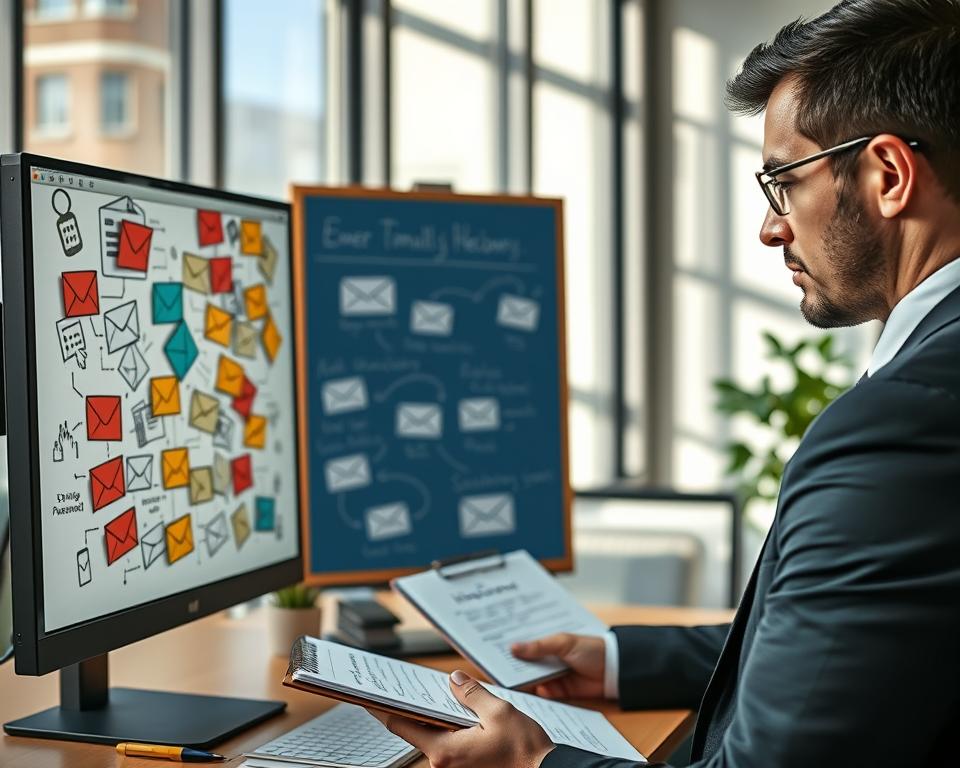
Did you know almost 94% of malware comes through email? In our digital world, keeping your email safe is super important. Our emails link us with friends and work and open doors to our private and professional spaces. Think of your email like your social security number, but for the digital world. It holds important data that must be kept safe. Rising phishing scams and data breaches mean we must be smart about email safety. This piece will share top tips and tricks to fight off threats and keep your inbox secure from phishing.
Key Takeaways
- Adopting strong email inbox security measures is essential for protecting sensitive data.
- Understanding common email threats can significantly reduce risks of phishing and malware attacks.
- Utilizing password management tools enhances security by ensuring strong passwords.
- Implementing two-factor authentication adds an extra layer of protection to your email accounts.
- Regular software updates and spam filter management are crucial for maintaining email security.
- Educating yourself on social engineering tactics can help recognize and avoid potential scams.
Understanding the Importance of Email Inbox Security
Email inbox security is key in our digital world today. Much personal and financial info is kept in our inboxes. So, protecting our email is more important than ever. We need to focus on keeping our email safe from risks.
Why Email Security Matters
Secure emails keep your info away from hackers. Crooks often try to break into emails to take personal details. This leads to identity theft and loss of money. By making our emails safer, we can avoid these dangers and keep our chats private.
Common Risks Associated with Insecure Inboxes
Not having strong email security can be risky. There are several common threats:
- Data Breaches: When bad guys get to private details.
- Phishing Scams: Fake emails meant to trick you.
- Malware Attacks: Viruses that harm your data.
- Spam and Scams: Annoying emails and fake deals.
Knowing these dangers shows why it’s crucial to have good email safety measures. This keeps our messages safe and secure.
Recognizing Common Email Threats
It’s crucial to know about common email dangers to better protect yourself from phishing and secure your email. The online world is full of bad players using different tricks to steal information. Here are some major threats to watch out for.
Phishing Scams: What to Look For
Phishing scams aim to make you give up personal details, like your passwords or credit card numbers. You might be facing a phishing scam if you see:
- Unexpected emails from people you don’t know.
- Messages that push you to act fast.
- Requests for personal or financial details.
Staying alert and questioning emails you didn’t expect is key to dodging phishing traps.
Malware and Ransomware Threats
Malware and ransomware are big dangers that usually sneak in via suspicious email attachments or links. They can cause serious harm, including:
- Lost data from ransomware locking your files.
- Computers slowing down because of malware.
A secure email gateway can block these nasty emails, offering strong defense layers.
Spoofing: How Attackers Trick You
Spoofing is when bad guys pretend to be a trusted source, making their emails look real. This tricks people into giving away private info. Keep an eye out for:
- Email addresses that look right but are off in small ways.
- Odd requests that don’t fit the norm.
Best Practices for Password Management
Managing your password well is key to keeping your email safe. By making and keeping strong passwords, you can greatly improve your email’s security. This helps protect against unwanted entry and data leaks.
Creating Strong Passwords
To boost your email security, start by making strong passwords. A good password should have:
- At least 12 characters in length
- A mix of upper and lower case letters
- Numbers and special symbols
These steps make your passwords hard for hackers to guess or break. They lay a strong base for keeping your emails safe.
Utilizing Password Managers
Password managers are great for handling strong passwords. They keep your passwords safe and encrypted, so you can use difficult passwords without having to remember each one. This is very useful if you have many accounts. Plus, some security software for emails works with password managers. This adds more protection by keeping your login info private and secure.
Regularly Updating Passwords
Changing your passwords often makes things more secure. Try to update your passwords every few months. This way, even if someone gets your password, it won’t work forever. Keeping your passwords fresh is a key step in email security. It helps keep your private info safe.
The Role of Two-Factor Authentication
Two-factor authentication (2FA) boosts email security significantly. It works by making users prove their identity in two ways before getting access. This method makes it much tougher for unwanted visitors to break in. It might be through a special code on your phone or a notification on an app.
How It Adds an Extra Layer of Security
With 2FA, the chance of someone else getting into your emails goes down a lot. Even if someone knows your password, they’d still need the second form of ID to get in. This is super important because of all the hacking and scams online these days. By turning on 2FA, your personal data stays safer.
Setting Up Two-Factor Authentication
Getting 2FA set up on most email services is pretty easy. Just follow these steps:
- Access Security Settings: Go to the security part of your email settings.
- Enable 2FA: Choose to turn on two-factor authentication.
- Follow Prompts: Do any steps they ask for, like linking your mobile for codes.
By adding 2FA, you make your email much more secure. It’s a smart move for staying safe online.
Recognizing Legitimate vs. Suspicious Emails
In our online world, keeping your email safe is very important. Telling the difference between real and fake emails is hard. Phishing attacks often trick people into giving away private info. Knowing what a fake email looks like helps keep your info safe.
Signs of a Fake Email
There are signs that show an email might be fake. Watch out for:
- Misspelled sender addresses: Scammers often use similar-looking emails to real companies, but with small mistakes.
- Unprofessional tone: Real companies usually sound professional in their emails.
- Urgent requests for information: If an email pressures you for personal data, be careful.
- Generic greetings: Suspicious emails often use “Dear Customer” instead of your real name.
Trusting Your Instincts: When to Be Cautious
If an email seems strange, trust your gut. Look more into it before you reply or click any links. Most well-known companies won’t ask for passwords or personal details by email. Double-check who sent the email. Be wary of odd requests to keep your email safe.
Keeping Software and Security Tools Updated
Keeping your software and security tools updated is key to strong email security. Cyber threats are always changing. If your software is old, attackers find it easy to break in. It’s important for everyone to keep their email and security tools updated. This helps protect your emails from risks.
The Importance of Regular Updates
Updates bring critical security fixes and sometimes new features. They make things work better and safer. Keeping your email security software updated fights off malware and phishing. It’s crucial to keep up with updates to stay safe from new threats.
Best Security Tools for Email Protection
Choosing the right email security software is a big step towards better protection. Here’s a look at some top options and what makes them stand out:
| Email Security Software | Key Features | Best For |
|---|---|---|
| Symantec Email Security | Advanced threat detection, Strong spam filters | Businesses needing comprehensive protection |
| Proofpoint | Threat intelligence, Data loss prevention | Organizations with sensitive data |
| Microsoft Defender for Office 365 | Integration with Office apps, Real-time threat response | Users of Office 365 seeking seamless security |
| McAfee Email Protection | Spam defense, Phishing protection | Individuals and small businesses |
Using these tools creates a safer email environment. Following the best email security practices, like updating software, is key in fighting digital threats.
Utilizing Spam Filters Effectively
Spam filters are crucial for keeping your inbox safe. They stop unwanted emails and threats. Learning to use these filters makes your email protection stronger. They check the sender, scan the email, and use rules to keep your inbox clean and private.
It’s important to update your spam filter settings often. This keeps them good at fighting new threats. Adjusting these settings cuts down spam and keeps you safe from harmful content.
How Spam Filters Work
Spam filters decide if an email is good or bad in several ways:
- Sender Reputation: They look at how trustworthy the sender is.
- Email Content: Certain words, links, or attachments might make an email seem spammy.
- User Interaction: How you’ve dealt with past emails affects what gets filtered.
Tips to Tweak Your Spam Filter Settings
Making your spam filter better helps keep your email safe. Here’s how to improve your settings:
- Check your spam folder often to see if any good emails are there by mistake. Then adjust your filter.
- Make filtering rules stricter if you need to, so only emails you want get through.
- Add emails from people you trust to a whitelist to make sure their emails don’t get blocked.
- Change how sensitive the filter is based on how much email you get and your security needs.
By keeping an eye on your spam filters, you make your email safer. You get a better, more efficient inbox that keeps your emails private.
Educating Yourself on Social Engineering
Learning how to spot social engineering helps protect your emails. Attackers use tricks, playing on feelings or lying to get personal info from people. Knowing these tricks is key to stop phishing attacks and keep emails safe.
Understanding the Tactics Used
Social engineering attacks our human nature, using different methods to trick us. Some common tricks include:
- Impersonation: Pretending to be someone you trust.
- Urgency: Making you feel you must act fast.
- Curiosity: Offering something tempting to break security.
Real-World Examples of Social Engineering Attacks
Some big attacks show why we must be always alert. Like when a famous tech company was hacked because an employee was fooled over the phone. These stories teach us to follow email safety rules to lower risks.
| Attack Type | Description | Impact |
|---|---|---|
| Phishing Emails | Emails that look real but aim to steal your info. | Leads to data theft and money loss. |
| Vishing | Phone scams that trick you into giving out info. | Allows hackers to get into private accounts. |
| Smishing | Text scams that deceive you into revealing info. | Causes identity theft and harmful software installs. |
Securing Email on Mobile Devices
More and more, people check their email on smartphones and tablets. This makes it super important to keep email safe on these devices. We face threats like malware and hacks that can put important info at risk. By using safe practices for mobile email, you can make your email way more secure.
Tips for Safe Mobile Email Use
- Download email apps only from trusted sources, like official app stores.
- Keep your device’s operating system and apps updated to protect against vulnerabilities.
- Avoid using public Wi-Fi networks for secure email messaging, especially when handling sensitive information.
- Activate remote wipe features to erase data if your device is lost or stolen.
- Use strong passwords and enable biometric authentication whenever possible.
Common Mobile Security Threats
Cybercriminals often target mobile devices, leading to a rise in security threats. Malware made for smartphones can sneak in without us noticing. And using public Wi-Fi can let hackers into our personal space. Knowing about these dangers is key to keeping our emails safe.
Backing Up Important Emails
Backing up important emails is key to keeping them safe. Unexpected events like data loss or breaches can happen. Having backups means sensitive emails stay protected. We’ll look into why backups are must-haves and the best ways to do them.
Why Regular Backups Are Crucial
Data loss can strike due to many causes. These include accidentally deleting emails, equipment breaking, or online attacks. Losing important emails can be a big problem, especially if they’re private. Regular backups are like a safety net. They let you get back lost messages without compromising email privacy. Knowing your data is backed up adds to the reliability of secure email messaging.
Best Practices for Email Backup
Here are some smart ways to back up emails:
- Use cloud storage that does backups automatically. This way, your emails are saved regularly with no extra work needed.
- Look into special backup programs made for emails. They have features aimed at making data recovery better.
- Check your backup files often to avoid any corruption. This ensures your most important emails are always safe.
- Plan your backups at set times to always have the latest copies of vital emails. Change how often based on how much you email and what’s in them.
Following these guidelines will keep your email secure. It makes sure your privacy measures can handle any danger.
The Impact of Public Wi-Fi on Email Security
Public Wi-Fi networks make staying connected easy. But they bring big public Wi-Fi risks for your email’s safety. Weak encryption and flaws can let hackers see your private info.
Risks of Using Public Networks
Public networks can let hackers into your email. They can do man-in-the-middle attacks, intercepting messages between you and the server. This could lead to stolen passwords and personal data.
With little defense, your emails are wide open for identity theft.
Best Practices for Securing Public Connections
Here are some key steps to stay safe on public Wi-Fi:
- Use a Virtual Private Network (VPN) to make your data private and protect your online moves.
- Don’t log into important accounts on public Wi-Fi.
- Watch for anything odd in your email activities.
- Get email protection software with strong features to fight off dangers.
Seeking Professional Help When Necessary
In today’s world, knowing when to call IT security experts is key. This is true for keeping your email safe. Companies often face tricky email security issues, like frequent hacks or sketchy activity. It’s important to know when it’s time to get help.
Getting help from security pros is a smart move for your emails. These pros offer deep insights and strong solutions for businesses. They do thorough checks and set up tight security to keep your emails safe.
Hiring IT security pros makes your email safer and protects important info. Taking this step early helps avoid problems with hackers. It gives everyone confidence that their emails are secure in today’s risky online world.