

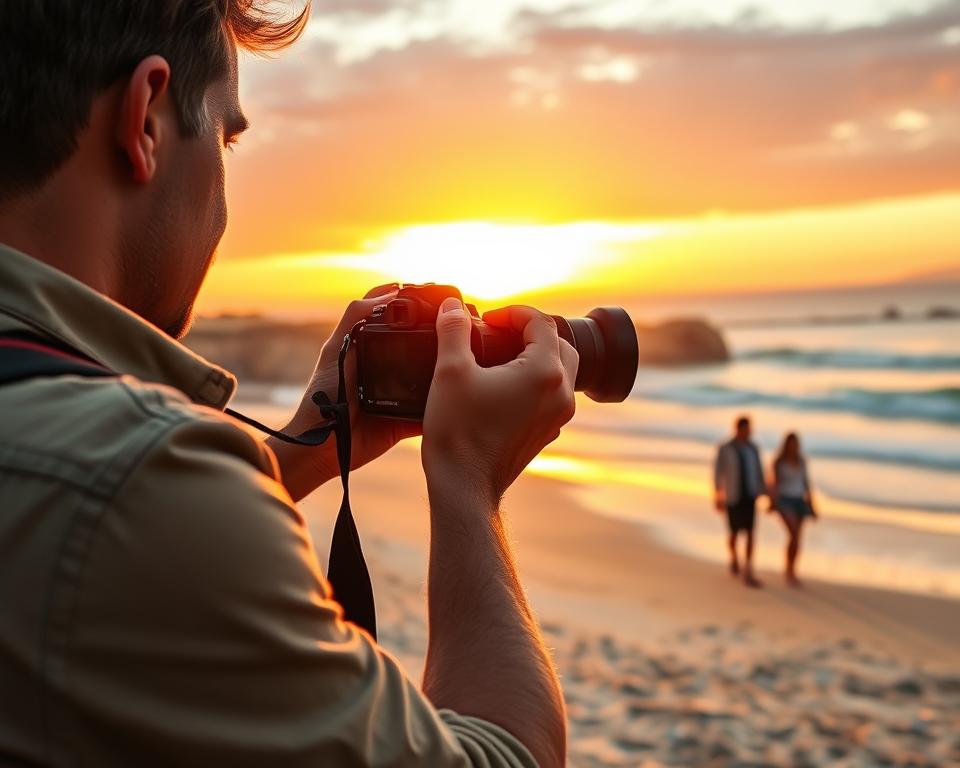
About 45% of travelers think taking photos is key to their vacation. This shows how important photos are in making our trips memorable. Capturing beautiful moments and keeping our experiences alive is what travel photography is all about. While some worry that taking photos might keep them from enjoying the trip, many feel it makes them more aware of their surroundings. In this guide, we’ll cover the basics of travel photography. We’ll give you tips to avoid common mistakes like wrong settings and bad lighting. Whether you’re just starting or want to get better, these tips will make your travels and memories even more amazing.
Key Takeaways
- Travel photography is crucial for preserving vacation memories.
- Understanding your camera gear is the foundation of great photos.
- Composition techniques make your photos more engaging.
- Natural lighting can significantly enhance your images.
- Editing tools can elevate your travel photos from good to great.
- Telling stories through your photos adds depth and context.
- Staying organized and prepared will improve your shooting experience.
Understanding Your Camera Gear
Learning about your camera gear is key for those who love travel photography. Picking the right camera is crucial for taking great photos. Weight, how it works, and your photography aims are important to think about.
For a simple choice, think about compact cameras or smartphones like the iPhone 13 Pro. They offer both quality and ease. For more serious photographers, a DSLR like the Sony Alpha a7II gives more control and better pictures. Yet, it’s not as easy to carry around.
Choosing the Right Camera for Travel
Choosing the right camera for travel needs thought. Compact cameras give good pictures without being heavy. Or, a DSLR or mirrorless camera is good for those who want more creative control.
Think about what settings your travel camera has and if they fit your style. Knowing the features can help you take special pictures.
Essential Accessories for Capturing Moments
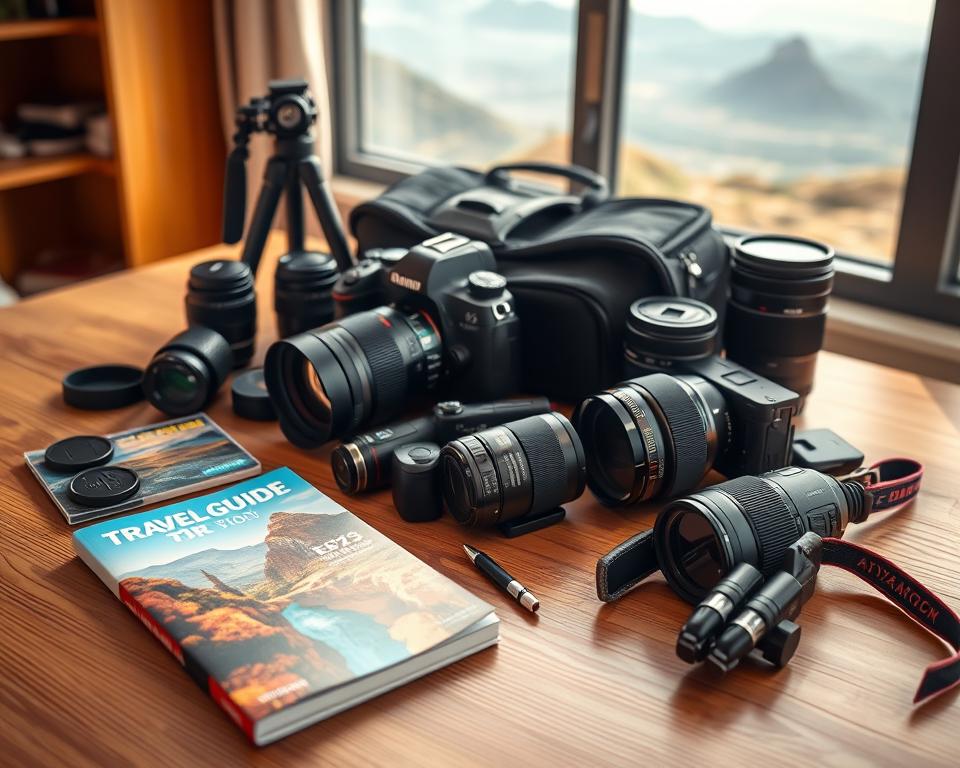
Your photography kit isn’t complete without the essentials. Have extra batteries so you don’t miss a photo because your camera died. You need memory cards for saving lots of high-quality pictures.
Using a tripod can make your photos clearer. Lens cleaning cloths are a must to keep your camera clean. And, don’t forget protective gear to keep your equipment safe from weather. With these items, you’re ready to capture any moment beautifully.
Mastering Composition Techniques
Understanding composition techniques is key to capturing stunning travel moments. Proper composition makes an ordinary photo memorable. It lets the viewer connect more deeply with the image. Now, let’s explore some crucial methods to improve your photography skills.
Rule of Thirds: A Quick Guide
The Rule of Thirds is vital in photography. It involves dividing your frame into nine equal sections. Place key elements along these lines or their intersections. This technique makes your image balanced and visually appealing. Using this method ensures your subjects guide the viewer’s eye, enriching your travel photos.
Leading Lines: Directing the Viewer’s Eye
Leading lines are composition powerhouses. They can be anything, like roads or architectural features. These lines draw the viewer’s attention to the main subject. By using leading lines, photographers create depth and invite viewers on a visual journey. This method encourages viewers to delve deeper into the travel scene.
Framing: Creating a Subject Focus
Framing helps focus on your subject by using scene elements. This technique adds context to your photo focusing the main subject. Urban settings or natural arches can serve as effective frames. Trying different perspectives can really boost the quality of your travel shots.
Natural Lighting: Your Best Friend
Understanding lighting is key to nailing the basics of travel photography. Great lighting turns normal scenes into amazing photos. As the day changes, so does the light, offering different chances to take lively pictures. The Golden Hour and avoiding midday sun are important to know.
Golden Hour: Timing Your Shots
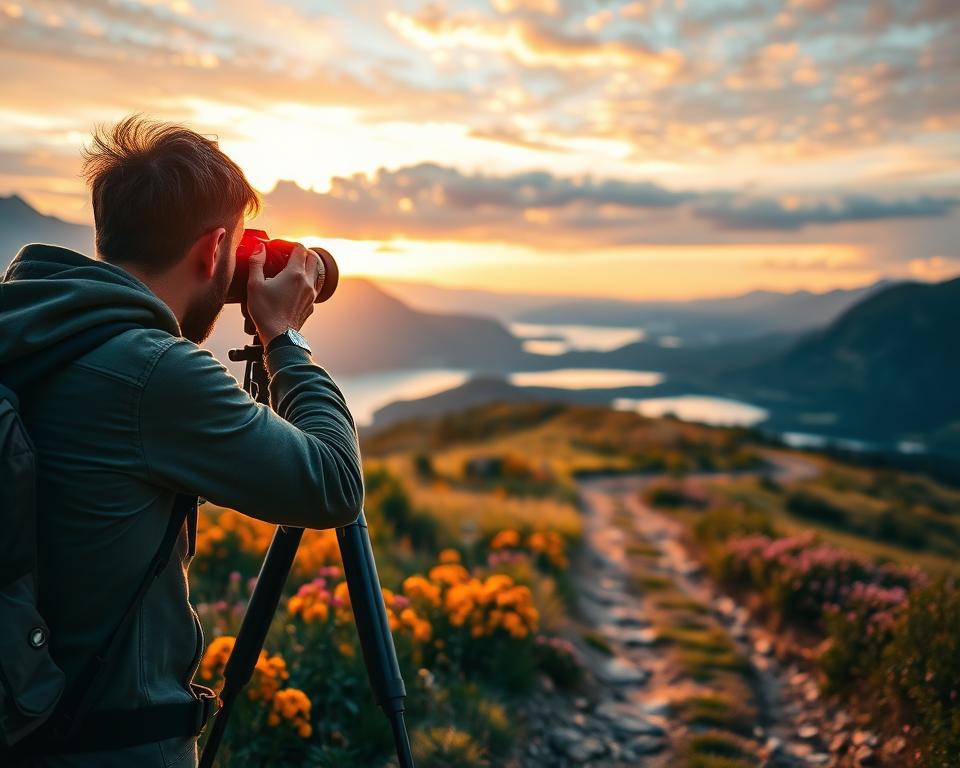
The Golden Hour happens just after sunrise and right before sunset. The light is then warm and soft, giving off a beautiful glow. This makes shadows dramatic and colors pop, perfect for breathtaking landscapes or portraits. It’s the best time to capture the feelings of the moment in your travel shots.
Avoiding Harsh Midday Sun
Midday sun can be tough with its strong shadows and too bright highlights. To fix this, find shade or use tools like reflectors and diffusers to make the light better. You can also shoot from a different angle to stay out of direct sun. These tips improve the look of your photos a lot.
Exploring Different Photography Styles
Understanding different photography styles can make your travel photos better. Each style shows unique parts of your adventures. They bring depth and variety to your pictures. Whether you love big landscapes or the busy life of cities, trying out these styles will improve your photos and stories.
Landscape Photography: Capturing the Scenery
Landscape photography shows off nature’s beauty at its best. It highlights the beauty of natural places like mountains, lakes, or deserts. When you take landscape photos, think about the setup, lighting, and best time to shoot. Using the rule of thirds makes your photos more striking, letting people see the details in the views.
Street Photography: Capturing Culture and Life
Street photography lets you see the soul of city life and culture. It catches unplanned moments, telling stories of people and where they live. You need to pay attention to small things, as the best shots often come from simple interactions. Street photography’s surprise element can create meaningful pictures that show the true spirit of a place.
Editing Your Travel Photos
Post-processing can make your travel photos come alive. Tools like Snapseed and Adobe Lightroom let anyone improve their images. They help you adjust brightness, contrast, and colors. This makes your memories look more vibrant.
Basic Editing Tools and Apps
Finding the right editing software is key, whether you’re new or experienced. Let’s look at a few top choices:
- Adobe Lightroom: Great for pros, helps manage and tweak lots of photos.
- Snapseed: Easy for beginners, with simple editing features.
- VSCO: Known for its unique filters that give photos a special style.
Tips for Enhancing Your Images
Balance is essential in editing. Avoid over-editing as it can make photos look fake. Here are some tips to help:
- First, adjust exposure and contrast to get your image right.
- Use color grading to capture the mood of your snapshot.
- Crop smartly to focus on your photo’s main subject.
- Keep edits mild to stay true to the original photo.
Try out these methods to find your editing style. Bettering your photos enhances their look and tells a richer travel story.
Telling Stories Through Your Photos
Effective storytelling makes simple photos into deep stories. To truly capture a place, understanding its context is key. This lets you show real cultural moments and connect with viewers.
The Importance of Context in Travel Photography
Context is vital in travel photography. It lets you showcase unique cultural aspects by combining different elements. A busy market, for example, shows the colors of spices and how people interact. This adds depth to your photos, telling stories beyond just looks.
How to Capture Emotions and Moments
Capturing the human side brings out feelings in photos. Look for real interactions, like laughter or deep thought. These moments connect with viewers on an emotional level, making your photos more powerful. It’s about catching these quick instances for the best shots.
Improving your skill in noticing context and emotion enhances your photos’ stories. Your pictures can tell compelling tales with the right approach. Focus on being true to your experiences, and let them speak through your photos.
Practical Tips for Shooting on the Go
Travel photography gets more exciting on the move, but it poses some challenges. Being ready for spontaneous shots means you can capture moments without hesitation. Here’s how to make the most of every opportunity that comes your way in travel photography.
Quick Tips for Spontaneous Photography
Knowing your camera settings well is key for quick shooting. It helps to understand how to make fast adjustments. To be more prepared, consider these tips:
- Keep your camera settings on auto mode for fast shots.
- Practice using the shutter button to quickly capture fleeting moments.
- Spot the best angles and compositions ahead of time.
Staying Organized: Keeping Your Gear Ready
Being organized helps save time and reduces stress while traveling. With everything neatly packed, you can focus more on taking great pictures instead of looking for your gear. Keep these points in mind:
- Establish a daily checklist for your essential gear.
- Keep batteries charged and memory cards empty before you start your day.
- Choose a bag that makes it easy to access your equipment quickly.
Safeguarding Your Equipment
Traveling with your camera is like a balancing act. You must protect your photography gear as you explore and capture memories. Taking precautions helps avoid damage, keeping your memories intact.
Protecting Your Camera While Traveling
On the go, protective cases are crucial. Padded cases protect your equipment from bumps and falls. Rain covers keep your camera dry during surprise weather.
Silica gel packs absorb moisture in your bag or case. These protective steps ensure your gear is safe during your travels.
Backing Up Your Photos: Best Practices
Backing up photos is crucial. Cloud services like Google Drive or Dropbox provide access to your images anywhere. External drives add extra security; regularly transfer your photos after shooting.
Making a habit of backing up your journey helps save photos and their stories. By doing so, you reduce the risk of losing precious memories to equipment issues or loss.
Developing Your Unique Style
Finding your own photography style is both fun and involves trying new things. Try out different angles, lenses, or camera settings. Each change might help you discover a new way to see things. This can lead to interesting photos that really show who you are.
Experimenting with Different Perspectives
Don’t be afraid to change your viewpoint when taking photos. You could shoot from high up, down low, or through objects. This can make your photos more interesting and can help you find your own style. Trying out these different ways of looking at things can make your work stand out.
Finding Inspiration from Other Photographers
Looking at other photographers’ work can really help your own photography. See what they do and how they do it for new ideas. You can find inspiration from blogs, social media, or photo shows. By learning from others, you can find what speaks to you. This helps you create your own unique style.