


Did you know about 29% of travelers run into issues during their trips? These can range from missing flights to getting sick. This fact shows how key travel insurance is. But you might wonder, what exactly is travel insurance? Why should you consider it? Travel insurance is like a safety net. It covers unexpected events that could affect your trip or wallet while you’re out exploring. It’s vital to get the basics of travel insurance. This knowledge will help keep you safe and protect your trip investment.
Key Takeaways
- Travel insurance acts as a safety net for unexpected events while traveling.
- Many health insurance plans do not cover international medical care costs.
- Understanding travel insurance basics is essential for all travelers.
- A significant percentage of travelers face disruptions during their trips.
- Having coverage can protect your financial investment in your travel plans.
What Is Travel Insurance and Why Do You Need It?
Travel insurance acts as a safety net when you’re far from home. It helps when you face unexpected problems, making many wonder, why do I need travel insurance? It’s simple. This insurance helps avoid big losses from surprises on your trip. It supports you during emergencies or when plans don’t go as expected.
Understanding the Purpose of Travel Insurance
Travel insurance’s main goal is to give you peace of mind. It covers you for trip cancellations, medical issues, or if your luggage goes missing. With this coverage, you can explore new places without stress.
Types of Coverage Offered
There are various types of travel insurance to fit your needs. These include:
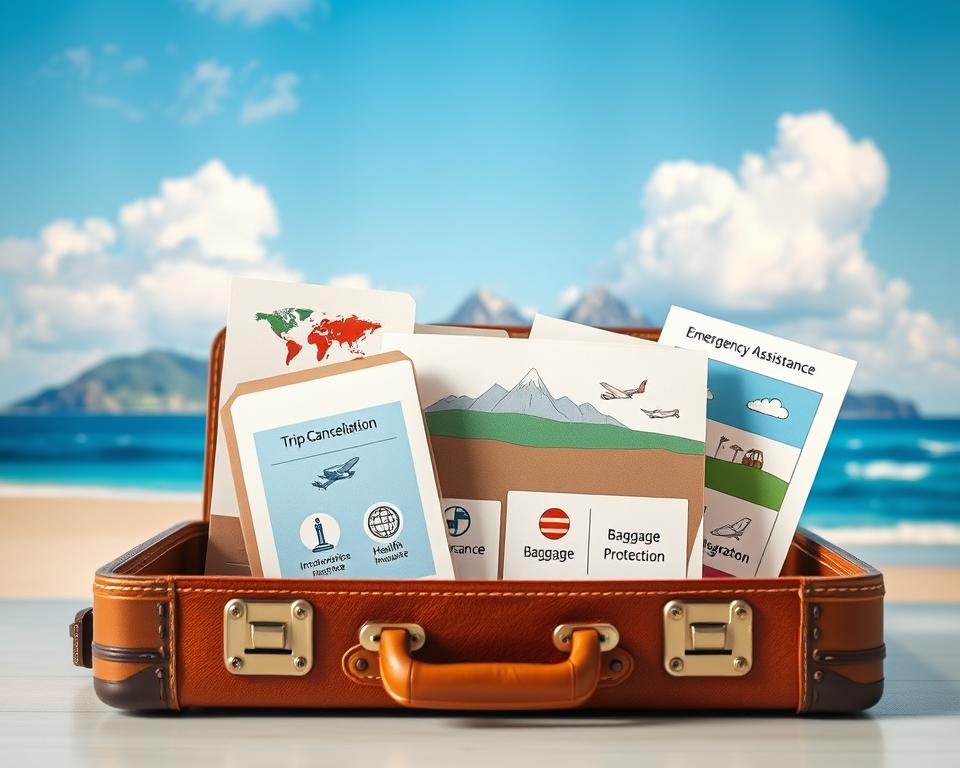
- Trip Cancellation Insurance: Protects against non-refundable costs if travel plans change unexpectedly.
- Medical Coverage: Offers financial assistance for medical emergencies while traveling.
- Emergency Evacuation Insurance: Covers costs related to transportation during a medical crisis.
- Baggage Loss or Delay Insurance: Assists with expenses incurred when luggage is lost or delayed.
Knowing these options can help you pick the best policy for your trip. Travel insurance benefits often outweigh its costs, proving its value in travel today.

Types of Travel Insurance Policies
Knowing the different types of travel insurance is key for travelers. Each policy covers unique aspects of your trip. Here are some important options to look at when checking out top travel insurance firms.
Trip Cancellation Insurance
Trip cancellation insurance is key for travelers with uncertain plans. It usually covers non-refundable costs like flights and hotels. It’s a good way to have peace of mind, thanks to its broad coverage for emergencies.
Medical Coverage
Having medical coverage is essential, especially abroad. It helps with health emergencies, covering things like ER visits and hospital stays. This insurance can save you from huge bills.
Emergency Evacuation Insurance
This insurance is crucial in remote areas for urgent medical help. It pays for airlifts to hospitals, which are very costly without it. Knowing about this insurance is vital for unexpected medical needs.
Baggage Loss or Delay Insurance
This insurance is for when luggage gets lost or delayed. It covers the cost of needed items while waiting for your bags. It’s another type of insurance that lessens travel worries.
How to Choose the Right Travel Insurance
Choosing the right travel insurance needs careful thought. It’s important because it impacts your travel experience. Every traveler is different, depending on their trip’s details.
Assessing Your Travel Needs
First, think about where you’re going, how long you’ll be there, and what you’ll do. If your trip is to remote spots or includes adventure, you might need better coverage. Also, consider any health issues that need special insurance attention.
Comparing Policies
With your needs in mind, compare different travel insurance plans. Look at what each plan covers, like medical limits and lost luggage. Comparing plans closely helps you find the right one for you.
Reading the Fine Print
It’s crucial to understand your policy’s details. Look carefully at the exclusions and limits. Being aware of these can make sure you pick a policy that covers you well.
Common Exclusions in Travel Insurance
Learning about travel insurance means knowing what’s not covered. Travelers need to understand which situations could stop them from getting money back. Knowing these exclusions prevents unexpected surprises when you file a claim and helps pick the right coverage.
Pre-Existing Conditions
Many policies don’t cover pre-existing health issues unless certain conditions are met. Usually, your health condition needs to have been stable for a while before your trip. This is important for those with ongoing health problems who might need coverage when traveling.
High-Risk Activities
Doing things considered risky, like skiing, scuba diving, or skydiving, might not be covered. If you plan to do these activities, check that your policy covers them. This ensures you’re protected in case something goes wrong.
Natural Disasters
Travel insurance usually doesn’t cover losses from natural disasters. If you’re going to places where earthquakes, hurricanes, or floods happen, read your policy carefully. This helps you understand your coverage limits and make smart insurance choices.
Travel Insurance for Domestic vs. International Trips
Knowing the differences in travel insurance for domestic and international trips is key. Each offers crucial protection but varies in scope and price. Let’s dive into the main differences, when domestic is enough, and why you need international coverage.
Key Differences Between Domestic and International Coverage
Domestic travel insurance is for shorter trips within the U.S. It’s usually cheaper and simpler. International travel insurance, on the other hand, covers more. It deals with high medical costs, evacuations, and problems abroad. These plans help with issues you might face outside the U.S.
When Domestic Coverage Is Sufficient
For brief trips or quick getaways, domestic insurance is usually all you need. It covers trip cancellations and your stuff. Knowing what you need helps you avoid paying for extra coverage. Smart travel insurance tips can help make choosing easier.
Why International Coverage Might Be Necessary
Traveling internationally comes with more risks like high medical bills and lost luggage. A good international policy protects you from these surprises. Consider the risks of going abroad and the costs to decide if you need this insurance.
Understanding Travel Insurance Costs
When you plan a trip, it’s important to know about travel insurance costs. Prices can change for many reasons, affecting your budget. By understanding these factors, you can choose the right coverage and include it in your travel expenses easily.
Factors Influencing Insurance Premiums
Several things affect the cost of your travel insurance. Let’s look at a few important ones:
- Age: Older travelers might pay more due to higher health risks.
- Destination: Going to places seen as risky can raise the price.
- Length of Trip: The longer your trip, the more you’re likely to pay.
- Coverage Amount: Choosing more coverage means higher costs.
Budgeting for Travel Insurance
Understanding your needs is key to budgeting for travel insurance. Prices usually are 5% to 10% of your trip’s total cost. Think about your trip’s risks and the coverage you need. Setting money aside for insurance ensures surprises don’t spoil your journey.
Finding Affordable Options
Looking for affordable travel insurance is important but can seem tough. It’s crucial to check out different options to find what fits you best. Here’s how you can find a good deal:
- Use comparison websites to look at policies together.
- Search for discounts with packaged deals or for group members.
- Read reviews to find great value without losing important coverage.
| Factors | Impact on Premiums |
|---|---|
| Age | Higher premiums for older travelers |
| Destination | Increased costs for high-risk areas |
| Trip Length | Longer trips lead to higher costs |
| Coverage Amount | More extensive coverage increases premiums |
Filing a Claim: What You Need to Know
When you file a travel insurance claim, knowing the process is key. Talking to your insurance company early helps a lot. Make sure to submit the right documents for a smooth process.
Step-by-Step Guide to Filing Claims
- Contact your insurance company promptly to report the claim.
- Gather all necessary documentation, including receipts and invoices.
- Provide a detailed account of the incident and the resulting expenses.
- Submit your claim as directed by your provider, often via online platforms or through mail.
- Follow up to check the status of your claim.
Common Mistakes to Avoid
- Delaying the notification to your insurance provider.
- Filing incomplete claims without essential documentation.
- Assuming all expenses will be covered without verifying your policy.
- Not keeping copies of submitted documents and correspondence.
Essential Documentation Required
Getting the right paperwork is critical for your claim. You’ll likely need to provide:
- Receipts for any expenses incurred.
- Medical records, especially if your claim involves health issues.
- Invoices detailing costs related to the situation.
- Police reports, if applicable, especially for theft or loss of property.
Travel Insurance Myths Debunked
Many travelers have wrong ideas about travel insurance. These myths can cause expensive mistakes. It’s important to know the truth before you decide. Let’s clear up some common myths and share the truths.
Myth: Travel Insurance Is Too Expensive
Some people think travel insurance is too costly. But, there are options for every budget. Look around at different policies to find an affordable plan that covers what you need. Getting travel insurance tips can help pick the right plan for your wallet.
Myth: My Health Insurance Covers Me While Traveling
Many think their regular health insurance will cover them worldwide. This often leads to unexpected medical bills when they learn their coverage doesn’t apply overseas. It’s key to check your health policy before traveling. Buying travel insurance can ensure you’re covered for medical needs abroad.
Myth: I Don’t Need Insurance for Short Trips
Some say insurance isn’t needed for quick trips. But, surprises can happen no matter how short the trip is. Having coverage can save you from issues like sudden sickness or delays. Knowing the basics of travel insurance can protect any trip from these surprises.
| Myth | Reality |
|---|---|
| Travel insurance is too expensive | Affordable options are available for all budgets |
| Health insurance covers me while traveling | Most domestic policies do not extend coverage abroad |
| No need for insurance on short trips | Unforeseen events can happen regardless of trip length |
Frequently Asked Questions About Travel Insurance
Travel insurance basics come with many questions. Understanding these details helps travelers make smart choices. Here are some common questions that clear up confusion about travel insurance.
How Early Should I Purchase Insurance?
It’s best to buy travel insurance right after you book your trip. Getting it within a week offers better coverage. This includes protection for cancellations and health issues. Since many providers have strict rules, moving fast is key.
Can I Buy Insurance After Booking My Trip?
Yes, you can buy travel insurance after booking. But, the coverage might be more limited. You might not be covered for certain problems if you wait too long to get the policy. It’s important to think about the pros and cons of waiting.
What Should I Do If My Travel Plans Change?
If your travel plans change, reach out to your insurance company. They can help you figure out what changes can be made. They’ll also tell you if your current policy covers your new plans. Being flexible can lead to easier solutions.
Tips for Smart Travel Insurance Use
Having easy access to your insurance info is crucial. Keep your policy details on your mobile device and also pack a copy with your travel papers. This lets you quickly get help or file a claim if needed. With these tips, you can feel safe on your trip.
Knowing the laws of where you’re going is also key. Different places have rules that could impact your coverage. By staying informed, you avoid surprises and reduce stress during your travels.
Finally, always keep in touch with your insurance provider. They’re there to help if you run into trouble. Whether it’s questions about your coverage or help with a problem, the top insurers are ready to assist. Knowing how to use your policy well makes your travels much smoother.