

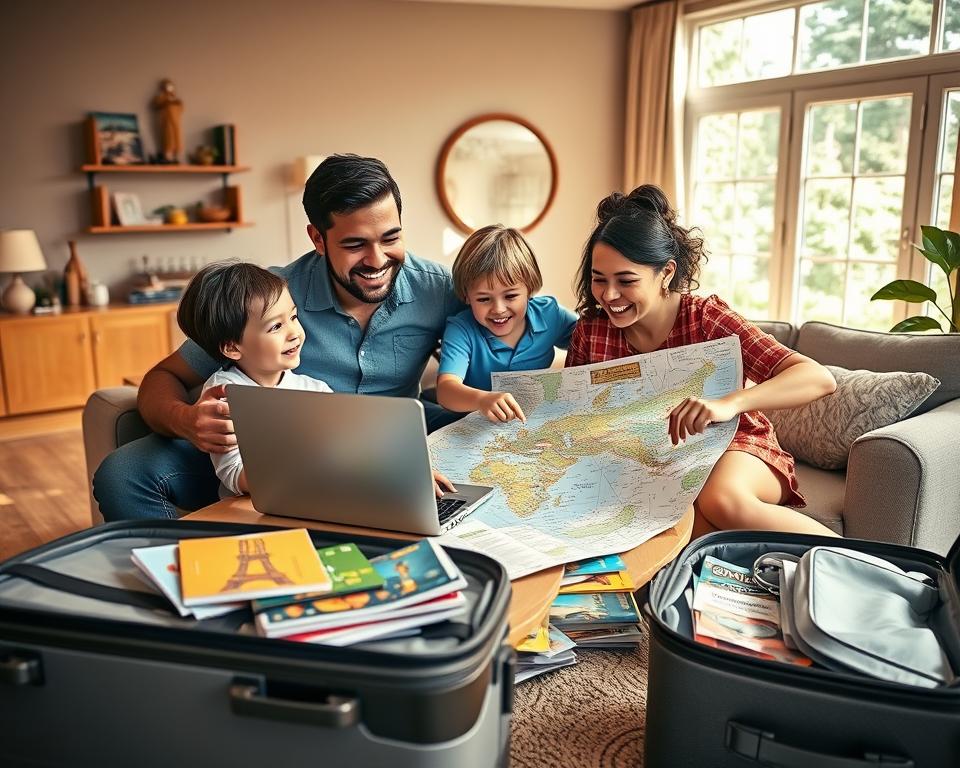
Did you know that nearly 90% of families feel more stressed on vacation than in daily life? The secret to changing this is good travel planning. A well-made family vacation planner lowers stress and makes family time better.
By focusing on handy travel tips and planning trips well, you can make great memories instead of headaches. Let’s see how planning carefully can make vacations fun for everyone.
Key Takeaways
- Effective planning minimizes stress for the entire family.
- Using a family vacation planner can enhance trip enjoyment.
- Proper organization leads to better family dynamics during travels.
- Start with essential family travel tips to lay a solid foundation.
- Memorable vacations stem from thoughtful preparation and execution.
Understanding the Importance of Family Travel Organization
Family travel organization is key to smooth, fun trips. It helps when families plan well and think of everyone’s needs. This way, everyone gets along better and enjoys more. Good planning means less arguing and more fun for everyone.
Benefits for the Family
Organizing family trips has many great points;
- Strengthening Family Bonds: Traveling together can make family ties stronger. It brings everyone closer.
- Customization: Families can pick activities that everyone will enjoy. This could be outdoor fun or cultural trips.
- Learning Opportunities: Trips are a chance to see new places and learn. They make happy memories too.
Saving Time and Stress
Efficient planning saves time and cuts stress. Having a plan means:
- Minimize Last-Minute Decisions: Good itineraries prevent stress from sudden choices.
- Allocate Resources Wisely: Knowing details helps manage money for hotels, fun, and food.
- Ensure Smooth Transitions: Organized routes make moving from one activity to another easier. This makes trips better.
| Advantage | Description |
|---|---|
| Stronger Bonds | Traveling together deepens relationships and creates memories. |
| Customization | Plans that fit everyone’s likes mean happier trips. |
| Reduced Stress | Good planning takes away last-minute worries and mix-ups. |
| Resource Management | Thoughtful budgets ensure money is well spent on fun activities. |
| Smoother Transitions | Organized plans mean less hassle moving from place to place. |
Planning Your Destination
Choosing the right destination is key for a great family vacation. It’s important to pick a place that fits your family’s needs. This means finding a spot that’s safe, fun, and accessible for kids of all ages.
There are lots of choices, like beach resorts or cities full of history. Making a plan that includes activities everyone will enjoy is essential.
Factors to Consider
- Age of Children: Think about what your kids will enjoy doing.
- Safety: Make sure the place you’re going is safe for children.
- Accessibility: It should be easy to get around and see the sights.
- Activities Available: Pick a place with lots of fun things for families to do together.
Popular Family-Friendly Destinations
Some places are just perfect for families. Here are a few top picks:
- Disney World: It’s a magical place with rides and characters.
- National Parks: They offer beautiful views and outdoor fun for everyone.
- Beach Resorts: These spots are great for relaxation and water play.
- Historical Cities: Places like Washington D.C. are educational and exciting to explore.
Budgeting for Family Travel
Creating a travel budget for families is key to a stress-free journey. Planning all aspects of your trip means more fun and no surprise costs. Your budget should cover places to stay, food, getting around, fun activities, and even little gifts. Here’s how to plan your budget step by step.
Creating a Travel Budget
Begin shaping your travel budget by detailing each part of your trip:
- Transportation: Look at costs for flights, car rentals, or gas for driving.
- Accommodation: Choose from hotels, vacation homes, or campsites. Then find the best prices.
- Activities: Find fun places and events to visit. Include entry fees and possible discounts.
- Meals: Plan your daily food budget. Mixing eating out with cooking can save money.
- Emergency Fund: Keep extra money for unexpected needs.
Tips to Save on Family Vacations
Use these smart ideas to spend less during your family travels:
- Travel when it’s not busy to find better deals on flights and places to stay.
- Look for family discounts at attractions, on transport, and with accommodation.
- Explore free or cheap local things to do to enjoy the culture without spending a lot.
- Join newsletters from airlines and hotels to get info on special offers and discounts.
- Think about visiting several places in one trip. It offers variety and can save on travel expenses.
Packing Essentials for Family Trips
Packing for family trips doesn’t have to be a headache. A thought-out list can simplify things. Think about the needs of each family member, from the youngest to the oldest. That way, everyone will have what they need for a fun trip.
Family Packing List
Your family packing list should have something for everyone. It needs to cover clothes, toiletries, and special items. Below is a sample list to help you out:
| Age Group | Items |
|---|---|
| Toddlers | Diapers, wipes, snacks, toys, extra clothes |
| Kids | Clothing, books, games, water bottle |
| Teens | Clothing, personal electronics, headphones |
| Adults | Clothing, toiletries, medications |
Tips for Efficient Packing
Good packing tips can ease your travel stress. Packing cubes help keep things tidy. Make sure everyone’s stuff is easy to find. Here are some ideas for smooth packing:
- Pack versatile clothing to mix and match.
- Include clothes for all weather, including layers.
- Don’t forget entertainment for the kids, like coloring books and games.
These tips can make your family trip much easier. Planning ahead can make trips enjoyable for everyone.
Transportation Options for Families
When families plan road trips, they must think carefully about how to travel. Choosing wisely makes the trip more fun and less stressful. Knowing the good and bad sides of each travel method is key for smooth planning.
Choosing the Right Mode of Transport
Families can fly, drive, or take public transport when they travel. Each choice has its upsides and downsides:
| Mode of Transport | Advantages | Disadvantages |
|---|---|---|
| Flying | Quick travel time, less distance to cover. | Higher costs, airport logistics can be stressful. |
| Driving | Flexibility with stops, family bonding time. | Long hours on the road, potential boredom for kids. |
| Public Transport | Cost-effective, options to relax while traveling. | Limited schedules, potential complications with luggage. |
Choosing how to travel depends on your budget, how far you’re going, and what your family likes. If you want more freedom on your trip, driving might be best. But if you need to get there fast, consider flying.
Tips for Long Road Trips
If you decide to drive, some tips can make the trip way better. Here are a few key suggestions:
- Plan for regular breaks to stretch and refresh.
- Pack a travel-friendly kit with snacks, drinks, and entertainment options for kids.
- Create a playlist of family favorites or download audiobooks.
- Establish a travel schedule that accommodates the children’s routines.
Getting ready for the journey can turn a long drive into an exciting adventure. Travel will be smooth and fun. Choose the best way to travel, and every trip will be a treasured experience.
Family-Friendly Accommodations
Choosing the right place to stay is crucial when traveling with family. There are many options that meet different needs, ensuring everyone is comfortable and happy. Looking into these accommodations will make your family trip both fun and memorable.
Types of Family Lodging
There are a few main types of places families can stay, each fitting different tastes and budgets. Here’s a look at some common ones:
- Hotels with Family Suites: They offer more room and special features for families, like kitchen areas or connecting rooms.
- Vacation Rentals: Sites like Airbnb and Vrbo provide whole houses or apartments. This gives families a cozy feeling and more freedom, especially for big groups.
- Campgrounds: Camping is a great way for families to connect and enjoy the outdoors, usually at a cheaper price.
Booking Tips for Accommodation
Finding the perfect place for your family might seem hard. But, these tips can help you pick the best option:
- Plan Ahead: Start looking early to find a spot, especially if you’re traveling when it’s busy.
- Look for Child-Friendly Amenities: Make sure the place has fun stuff like pools, playgrounds, or complimentary breakfast to make your stay better.
- Read Reviews: Feedback from other families can show the good and bad, helping you decide smarter.
- Compare Prices: Check different sites to get the best prices on places to stay for your family.
Activities and Entertainment for Kids
Planning fun for a family vacation needs careful thought, especially for different ages. A planner should include activities that fit everyone. Looking into local spots, theme parks, and cultural things to do is key for fun memories.
Finding Age-Appropriate Activities
It’s important to pick things to do that match your kids’ ages and likes. Younger children often like hands-on exhibits, playgrounds, and museums made for kids. Older children may prefer adventure parks or places with learning workshops. Websites like TripAdvisor or local tourist sites are great for finding what’s best for families.
Balancing Adult and Kid Interests
Adults want to have fun on vacation too, not just the kids. It’s all about finding the right mix of kid-focused and adult-friendly activities. You might pick a place like a zoo that also has great food spots for adults or plan some relaxation time for adults while kids are at a supervised activity. Having a plan that can change helps make sure everyone enjoys their time.
Meal Planning on the Road
Meal planning helps families have a better travel experience. It is important to compare the advantages of bringing snacks versus eating out. Bringing healthy snacks can keep kids full of energy. It also saves time and money while on a trip.
Packing Snacks vs. Eating Out
Bringing your snacks allows you to know what your kids are eating on the trip. Foods like nuts, granola bars, and dried fruit are great for traveling. They don’t spoil easily and are okay in different temperatures.
Eating out is fun and lets you try local foods. But, it might not always have things kids like to eat. Some places may not fit children’s needs, leading to disappointment. Having snacks ready means kids stay happy until you find a good place to eat.
Kid-Friendly Restaurant Tips
Finding places to eat that kids like makes dining out enjoyable for everyone. Look for places with children’s menus or small adult portions. This helps even if you have picky eaters and reduces food waste.
Looking up restaurants before you go can show you the best spots for families. Reading what others say online gives you an idea of what to expect. Being flexible when you eat is key. Quick snacks can make the wait for a table much better.
Using Technology for Smooth Travel
Technology is a big help in today’s fast world, especially for traveling families. There are tools that can make planning trips easier and more fun. With travel apps and digital tools, families can plan everything easier and make sure their trips go without a hitch.
Apps for Family Travelers
Travel apps are now a must-have for parents on the move. They assist in finding places, keeping in touch, and organizing trips. Here are some key apps:
- Google Maps – Great for directions and finding things to do.
- TripIt – Keeps all your trip plans in one spot.
- Roadtrippers – Perfect for planning road trips with cool places to visit.
- Family Locator – Helps you know where your family members are.
Digital Organization Tools
Digital tools help keep all your trip details, like documents and lists, organized. These tools are big supporters for families traveling. You might want to use:
| Tool | Purpose | Benefits |
|---|---|---|
| Evernote | Notes and Lists | Keeps all your ideas, to-dos, and packing lists together. |
| Google Drive | Document Storage | Safe place to keep and share your travel documents. |
| PocketGuide | City Guides | Gives you city info and tips, even without internet. |
Using these apps and tools can really make your travel experience better. It lets you focus more on making memories. When travel plans are well-organized, families can relax and enjoy their adventures more.
Reflecting on Your Family Travel Experience
When your family trip winds down, reflecting on it is key to making memories last. Talking about your adventures enhances the experience and helps everyone bond. Use travel journals or digital albums to capture the best parts.
Creating Lasting Memories
Storytelling is a great way to keep your travel memories alive. You can use journals, scrapbooks, or digital slideshows. Have everyone share their favorite experiences to make memories that everyone will remember.
Tips for Sharing Your Travel Stories
Don’t hesitate to tell your travel tales at family events or on social media. Use photos or stories that capture your trip’s spirit. This can inspire others to travel and bring your family closer through shared stories.